Pink-Barred Eublemma

Pink-Barred Eublemma

Eublemma cochylioides

Daily sighting probability ~10% · With luck
at Lamington National Park

In 3 days ~20% in a week ~40%

5 Verified sightings at Lamington National Park From 2019 to 2026
12 In all 2 parks
April Best month
🌙 Nocturnal When it's spotted

About the Pink-Barred Eublemma

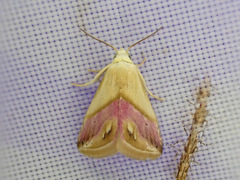
Eublemma cochylioides, the pink-barred eublemma, is a species of moth of the family Erebidae described by Achille Guenée in 1852. It is found throughout the Old World countries (including France). Besides France, it can also be found in such European countries as Greece and Portugal, and on islands such as Crete and Cyprus. It is also common in Asian ones such as Hong Kong, India, Sri Lanka, Japan, and Taiwan, where it might migrate. When comes African migration the species resort to South Africa, from which it might migrate to such Australian islands as Fiji and Tonga, and including Queensland, New South Wales, and Western Australia.

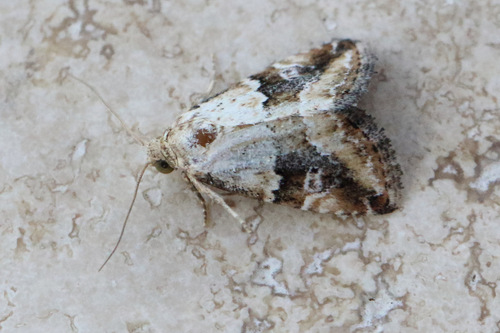
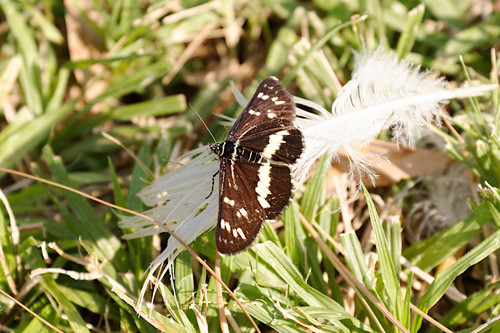
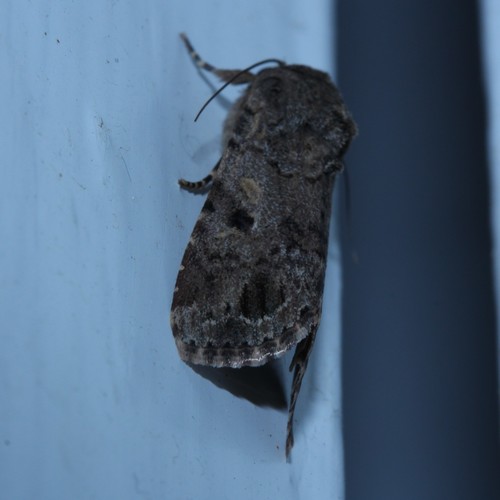
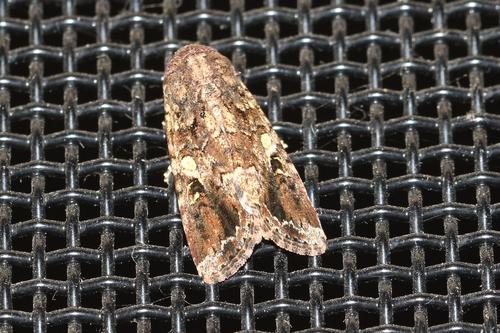
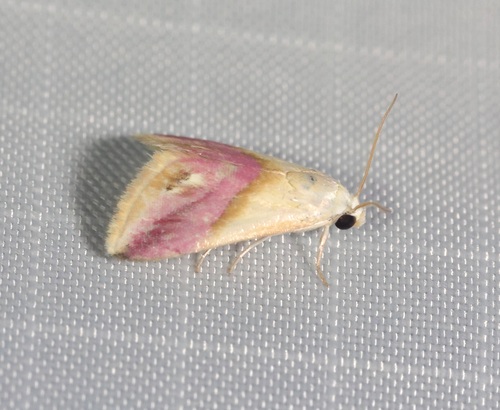
The wingspan is about 20 millimetres (0.79 in). Male with no pit in the membrane of forewing towards apex, which is somewhat acute. Head and thorax ochreous white. Forewings with ochreous-white basal area, bounded by a very oblique fulvous line, beyond which the area is bright pink. Outer margin fulvous suffused. Two white spots can be seen near outer angle, with some black scaled on their outer edge. Hindwings pale, suffused with fuscous towards outer margin.

The larvae have been recorded on Elephantopus species and... Wikipedia →
Global Distribution

Parks Where Found

# Park Country Daily sighting probability
1 Hattah-Kulkyne National Park 🇦🇺 Australia
~10%
2 Lamington National Park 🇦🇺 Australia
~10%

Cities Where Found

# City Country Daily sighting probability
1 Brisbane 🇦🇺 Australia
~10%
2 Hong Kong 🇨🇳 China
<5%

Before you go

What are the chances of seeing a Pink-Barred Eublemma in Lamington National Park?

With luck

About 10% of wildlife watchers report a Pink-Barred Eublemma sighting in Lamington National Park on a given day, based on 5 verified sightings from GBIF citizen-science data from 2019 to 2026. It is the 365th most-seen of the 430 insects we can rate there. Over three days the chance rises to about 20%, and over a week to about 40%, if each day is a fresh chance.

When is the best time to see a Pink-Barred Eublemma in Lamington National Park?

February and April

In those months about 20% of wildlife watchers report a Pink-Barred Eublemma in Lamington National Park on a given day, against under 5% in May to January, the lowest months.

What time of day is best to see a Pink-Barred Eublemma?

Between 7 and 10 pm

Across all the parks we cover, that three-hour window holds the most Pink-Barred Eublemma sightings with a recorded time, and nearly all of them come between 6 pm and 6 am: it is mostly seen at night.

Is Lamington National Park the best place to see a Pink-Barred Eublemma?

Among the best

Of the 2 parks where we can rate Pink-Barred Eublemma sightings, Lamington National Park ranks 2nd at about 10%, level with the leaders once rounded. The best odds are in Hattah-Kulkyne National Park (Australia, about 10%).

Which relatives of the Pink-Barred Eublemma live in Lamington National Park?

Same family: Noctuidae

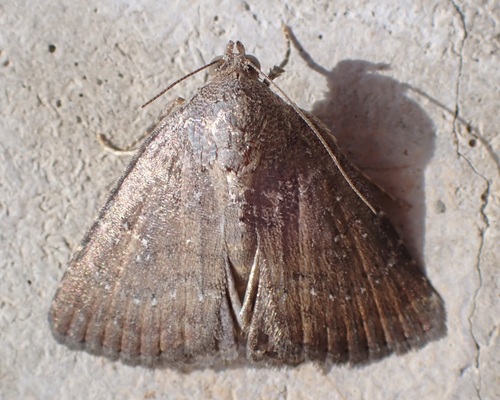
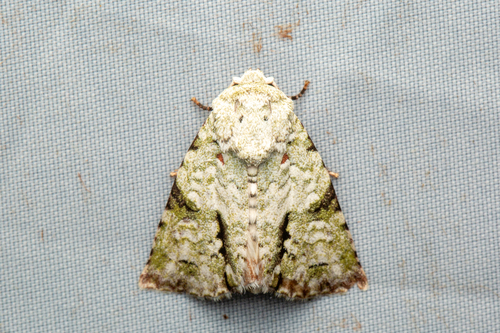
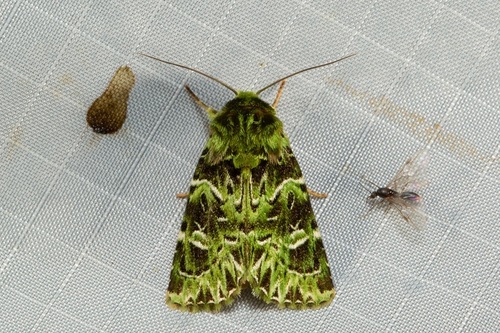
The closest relatives of the Pink-Barred Eublemma that you can see in Lamington National Park (family Noctuidae, Cutworm Moths and Allies) are Brown-Bar Moth (about 20%), Green-Blotched Moth (about 20%) and Cruria synopla (about 10%), with each one's daily chance of a sighting.

Where does the Pink-Barred Eublemma sighting chance come from?

GBIF citizen-science records

It is estimated from how often the Pink-Barred Eublemma is recorded against all the insects logged in Lamington National Park (5 verified sightings from 2019 to 2026), calibrated against known sighting rates. Figures are rounded to the nearest 10% because citizen-science data supports honest approximations, not decimals, and months with records from fewer than five people show "—". How it works.

← Back to Lamington National Park