Hattah-Kulkyne National Park
🇦🇺 Australia
Oceania, Australia 490 spp. recorded
Hattah-Kulkyne National Park is a protected area of Mediterranean scrub and riverine woodland situated in northwestern Victoria, Australia. The landscape features sprawling open mallee eucalypt scrub, arid sand ridges, and ancient dry lake beds fed by the winding Murray River system. Sandy walking tracks wind directly through thickets of native shrubs and towering river red gums, offering clear access into this dry inland habitat.
-34.678° S 142.358° E
🦜 Nature

231 Species sighted
47,556 Verified sightings From 2019 to 2026
Apr Best month
⭐ Iconic Species




📊 Most Spotted


⭐ Iconic Species
📊 Most Spotted


⭐ Iconic Species
📊 Most Spotted
⭐ Iconic Species
📊 Most Spotted






📊 Most Spotted


📊 Most Spotted
🌙 Most active after dark


+ 289 more species with insufficient data
Recent sightings in Hattah-Kulkyne National Park
LIVEiNaturalistSighting Calendar
How many species you'd see in a day
43Jan
41Feb
48Mar
54Apr
36May
39Jun
34Jul
37Aug
49Sep
44Oct
48Nov
44Dec
Sighting Zones
Warmer areas are where all species together are recorded most often.
-
Lake Mournpall campground
Daily sight. prob.vs avg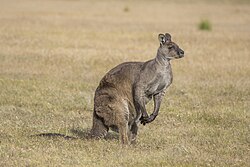 Western Grey Kangaroo~80%+20%
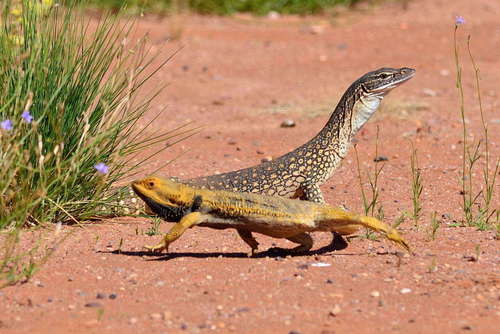
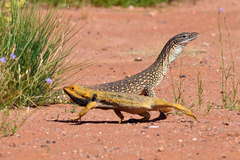 Central Bearded Dragon~70%+20%
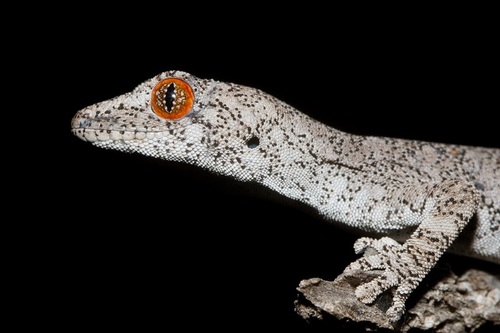
 Beaded Gecko~70%+30%
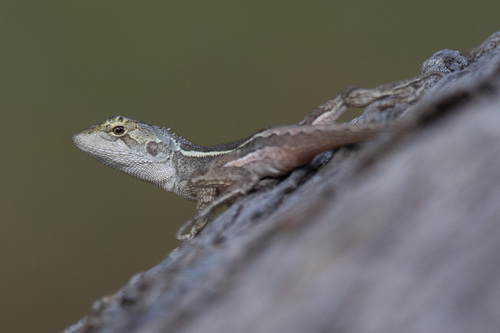
 Eastern tree dtella~70%+30%
 Shingleback Lizard~60%+20%
 Boulenger's Snake-eyed Skink~60%+30%
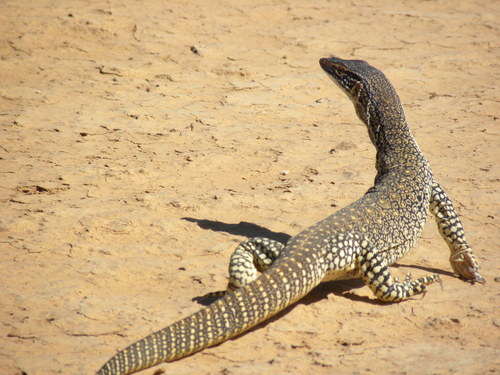
 Gould's Goanna~60%+10%
 Peron's Tree Frog~60%+30%
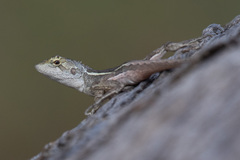 Nobbi~60%+20%
 Lace Monitor~60%+10%
 Swamp Wallaby~50%+20%
 Ragged Snake-eyed Skink~50%+20%
-
Nowingi Track b/w Old Calder Hwy and Konardin Track
Daily sight. prob.vs avg- Nobbi~80%+40%
 Yellow-plumed Honeyeater~80%+10%
- Central Bearded Dragon~80%+20%
- Western Grey Kangaroo~80%+20%
- Beaded Gecko~70%+20%
- Gould's Goanna~60%+10%
 Southern Spiny-tailed Gecko~60%+30%
 Crested Bellbird~60%≈
 Burton's Legless Lizard~50%+30%
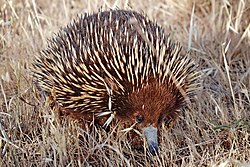 Short-beaked Echidna~40%+30%
 Pale-rumped Ctenotus~40%+10%
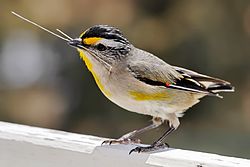 Striated Pardalote~40%-20%
-
Visitor centre
Daily sight. prob.vs avg- Western Grey Kangaroo~80%+30%
- Central Bearded Dragon~60%+10%
- Gould's Goanna~60%+20%
- Shingleback Lizard~60%+20%
- Lace Monitor~60%+20%
 Noisy Miner~60%≈
- Beaded Gecko~60%+10%
 Sulphur-crested Cockatoo~60%≈
 Pobblebonk~50%+20%
 Spotted Grass Frog~50%+20%
- Southern Spiny-tailed Gecko~50%+20%
- Ragged Snake-eyed Skink~50%+20%
-
North park edge
Daily sight. prob.vs avg- Central Bearded Dragon~80%+20%
- Gould's Goanna~80%+30%
- Eastern tree dtella~80%+40%
- Pobblebonk~70%+30%
- Burton's Legless Lizard~60%+30%
- Spotted Grass Frog~60%+30%
- Western Grey Kangaroo~60%≈
- Southern Spiny-tailed Gecko~60%+20%
 Willie Wagtail~50%-10%
 Australian Ringneck~50%-20%
 Australian Magpie~50%-20%
- Shingleback Lizard~40%≈
-
Hattah
Daily sight. prob.vs avg


🏕️ Experience
Essentials
Entrance
—
Tourism
Low
Typical stay
1–2
daysTrails
Easy
World Heritage
No
Climate
Temp °C Rain mm
JanFebMarAprMayJunJulAugSepOctNovDec
0.0 Good
Wallace's Line Score
How good is this park for seeing wildlife? 🦜
Biodiversity
GoodHow rich is the wildlife?
3.6
Species by taxon
🦅 Birds 333
🐒 Mammals 48
🦎 Reptiles 99
🐸 Amphibians 10
490 Total Species
828 Global average across 316 parks
21 Threatened 254 Endemic
🔭
Sighting
Very goodHow likely to see animals?
3.3
🎯
Top-12 Avg Probability
62% 📊
Coverage (151 species at ≥5% of 490 in the inventory)
31% 🔀
Taxon variety in top 12 (11 bird, 1 mammal)
20% 🔭
Species per 10 outings (distinct species a visitor would meet over 10 outings — effort held equal across parks)
104 🌟
Iconic-group species (≥15%) (every species from the 19 iconic groups — monkeys, cats, toucans, macaws, sloths, crocodilians… — not just the 4 highlighted above)
15 ⭐
High-prob species (>40%)
32 🏕️
Experience
Very goodHow easy and pleasant is the visit?
4.0
Climate Mixed Medium
Entrance Not verified Low
Tourism Medium Medium
Trails Easy High
World Heritage No —
What visitors say
We also encountered A male Red-capped Robin, a lone Spiny-cheeked Honeyeater that was detected by its peculiar water droplet call.
I’ve found the best spot to be around 500 m after you pass through the Kangaroo Fence (-34.690833, 142.329767).
I’ve found the best spot to be around 500 m after you pass through the Kangaroo Fence (-34.690833, 142.329767).
Our original plans to visit Mungo National Park in New South Wales had been stymied after heavy rain in the lead-up; so a visit to Hattah-Kulkyne National Park was a quickly devised but excellent plan B.
Before you go
What animals can you see in Hattah-Kulkyne National Park?
490 species
Hattah-Kulkyne National Park has 490 recorded vertebrate species. The ones wildlife watchers report most often on a given day are Galah (about 70%), Yellow-plumed Honeyeater (about 70%), Australian Ringneck (about 70%), Australian Magpie (about 60%) and Noisy Miner (about 60%). Among mammals, the most-seen is Western Grey Kangaroo (about 60%); among reptiles, Central Bearded Dragon (about 50%); among amphibians, Pobblebonk (about 30%).
When is the best time to visit Hattah-Kulkyne National Park for wildlife?
August
In that month the park's 12 most-seen species average about 70% on a given day, against about 60% in September to July.
Can you see a Regent Parrot in Hattah-Kulkyne National Park?
Yes
About 50% of wildlife watchers report a Regent Parrot sighting in Hattah-Kulkyne National Park on a given day, based on 968 verified sightings from GBIF citizen-science data from 2019 to 2026. The best time is June and November (about 70%).
Can you see a Western Grey Kangaroo in Hattah-Kulkyne National Park?
Yes
About 60% of wildlife watchers report a Western Grey Kangaroo sighting in Hattah-Kulkyne National Park on a given day, based on 85 verified sightings from GBIF citizen-science data from 2019 to 2026. The best time is May (about 80%).
Can you see a Central Bearded Dragon in Hattah-Kulkyne National Park?
Yes
About 50% of wildlife watchers report a Central Bearded Dragon sighting in Hattah-Kulkyne National Park on a given day, based on 59 verified sightings from GBIF citizen-science data from 2019 to 2026. The best time is September (about 70%).
Can you see a Chestnut Quail-thrush in Hattah-Kulkyne National Park?
Yes
About 40% of wildlife watchers report a Chestnut Quail-thrush sighting in Hattah-Kulkyne National Park on a given day, based on 656 verified sightings from GBIF citizen-science data from 2019 to 2026. The best time is January and February (about 60%).
Where in Hattah-Kulkyne National Park is wildlife easiest to see?
Around Lake Mournpall campground
The richest sighting zone is around Lake Mournpall campground, followed by Nowingi Track b/w Old Calder Hwy and Konardin Track and Visitor centre, ranked by how many of the park's headline animals visitors can expect to see in each. See the zones on the map.
Is Hattah-Kulkyne National Park good for wildlife watching?
3.4 out of 5
On the Wallace's Line Score, Hattah-Kulkyne National Park rates 3.4/5: 220th of 316 parks worldwide and 19th in Oceania. 42 of its species are reported by about 40% or more of wildlife watchers on a given day.


