Yellow-headed Brush-Finch

Yellow-headed Brush-Finch

Atlapetes flaviceps

Silhouette: L. Shyamal · PhyloPic

LCNTNear ThreatenedVUENCR Endemic
Daily sighting probability <5% · Rare
at Los Nevados National Natural Park

In 3 days <5% in a week ~10%

88 Verified sightings at Los Nevados National Natural Park From 2019 to 2026
88 In 1 park
May Best month
☀️🌙 Day & Night When it's spotted

About the Yellow-headed Brush-Finch

The yellow-headed brushfinch (Atlapetes flaviceps) is a Near Threatened species of bird in the American sparrow family, Passerellidae. It is endemic to Colombia. The common name is a semi-literal translation of the scientific name, with Atlapetes referring to the brushfinch genus, and flaviceps meaning "yellow-headed".

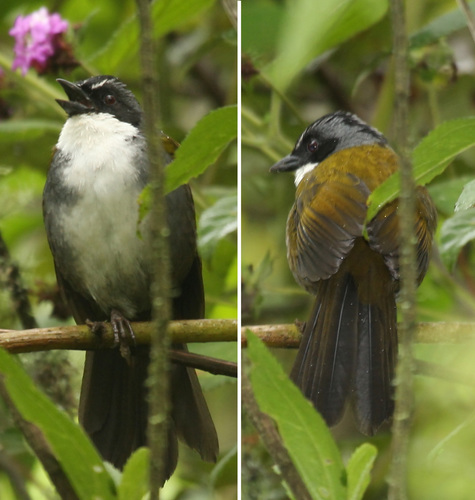
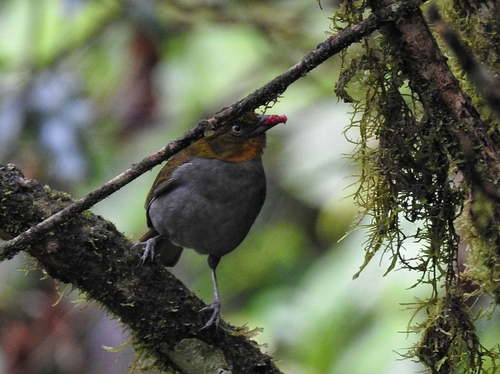
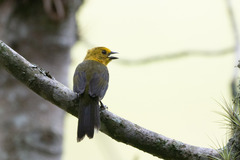
This species has a yellow to dark olive head. The throat, chin, malar streak, lores, eye-ring, and ear patch are bright yellow in any case. The rest of the plumage is yellow with dark olive upperparts, wing and tail. The variation in the head color is not well explained, but it is likely that the olive-headed individuals are females and/or immature birds.

It is sometimes still referred to by its obsolete common name, olive-headed brushfinch. That name is the result of an interesting error. A. flaviceps occurs in a very limited range, and is rare. Until the 1980s, it was known only from the two specimens collected on October 24 and 25, 1911, in the Toché River valley, and two additional specimens collected in 1942. Though the exact amount and brightness was variable in the few specimens, the bright yellow head of these birds was noted. It did not receive... Wikipedia →

Sounds

Song0:43

Colombia · 2020

© Jerome Fischer · XC578308 · CC BY-NC-SA 4.0

Call0:16

Colombia · 2016

© Ross Gallardy · XC353935 · CC BY-NC-SA 4.0

Alarm call0:10

Colombia · 2013

© Julian Andres Zuleta Marín · XC146399 · CC BY-NC-SA 3.0

Global Distribution

Parks Where Found

# Park Country Daily sighting probability
1 Los Nevados National Natural Park 🇨🇴 Colombia
<5%

More parks will be added in future updates.

Before you go

What are the chances of seeing a Yellow-headed Brush-Finch in Los Nevados National Natural Park?

Rare

Under 5% of wildlife watchers report a Yellow-headed Brush-Finch sighting in Los Nevados National Natural Park on a given day, based on 88 verified sightings from GBIF citizen-science data from 2019 to 2026. It is the 256th most-seen of the 424 birds we can rate there. Over three days the chance rises to under 5%, and over a week to about 10%, if each day is a fresh chance.

When is the best time to see a Yellow-headed Brush-Finch in Los Nevados National Natural Park?

May

In that month about 10% of wildlife watchers report a Yellow-headed Brush-Finch in Los Nevados National Natural Park on a given day, against under 5% in June to April, the lowest months.

What time of day is best to see a Yellow-headed Brush-Finch?

Between 10 pm and 1 am

Across all the parks we cover, that three-hour window holds the most Yellow-headed Brush-Finch sightings with a recorded time, and about 7 in 10 of them come between 6 am and 6 pm: it is seen both by day and at night.

Where else can you see a Yellow-headed Brush-Finch?

Only Los Nevados National Natural Park, in our data

Los Nevados National Natural Park is the only park on Wallace's Line with enough records to rate Yellow-headed Brush-Finch sightings: under 5% of wildlife watchers there report one on a given day.

Which relatives of the Yellow-headed Brush-Finch live in Los Nevados National Natural Park?

Same genus: Atlapetes

The closest relatives of the Yellow-headed Brush-Finch that you can see in Los Nevados National Natural Park (genus Atlapetes, Atlapetes Brushfinches) are Pale-naped Brush-Finch (about 40%), Slaty Brush-Finch (about 20%) and White-naped Brush-Finch (about 10%), with each one's daily chance of a sighting.

Where does the Yellow-headed Brush-Finch sighting chance come from?

GBIF citizen-science records

It is estimated from how often the Yellow-headed Brush-Finch is recorded against all the birds logged in Los Nevados National Natural Park (88 verified sightings from 2019 to 2026), calibrated against known sighting rates. Figures are rounded to the nearest 10% because citizen-science data supports honest approximations, not decimals, and months with records from fewer than five people show "—". How it works.

← Back to Los Nevados National Natural Park