Trinidad Motmot

Trinidad Motmot

Momotus bahamensis

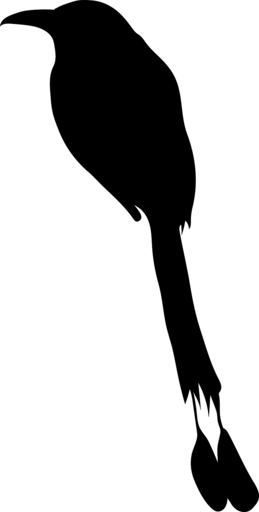
Silhouette: Sofía Terán Sánchez · PhyloPic

LCLeast ConcernNTVUENCR Endemic
Daily sighting probability ~80% · Very likely
at Main Ridge Forest Reserve

In 3 days >90%

1,048 Verified sightings at Main Ridge Forest Reserve From 2019 to 2026
1,048 In 1 park
June Best month
☀️ Diurnal When it's spotted

About the Trinidad Motmot

The Trinidad and Tobago motmot (Momotus bahamensis) is a colourful Coraciiform afroavian endemic to the forests and woodlands of Trinidad and Tobago. It is a nonmigratory member of the Momotidae family and the Momotus genus. This species and the blue-capped motmot, Lesson's motmot, whooping motmot, Amazonian motmot, and Andean motmot were all considered conspecific. Though found on both islands, this bird is more abundant in Tobago than it is in Trinidad.

These birds are characterised by their colourful plumage, heavy bills, and low owl-like "hoot" call. Their underparts are a deep, rufous colour, with a slightly paler breast and an olive-green wash. The black eye-mask and blue-black racquet tails are also distinguishable features for this species.

These birds often sit still, and in their dense forest habitat can be difficult to see, despite their size. They eat small prey such as amphibians, small mammals, insects, spiders, earthworms, lizards, small snakes and fledgling birds, and will also regularly take fruit. They are known to eat small tree snails, and to use forest floor rocks as 'anvils' to crack open their hard shells, as well as the exoskeletons of crabs, beetles, and large millipedes, to access the soft edible bodies within.

Although little information is known about this species, the population is thought to be stable, and is considered least concern by the International Union for Conservation of Nature (IUCN). Despite its small range and unquantified population size, the Trinidad motmot is not believed to approach the thresholds for a vulnerable species under the range and population size criteria. There are no current conservation actions undertaken to protect this species.

The bird is shown on the front of the $5 bank note of Trinidad and Tobago. Wikipedia →

Sounds

Call1:18

Trinidad & Tobago · 2013

© Simon Elliott · XC590701 · CC BY-NC-ND 4.0

Song1:01

Trinidad & Tobago · 2002

© Alvaro Jaramillo · XC115379 · CC BY-NC-SA 3.0

Global Distribution

Parks Where Found

# Park Country Daily sighting probability
1 Main Ridge Forest Reserve 🇹🇹 Trinidad and Tobago
~80%

More parks will be added in future updates.

Before you go

What are the chances of seeing a Trinidad Motmot in Main Ridge Forest Reserve?

Very likely

About 80% of wildlife watchers report a Trinidad Motmot sighting in Main Ridge Forest Reserve on a given day, based on 1,048 verified sightings from GBIF citizen-science data from 2019 to 2026. It is the 5th most-seen of the 103 birds we can rate there. Over three days the chance rises to over 90%, if each day is a fresh chance.

When is the best time to see a Trinidad Motmot in Main Ridge Forest Reserve?

January, April and June

In those months about 90% of wildlife watchers report a Trinidad Motmot in Main Ridge Forest Reserve on a given day, against about 60% in July and September–October, the lowest months.

What time of day is best to see a Trinidad Motmot?

Between 2 and 5 pm

Across all the parks we cover, that three-hour window holds the most Trinidad Motmot sightings with a recorded time, and about 8 in 10 of them come between 6 am and 6 pm: it is a daytime animal.

Where else can you see a Trinidad Motmot?

Only Main Ridge Forest Reserve, in our data

Main Ridge Forest Reserve is the only park on Wallace's Line with enough records to rate Trinidad Motmot sightings: about 80% of wildlife watchers there report one on a given day.

Where does the Trinidad Motmot sighting chance come from?

GBIF citizen-science records

It is estimated from how often the Trinidad Motmot is recorded against all the birds logged in Main Ridge Forest Reserve (1,048 verified sightings from 2019 to 2026), calibrated against known sighting rates. Figures are rounded to the nearest 10% because citizen-science data supports honest approximations, not decimals, and months with records from fewer than five people show "—". How it works.

← Back to Main Ridge Forest Reserve