Australasian Grass-Owl

Australasian Grass-Owl

Tyto longimembris

Silhouette: Sharon Wegner-Larsen · PhyloPic

LCLeast ConcernNTVUENCR
Daily sighting probability <5% · Rare
at Manas National Park

In 3 days <5%

8 Verified sightings at Manas National Park From 2019 to 2026
8 In 1 park
January Best month
☀️🌙 Day & Night When it's spotted

About the Australasian Grass-Owl

The eastern grass owl (Tyto longimembris), also known as Chinese grass owl or Australasian grass owl, is a species of owl in the family Tytonidae. They feed predominantly on small rodents. Though some authorities consider this owl to be conspecific with the African grass owl, T. capensis, other consider it to be a valid species.

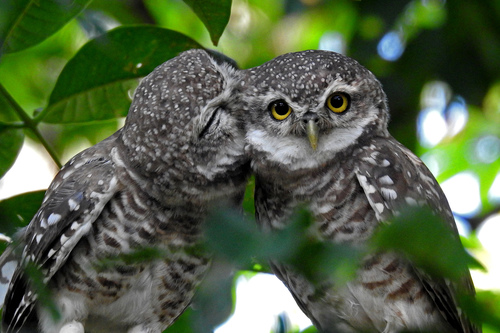
The eastern grass owl is a medium-sized owl, similar in size to the barn owl. Adult males measure from 32 to 38 cm (13 to 15 in) in length, while the larger females can measure from 35 to 42 cm (14 to 17 in). The wingspan is from 100 to 116 cm (39 to 46 in). The female weighs 460 g (16 oz) while the male weighs 400 g (14 oz). They have dark brown or tan upper parts with pale spots. They have black and tan bars on its wings and a very pale beak, feathered legs, and dark brown eyes. Like all Tyto owls, it has a heart-shaped facial disk with brown buff and a white bordering.

T. l. Pithecops (Swinhoe, 1866) – Taiwan. It is mainly found in the southern lowlands and foothills. Locally, it is known in Taiwanese as the “monkey-faced owl” due to its monkey-like facial appearance. The eastern grass owl's primary call is similar... Wikipedia →

Sounds

Flight call0:06

China · 2025

© Lim Ying Hien 林勇贤 · XC1041521 · CC BY-NC-ND 4.0

Global Distribution

Parks Where Found

# Park Country Daily sighting probability
1 Manas National Park 🇮🇳 India
<5%

More parks will be added in future updates.

Zoos & Centres Where Found

# Zoo / Centre Country
1 Kadoorie Farm and Botanic Garden 🇭🇰 Hong Kong SAR China In captivity
2 Fonghuanggu Bird and Ecology Park 🇹🇼 Taiwan In captivity
3 Darling Downs Zoo 🇦🇺 Australia In captivity
4 Manila Zoological and Botanical Garden 🇵🇭 Philippines In captivity
5 Featherdale Sydney Wildlife Park 🇦🇺 Australia In captivity
6 Negros Forests and Ecological Foundation Biodiversity Conservation Center 🇵🇭 Philippines In captivity

Before you go

What are the chances of seeing an Australasian Grass-Owl in Manas National Park?

Rare

Under 5% of wildlife watchers report an Australasian Grass-Owl sighting in Manas National Park on a given day, based on 8 verified sightings from GBIF citizen-science data from 2019 to 2026. It is the 363rd most-seen of the 377 birds we can rate there. Over three days the chance rises to under 5%, if each day is a fresh chance.

When is the best time to see an Australasian Grass-Owl in Manas National Park?

Any time of year

In every month with enough records, under 5% of wildlife watchers report an Australasian Grass-Owl in Manas National Park on a given day, so our monthly data shows no clear season.

What time of day is best to see an Australasian Grass-Owl?

Between 7 and 10 pm

Across all the parks we cover, that three-hour window holds the most Australasian Grass-Owl sightings with a recorded time, and about 7 in 10 of them come between 6 pm and 6 am: it is seen both by day and at night.

Where else can you see an Australasian Grass-Owl?

Only Manas National Park, in our data

Manas National Park is the only park on Wallace's Line with enough records to rate Australasian Grass-Owl sightings: under 5% of wildlife watchers there report one on a given day.

Which relatives of the Australasian Grass-Owl live in Manas National Park?

Same order: Strigiformes

The closest relatives of the Australasian Grass-Owl that you can see in Manas National Park (order Strigiformes, Owls) are Asian Barred Owlet (about 30%), Spotted Owlet (about 20%) and Brown Boobook (about 10%), with each one's daily chance of a sighting.

Where does the Australasian Grass-Owl sighting chance come from?

GBIF citizen-science records

It is estimated from how often the Australasian Grass-Owl is recorded against all the birds logged in Manas National Park (8 verified sightings from 2019 to 2026), calibrated against known sighting rates. Figures are rounded to the nearest 10% because citizen-science data supports honest approximations, not decimals, and months with records from fewer than five people show "—". How it works.

← Back to Manas National Park