Completed
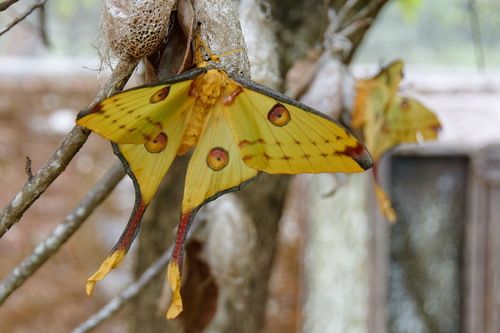

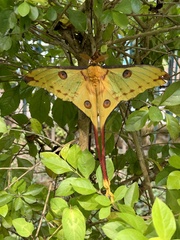
Madagascan Moon Moth
Argema mittrei
- KingdomAnimalia (Animals)
- PhylumArthropoda (Arthropods)
- ClassInsecta (Insects)
- OrderLepidoptera (Butterflies and Moths)
- FamilySaturniidae (Emperor and Giant Silk Moths)
- GenusArgema (African Moon Moths)
- SpeciesArgema mittrei (Madagascan Moon Moth)
In 3 days ~60% in a week ~90%
9 Verified sightings at Mantadia National Park From 2019 to 2026
44 In all 2 parks
August Best month
☀️ Diurnal When it's spotted
About the Madagascan Moon Moth
The comet moth or Madagascan moon moth (Argema mittrei) is a moth native to the rain forests of Madagascar. The species was first described by Félix Édouard Guérin-Méneville in 1847. The adult moth cannot feed and only lives for 4 to 5 days. Although endangered in the wild due to habitat loss, the comet moth has been bred in captivity. The genus name Argema is Greek for "speckled eye" referencing the abundance of eyespots on their wings, warding off predators.
There are physical differences among females and males. Females have more rounded wings. The male has a wingspan of 20 cm (7.9 inches) and a tail span of 15 cm (5.9 inches), making it one of the world's largest silk moths. The males have long, feathery antennae and the females have thin antennae. Argema mittrei wings have large eyespots, giving the appearance of a large and dangerous creature that should not be attacked.
Host plants include the genus Eugenia and Weinmannia, as well as Eucalyptus gunnii and Liquidambar. Other host plants they are reared to are Eugenia cuneifolia, Sclerocarya birrea, Weinmania eriocampa, Rhus cotinus, Schinus terebinthifolia, and Schinus molle. Additional... Wikipedia →
Recent sightings of Madagascan Moon Moth in Mantadia National Park
LIVEiNaturalistGlobal Distribution
Parks Where Found
| # | Park | Country | Daily sighting probability |
|---|---|---|---|
| 1 | Ranomafana National Park | 🇲🇬 Madagascar | |
| 2 | Mantadia National Park | 🇲🇬 Madagascar |
Closest Relatives at Mantadia National Park

Before you go
What are the chances of seeing a Madagascan Moon Moth in Mantadia National Park?
Possible
About 30% of wildlife watchers report a Madagascan Moon Moth sighting in Mantadia National Park on a given day, based on 9 verified sightings from GBIF citizen-science data from 2019 to 2026. It is the 13th most-seen of the 24 insects we can rate there. Over three days the chance rises to about 60%, and over a week to about 90%, if each day is a fresh chance.
When is the best time to see a Madagascan Moon Moth in Mantadia National Park?
June, August and December–January
In those months about 40% of wildlife watchers report a Madagascan Moon Moth in Mantadia National Park on a given day, against under 5% in February–May and September, the lowest months.
What time of day is best to see a Madagascan Moon Moth?
Between 6 and 9 am
Across all the parks we cover, that three-hour window holds the most Madagascan Moon Moth sightings with a recorded time, and about 8 in 10 of them come between 6 am and 6 pm: it is a daytime animal.
Is Mantadia National Park the best place to see a Madagascan Moon Moth?
2nd of 2
Of the 2 parks where we can rate Madagascan Moon Moth sightings, Mantadia National Park ranks 2nd at about 30%. The best odds are in Ranomafana National Park (Madagascar, about 50%).
Which relatives of the Madagascan Moon Moth live in Mantadia National Park?
Same order: Lepidoptera
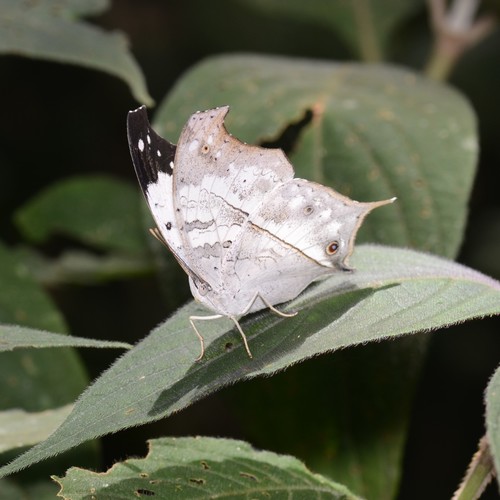
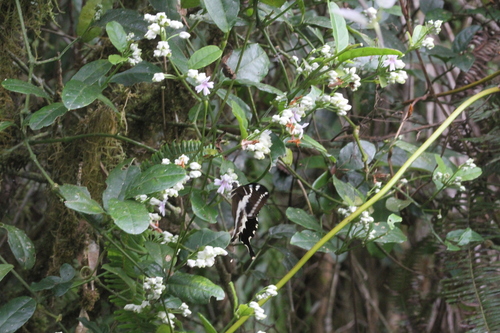
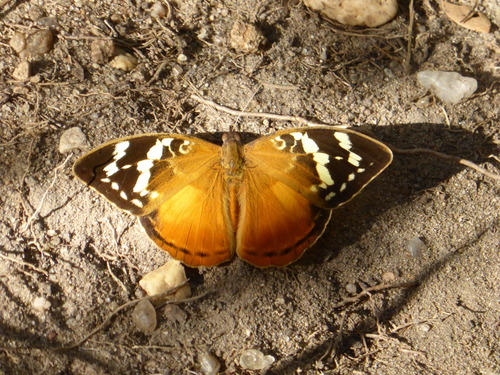
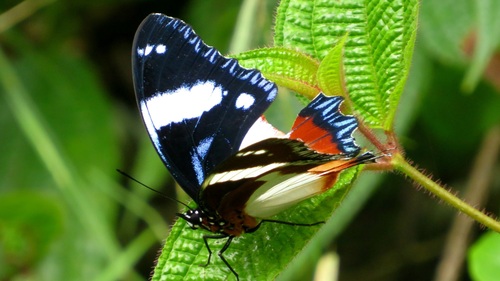
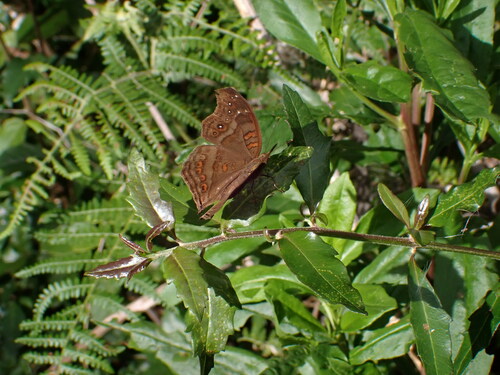
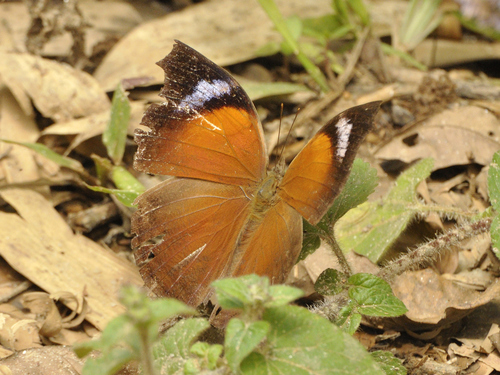
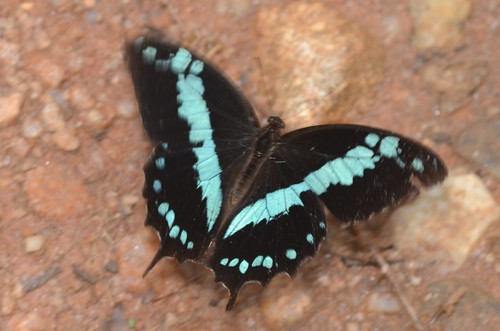
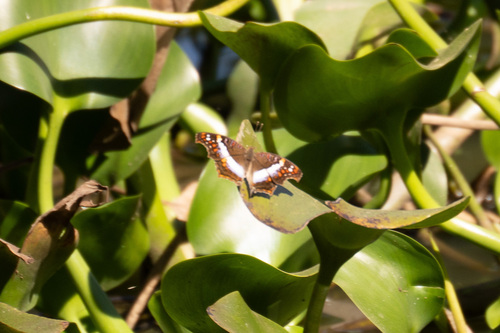
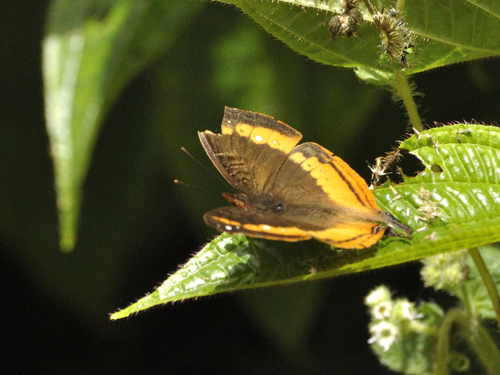
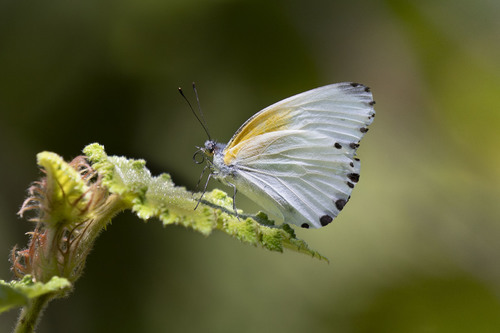
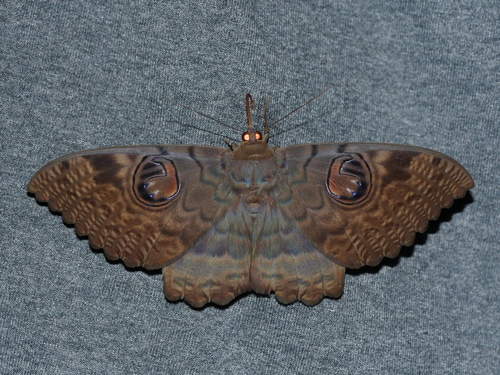
The closest relatives of the Madagascan Moon Moth that you can see in Mantadia National Park (order Lepidoptera, Butterflies and Moths) are Madagascan Mother-Of-Pearl (about 50%), Cream-Lined Swallowtail (about 40%) and Madagascar Forest Nymph (about 30%), with each one's daily chance of a sighting.
Where does the Madagascan Moon Moth sighting chance come from?
GBIF citizen-science records
It is estimated from how often the Madagascan Moon Moth is recorded against all the insects logged in Mantadia National Park (9 verified sightings from 2019 to 2026), calibrated against known sighting rates. Figures are rounded to the nearest 10% because citizen-science data supports honest approximations, not decimals, and months with records from fewer than five people show "—". How it works.
