
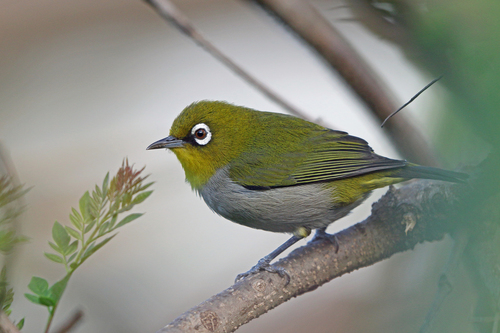
Sunbird Asity

Sunbird Asity

Neodrepanis coruscans

Silhouette: Sheatherius · PhyloPic

LCLeast ConcernNTVUENCR Endemic
Daily sighting probability ~10% · With luck
at Mantadia National Park

In 3 days ~20% in a week ~40%

39 Verified sightings at Mantadia National Park From 2019 to 2026
388 In all 2 parks
May Best month
☀️ Diurnal When it's spotted

About the Sunbird Asity

The common sunbird-asity or sunbird asity (Neodrepanis coruscans) is a species of bird in the family Philepittidae. It is endemic to Madagascar. Its natural habitat is subtropical or tropical moist lowland forests. The genus Neodrepanis is characterised by a tiny body with a short tail, a fine, strongly decurved bill and, during the breeding season, strong sexual dichromatism. Males in breeding plumage are brilliant blue and black above and variably bright yellow below, with extraordinary blue and green facial caruncles. Females, males in non-breeding plumage and immatures are dull blue-green above, lack caruncles and are variably yellowish below; some female-plumaged birds have a half-sized caruncle and may be immature males. In winter, males are often seen with traces of breeding plumage coloration.

Male common sunbird-asities are duller than yellow-bellied in almost all respects. The former have brilliant royal blue-fringed back crown, nape, mantle and scapular feathers, and narrow but fairly conspicuous yellow fringes to the secondaries and greater and median wing coverts. Their underparts are dull, deep yellow, with strong olive-brown streaking in the centre of... Wikipedia →

Sounds

Call0:17

Madagascar · 2012

© Peter Boesman · XC762850 · CC BY-NC-ND 4.0

Song1:25

Madagascar · 2019

© Dries Van de Loock · XC536980 · CC BY-NC-SA 4.0

Uncertain0:33

Madagascar · 2021

© Ken Behrens · XC624139 · CC BY-NC-SA 4.0

Global Distribution

Parks Where Found

# Park Country Daily sighting probability
1 Ranomafana National Park 🇲🇬 Madagascar
~40%
2 Mantadia National Park 🇲🇬 Madagascar
~10%

Before you go

What are the chances of seeing a Sunbird Asity in Mantadia National Park?

With luck

About 10% of wildlife watchers report a Sunbird Asity sighting in Mantadia National Park on a given day, based on 39 verified sightings from GBIF citizen-science data from 2019 to 2026. It is the 72nd most-seen of the 98 birds we can rate there. Over three days the chance rises to about 20%, and over a week to about 40%, if each day is a fresh chance.

When is the best time to see a Sunbird Asity in Mantadia National Park?

May

In that month about 50% of wildlife watchers report a Sunbird Asity in Mantadia National Park on a given day, against under 5% in July and November, the lowest months. That is one of Mantadia National Park's driest months, with about 80 mm of rain against 340 mm in January. January to April have too few records to rate.

What time of day is best to see a Sunbird Asity?

Between 7 and 10 am

Across all the parks we cover, that three-hour window holds the most Sunbird Asity sightings with a recorded time, and about 8 in 10 of them come between 6 am and 6 pm: it is a daytime animal.

Is Mantadia National Park the best place to see a Sunbird Asity?

2nd of 2

Of the 2 parks where we can rate Sunbird Asity sightings, Mantadia National Park ranks 2nd at about 10%. The best odds are in Ranomafana National Park (Madagascar, about 40%).

Where does the Sunbird Asity sighting chance come from?

GBIF citizen-science records

It is estimated from how often the Sunbird Asity is recorded against all the birds logged in Mantadia National Park (39 verified sightings from 2019 to 2026), calibrated against known sighting rates. Figures are rounded to the nearest 10% because citizen-science data supports honest approximations, not decimals, and months with records from fewer than five people show "—". How it works.

← Back to Mantadia National Park