Hooded Tinamou

Hooded Tinamou

Nothocercus nigrocapillus

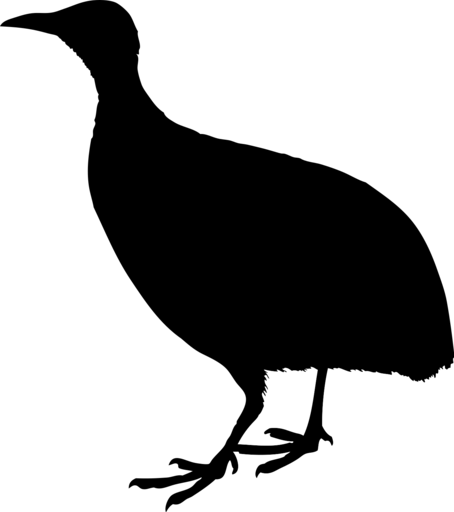
Silhouette: George Edward Lodge · PhyloPic

LCLeast ConcernNTVUENCR
Daily sighting probability <5% · Rare
at Manu National Park

In 3 days <5%

5 Verified sightings at Manu National Park From 2019 to 2026
5 In 1 park
January Best month
☀️ Diurnal When it's spotted

About the Hooded Tinamou

The hooded tinamou (Nothocercus nigrocapillus) is a type of ground bird found in forests of Bolivia and Peru. Tinamou are from the family Tinamidae, and in the larger scheme are also ratites. Unlike other ratites, tinamous can fly, although in general, they are not strong fliers. Ratites evolved from prehistoric flying birds, and tinamous are the closest living relative of these birds.

The hooded tinamou has two subspecies: N. n. nigrocapillus occurs in the Andes of central Peru and Bolivia. The hooded tinamou is found in montane moist forest up to 1,550 to 3,000 m (5,090–9,840 ft) altitude. This species is native to the Andes in Bolivia and Peru.

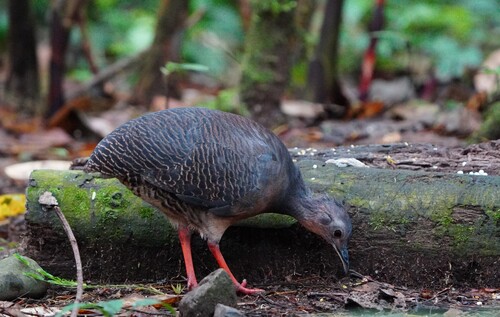
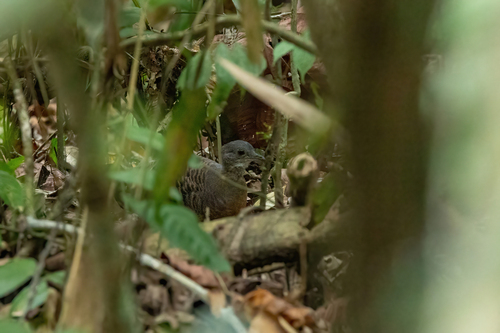
Hooded tinamou is light brown above and narrowly freckled with black in color. It is paler below with dusky bars, belly pale-spotted, and averages 33 cm (13 in) long. Like other tinamous, the hooded tinamou eats fruit off the ground or low-lying bushes. They also eat small amounts of invertebrates, flower buds, tender leaves, seeds, and roots. The male incubates the eggs which may come from as many as 4 different... Wikipedia →

Sounds

Call0:15

Peru · 2011

© Marcelo Villegas · XC91953 · CC BY-NC-ND 2.5

Song0:47

Peru · 2009

© Andrew Spencer · XC40712 · CC BY-NC-ND 2.5

Song0:19

Peru · 2007

© Huw Lloyd · XC36720 · CC BY-NC-ND 2.5

Global Distribution

Parks Where Found

# Park Country Daily sighting probability
1 Manu National Park 🇵🇪 Peru
<5%

More parks will be added in future updates.

Before you go

What are the chances of seeing a Hooded Tinamou in Manu National Park?

Rare

Under 5% of wildlife watchers report a Hooded Tinamou sighting in Manu National Park on a given day, based on 5 verified sightings from GBIF citizen-science data from 2019 to 2026. It is the 623rd most-seen of the 641 birds we can rate there. Over three days the chance rises to under 5%, if each day is a fresh chance.

When is the best time to see a Hooded Tinamou in Manu National Park?

Any time of year

In every month with enough records, under 5% of wildlife watchers report a Hooded Tinamou in Manu National Park on a given day, so our monthly data shows no clear season.

What time of day is best to see a Hooded Tinamou?

Between 7 and 10 am

Across all the parks we cover, that three-hour window holds the most Hooded Tinamou sightings with a recorded time, and about 8 in 10 of them come between 6 am and 6 pm: it is a daytime animal.

Where else can you see a Hooded Tinamou?

Only Manu National Park, in our data

Manu National Park is the only park on Wallace's Line with enough records to rate Hooded Tinamou sightings: under 5% of wildlife watchers there report one on a given day.

Which relatives of the Hooded Tinamou live in Manu National Park?

Same family: Tinamidae

The closest relatives of the Hooded Tinamou that you can see in Manu National Park (family Tinamidae, Tinamous) are Undulated Tinamou (about 30%), Cinereous Tinamou (about 30%) and Black-capped Tinamou (about 10%), with each one's daily chance of a sighting.

Where does the Hooded Tinamou sighting chance come from?

GBIF citizen-science records

It is estimated from how often the Hooded Tinamou is recorded against all the birds logged in Manu National Park (5 verified sightings from 2019 to 2026), calibrated against known sighting rates. Figures are rounded to the nearest 10% because citizen-science data supports honest approximations, not decimals, and months with records from fewer than five people show "—". How it works.

← Back to Manu National Park