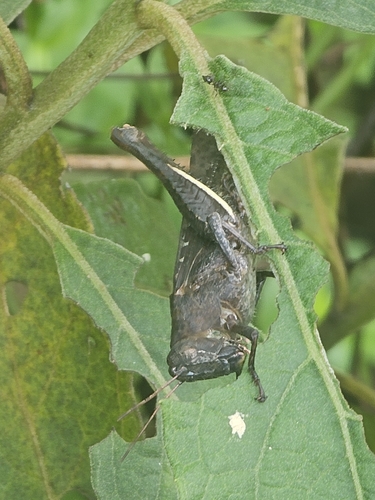
Human Botfly

Human Botfly

Dermatobia hominis

Daily sighting probability ~10% · With luck
at Manu National Park

In 3 days ~20% in a week ~40%

6 Verified sightings at Manu National Park From 2019 to 2026
6 In 1 park
December Best month
☀️ Diurnal When it's spotted

About the Human Botfly

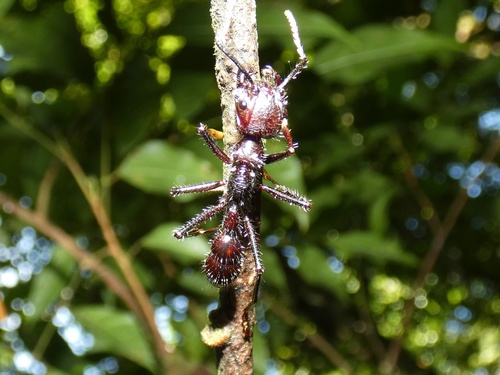
The human botfly, Dermatobia hominis (Greek δέρμα, skin + βίος, life, and Latin hominis, of a human), is a species of botfly whose larvae parasitise humans (in addition to a wide range of other animals, including other primates). It is also known as the torsalo or American warble fly, though the warble fly is in the genus Hypoderma and not Dermatobia, and is a parasite on cattle and deer instead of humans.

Dermatobia fly eggs have been shown to be vectored by over 40 species of mosquitoes and muscoid flies, as well as one species of tick (however, the source for this is somewhat old — 2007 — and slightly more recent literature seems to indicate they don't need a particular species of tick, or at least makes no mention of them only being able to use one as a vector). The female captures the mosquito and attaches its eggs to its body, then releases it. Either the eggs hatch while the mosquito is feeding and the larvae use the mosquito bite area as the entry point, or the eggs simply drop off the muscoid fly when it lands on the skin. The larvae develop inside the subcutaneous layers, and after about eight weeks, they drop out to pupate for at least a week, typically in the soil. The adults are large flies lacking mouthparts (as is true of other oestrid flies).

This species is native to the Americas from southeastern Mexico (beginning in central Veracruz) to northern Argentina, and Uruguay, though it is not abundant enough (nor harmful enough) to ever attain true pest status. Normally the greatest risk they pose to humans is increasing the chances of infection. Since the fly larvae can survive the entire eight-week development only if the wound does not become infected, patients rarely experience infections unless they kill the larva without removing it completely. Wikipedia →
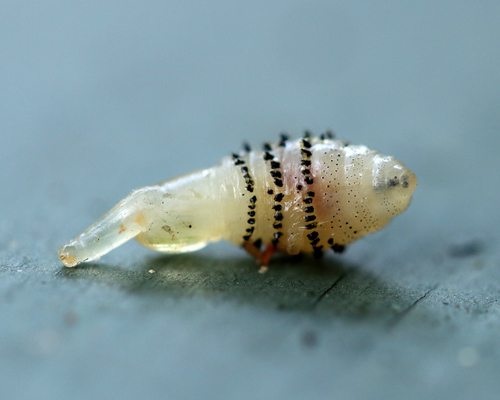
Global Distribution

Parks Where Found

# Park Country Daily sighting probability
1 Manu National Park 🇵🇪 Peru
~10%

More parks will be added in future updates.

Before you go

What are the chances of seeing a Human Botfly in Manu National Park?

With luck

About 10% of wildlife watchers report a Human Botfly sighting in Manu National Park on a given day, based on 6 verified sightings from GBIF citizen-science data from 2019 to 2026. It is the 246th most-seen of the 366 insects we can rate there. Over three days the chance rises to about 20%, and over a week to about 40%, if each day is a fresh chance.

When is the best time to see a Human Botfly in Manu National Park?

February–April, June and November–December

In those months about 10% of wildlife watchers report a Human Botfly in Manu National Park on a given day, against under 5% in January, May and July–October, the lowest months.

What time of day is best to see a Human Botfly?

Between 3 and 6 pm

Across all the parks we cover, that three-hour window holds the most Human Botfly sightings with a recorded time, and about 8 in 10 of them come between 6 am and 6 pm: it is a daytime animal.

Where else can you see a Human Botfly?

Only Manu National Park, in our data

Manu National Park is the only park on Wallace's Line with enough records to rate Human Botfly sightings: about 10% of wildlife watchers there report one on a given day.

Which relatives of the Human Botfly live in Manu National Park?

Same order: Diptera

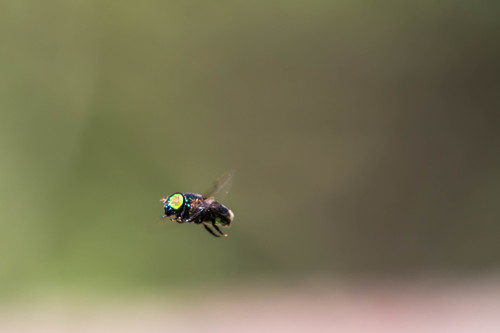
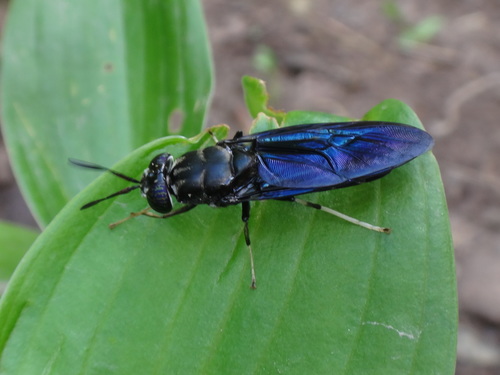
The closest relatives of the Human Botfly that you can see in Manu National Park (order Diptera, Flies) are Black Soldier Fly (about 10%) and Green Jewel Fly (about 10%), with each one's daily chance of a sighting.

Where does the Human Botfly sighting chance come from?

GBIF citizen-science records

It is estimated from how often the Human Botfly is recorded against all the insects logged in Manu National Park (6 verified sightings from 2019 to 2026), calibrated against known sighting rates. Figures are rounded to the nearest 10% because citizen-science data supports honest approximations, not decimals, and months with records from fewer than five people show "—". How it works.

← Back to Manu National Park