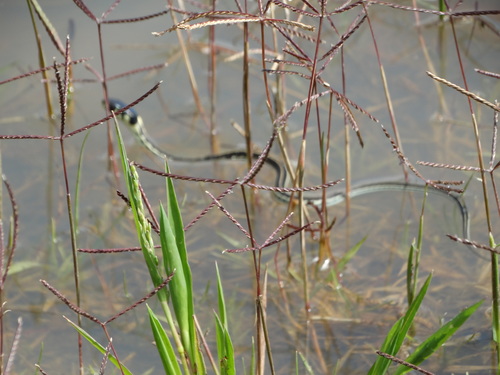
Dusky Rattlesnake

Dusky Rattlesnake

Crotalus triseriatus

Silhouette: Bill Bouton (source photo) & T. Michael Keesey (vectorization) · PhyloPic

LCLeast ConcernNTVUENCR Endemic
Daily sighting probability ~30% · Possible
at Reserva de la Biosfera Mariposa Monarca

In 3 days ~60% in a week ~90%

5 Verified sightings at Reserva de la Biosfera Mariposa Monarca From 2019 to 2026
5 In 1 park
April Best month
🌙 Nocturnal When it's spotted

About the Dusky Rattlesnake

Common names: Mexican dusky rattlesnake, dusky rattlesnake Crotalus triseriatus is a venomous pit viper species found in Mexico. Two subspecies are currently recognized, including the nominate subspecies described here. Adult male specimens of C. triseriatus commonly grow to a total length (including tail) greater than 60 cm (24 in), with females somewhat smaller. The maximum recorded total length is 68.3 cm (26.9 in).

The species C. triseriatus is found in Mexico, along the southern edge of the Mexican Plateau in the highlands of the Transverse Volcanic Cordillera, including the states of Jalisco, México, Michoacán, Morelos, Nayarit, Puebla, Tlaxcala, and Veracruz. The type locality given by Wagler in 1830 is "Mexico". A restriction to "Alvarez, San Luis Potosí, Mexico" was proposed by H.M. Smith and Taylor (1950).

Crotalus triseriatus occurs in pine-oak forest, boreal forest, coniferous forest and, bunchgrass grasslands. On Volcán Orizaba, it is found at very high altitudes. There, the snow line comes down to about 4,572 m (15,000 ft), while green plants can be found up to 4,573 m (15,000 ft): the species has been found within... Wikipedia →

Global Distribution

Parks Where Found

# Park Country Daily sighting probability
1 Reserva de la Biosfera Mariposa Monarca 🇲🇽 Mexico
~30%

More parks will be added in future updates.

Cities Where Found

# City Country Daily sighting probability
1 Toluca 🇲🇽 México
~20%
2 Mexico City 🇲🇽 México
<5%

Zoos & Centres Where Found

# Zoo / Centre Country
1 North Carolina Zoo 🇺🇸 United States In captivity
2 Saint Louis Zoo 🇺🇸 United States In captivity
3 San Antonio Zoo 🇺🇸 United States In captivity

Before you go

What are the chances of seeing a Dusky Rattlesnake in Reserva de la Biosfera Mariposa Monarca?

Possible

About 30% of wildlife watchers report a Dusky Rattlesnake sighting in Reserva de la Biosfera Mariposa Monarca on a given day, based on 5 verified sightings from GBIF citizen-science data from 2019 to 2026. It is the 5th most-seen of the 6 reptiles we can rate there. Over three days the chance rises to about 60%, and over a week to about 90%, if each day is a fresh chance.

When is the best time to see a Dusky Rattlesnake in Reserva de la Biosfera Mariposa Monarca?

April

In that month about 60% of wildlife watchers report a Dusky Rattlesnake in Reserva de la Biosfera Mariposa Monarca on a given day, against under 5% in May, August and December, the lowest months. That is one of Reserva de la Biosfera Mariposa Monarca's driest months, with about 40 mm of rain against 270 mm in July.

What time of day is best to see a Dusky Rattlesnake?

Between 6 and 9 pm

Across all the parks we cover, that three-hour window holds the most Dusky Rattlesnake sightings with a recorded time, and about 9 in 10 of them come between 6 pm and 6 am: it is mostly seen at night.

Where else can you see a Dusky Rattlesnake?

Only Reserva de la Biosfera Mariposa Monarca, in our data

Reserva de la Biosfera Mariposa Monarca is the only park on Wallace's Line with enough records to rate Dusky Rattlesnake sightings: about 30% of wildlife watchers there report one on a given day.

Where does the Dusky Rattlesnake sighting chance come from?

GBIF citizen-science records

It is estimated from how often the Dusky Rattlesnake is recorded against all the reptiles logged in Reserva de la Biosfera Mariposa Monarca (5 verified sightings from 2019 to 2026), calibrated against known sighting rates. Figures are rounded to the nearest 10% because citizen-science data supports honest approximations, not decimals, and months with records from fewer than five people show "—". How it works.

← Back to Reserva de la Biosfera Mariposa Monarca