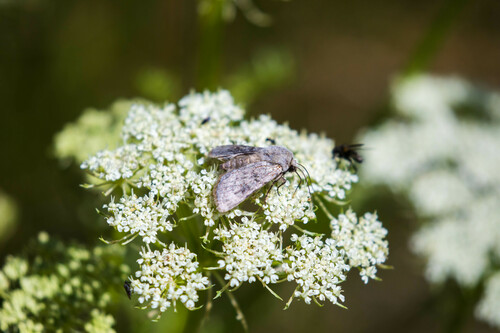
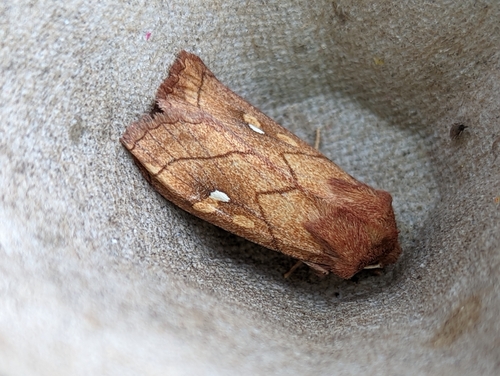
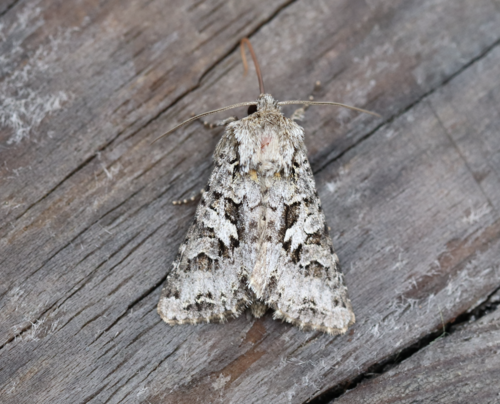
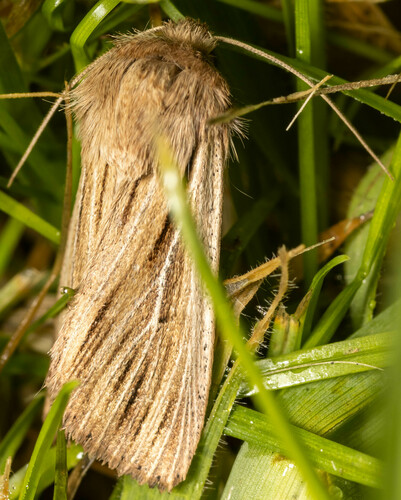
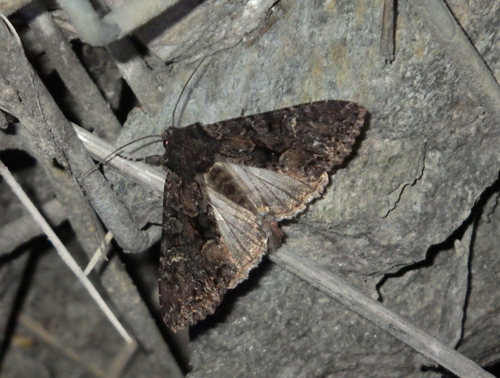
Light Feathered Rustic

Light Feathered Rustic

Agrotis cinerea

Daily sighting probability ~10% · With luck
at Mercantour National Park

In 3 days ~30% in a week ~50%

12 Verified sightings at Mercantour National Park From 2019 to 2026
12 In 1 park
June Best month
🌙 Nocturnal When it's spotted

About the Light Feathered Rustic

Agrotis cinerea, the light feathered rustic, is a moth of the family Noctuidae. The species was first described by Michael Denis and Ignaz Schiffermüller in 1775. It is found in southern and central Europe, northern Turkey, the Caucasus, western Turkmenia and Central Asia.

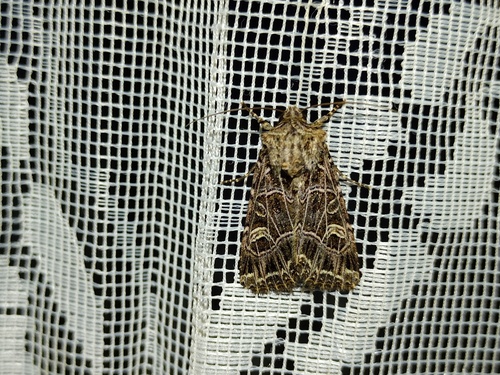
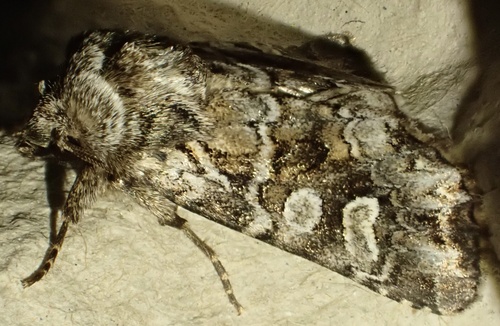
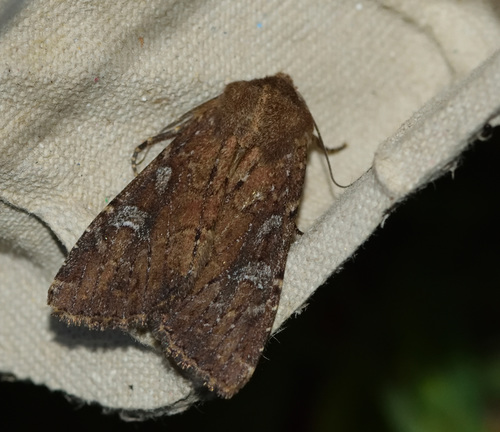
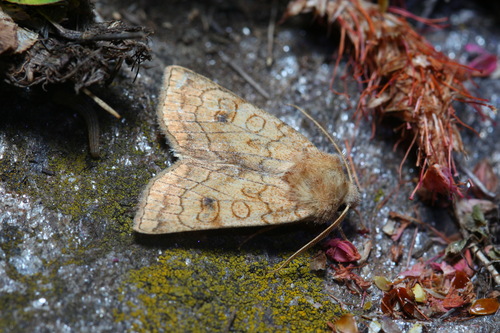
The wingspan is 33–40 mm. The forewing is ashy grey, with darker irroration (sprinkling): the claviform and orbicular stigmata are obsolete: reniform a small dark lunule; a distinct diffuse dark median shade: hindwing whitish, in the female grey-tinged. In the ab. alpigena Tur. the wings are paler and the markings indistinct, while in ab. livonica Teich they are darker. — ab. fusca Bsd., is larger than the typical form, and black brown; — subsp. tephrina Stgr. is smaller, with forewing narrower, and the markings much clearer; this form is confined to the south of England. Tutt, writing in 1892, evidently viewing only British specimens, did not notice that the British race was per se distinct from continental forms. The aberrations which he identified apply solely to the British race. These are ab. pallida Tutt, pale grey without median shade and all males; — ab. obscura Tutt nec Hbn. A unicolored dull brown form is generally (but not always) confined to females; and ab. virgata Tutt pale grey exhibits a distinct reddish median shade, and all males.

Adults are on the wing from May to June. They are active day and night and can be found near flowers, such as Berberis vulgaris. The yellowish-white egg has an indistinctly ribbed surface. Adult caterpillars are mostly earth-grey and are well-adapted to their surroundings. They have indistinct, dark lines and stripes on the dorsum and sides. Black point warts stand out. The reddish-brown pupa is characterized by a comb-like cremaster with two short thorns. The larvae feed on the roots and leaves of low-growing herbaceous plants and grasses, including Thymus praecox, Stellaria media, Medicago sativa, Rumex and Taraxacum. Wikipedia →
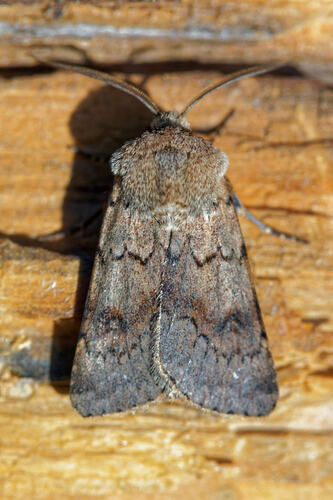
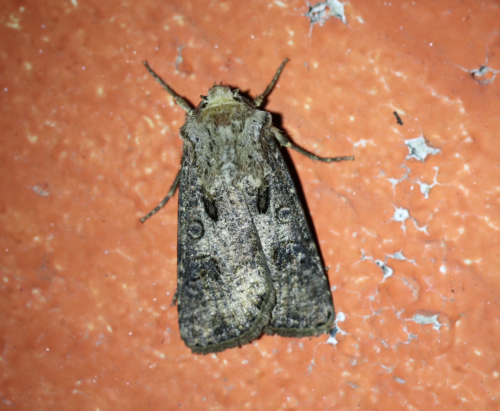
Global Distribution

Parks Where Found

# Park Country Daily sighting probability
1 Mercantour National Park 🇫🇷 France
~10%

More parks will be added in future updates.

Before you go

What are the chances of seeing a Light Feathered Rustic in Mercantour National Park?

With luck

About 10% of wildlife watchers report a Light Feathered Rustic sighting in Mercantour National Park on a given day, based on 12 verified sightings from GBIF citizen-science data from 2019 to 2026. It is the 272nd most-seen of the 412 insects we can rate there. Over three days the chance rises to about 30%, and over a week to about 50%, if each day is a fresh chance.

When is the best time to see a Light Feathered Rustic in Mercantour National Park?

June and July

In those months about 20% of wildlife watchers report a Light Feathered Rustic in Mercantour National Park on a given day, against under 5% in August to May, the lowest months.

What time of day is best to see a Light Feathered Rustic?

Between midnight and 3 am

Across all the parks we cover, that three-hour window holds the most Light Feathered Rustic sightings with a recorded time, and nearly all of them come between 6 pm and 6 am: it is mostly seen at night.

Where else can you see a Light Feathered Rustic?

Only Mercantour National Park, in our data

Mercantour National Park is the only park on Wallace's Line with enough records to rate Light Feathered Rustic sightings: about 10% of wildlife watchers there report one on a given day.

Where does the Light Feathered Rustic sighting chance come from?

GBIF citizen-science records

It is estimated from how often the Light Feathered Rustic is recorded against all the insects logged in Mercantour National Park (12 verified sightings from 2019 to 2026), calibrated against known sighting rates. Figures are rounded to the nearest 10% because citizen-science data supports honest approximations, not decimals, and months with records from fewer than five people show "—". How it works.

← Back to Mercantour National Park