
Eastern Beach Tiger Beetle

Eastern Beach Tiger Beetle

Habroscelimorpha dorsalis

Daily sighting probability ~10% · With luck
at Merritt Island National Wildlife Refuge

In 3 days ~20% in a week ~40%

15 Verified sightings at Merritt Island National Wildlife Refuge From 2019 to 2026
15 In 1 park
August Best month
☀️ Diurnal When it's spotted

About the Eastern Beach Tiger Beetle

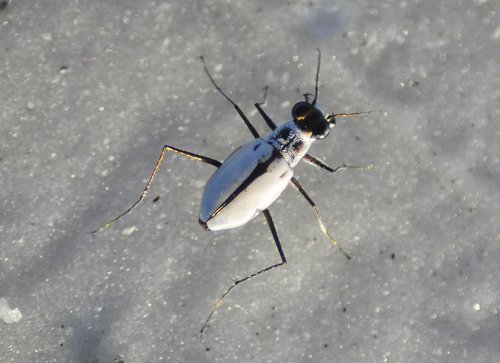
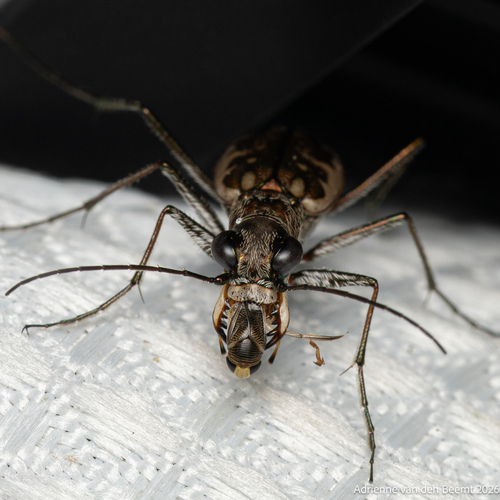
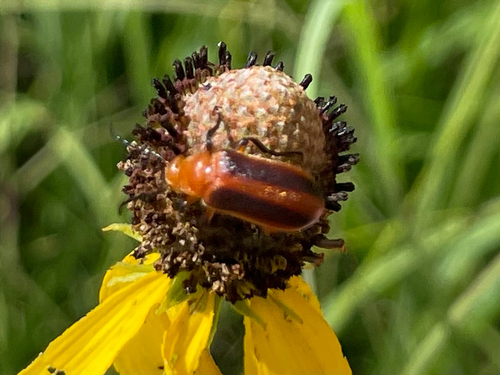
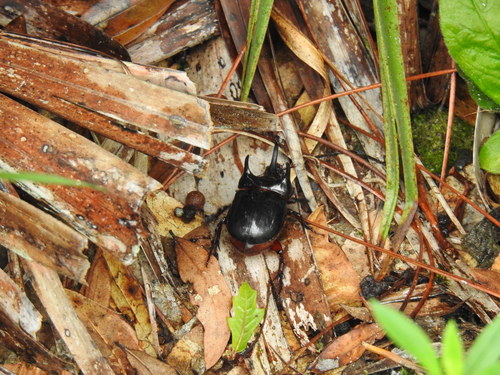
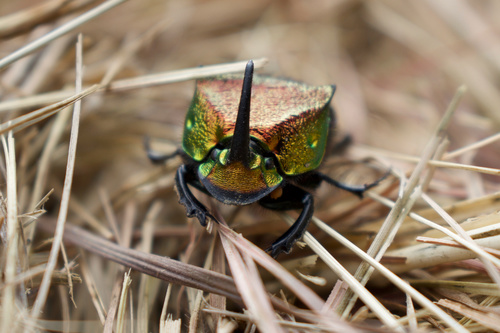
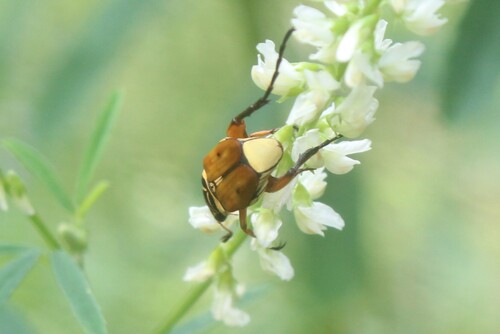
Habroscelimorpha dorsalis, commonly known as the eastern beach tiger beetle, is a species of flashy tiger beetle (Cicindelini tribe) in the family Cicindelidae. It is found in Central America and North America. The body length is 13 to 15 millimetres (0.51 to 0.59 in). The head and thorax are bronze-green, the legs are long and slender, and the elytra are white to light tan with narrow bronze markings. The head has long antennae, large compound eyes, and powerful jaws. There are white hairs on the pronotum and the sides of the abdomen. The pale coloration provides camouflage for the beetle on the light sand. The larvae are grub-like, with long, segmented bodies and large jaws similar to those of adults.

Habroscelimorpha dorsalis dorsalis, commonly known as the Northeastern beach tiger beetle, is the largest subspecies of Habroscelimorpha dorsalis. In 2012, the subgenus Habroscelimorpa was reclassified to the genus level Fitting to its name, the Northeastern beach tiger beetle is found along the north-eastern coast of the US and dwells in small sand burrows. The beetle is highly susceptible to abundant human activity and beach erosion, and in 1990, the Northeastern... Wikipedia →

Global Distribution

Parks Where Found

# Park Country Daily sighting probability
1 Merritt Island National Wildlife Refuge 🇺🇸 United States
~10%

More parks will be added in future updates.

Before you go

What are the chances of seeing an Eastern Beach Tiger Beetle in Merritt Island National Wildlife Refuge?

With luck

About 10% of wildlife watchers report an Eastern Beach Tiger Beetle sighting in Merritt Island National Wildlife Refuge on a given day, based on 15 verified sightings from GBIF citizen-science data from 2019 to 2026. It is the 90th most-seen of the 189 insects we can rate there. Over three days the chance rises to about 20%, and over a week to about 40%, if each day is a fresh chance.

When is the best time to see an Eastern Beach Tiger Beetle in Merritt Island National Wildlife Refuge?

August

In that month about 20% of wildlife watchers report an Eastern Beach Tiger Beetle in Merritt Island National Wildlife Refuge on a given day, against under 5% in October to March, the lowest months. That is one of Merritt Island National Wildlife Refuge's wettest months, with about 170 mm of rain against 50 mm in March.

What time of day is best to see an Eastern Beach Tiger Beetle?

Between 4 and 7 pm

Across all the parks we cover, that three-hour window holds the most Eastern Beach Tiger Beetle sightings with a recorded time, and about 7 in 10 of them come between 6 am and 6 pm: it is a daytime animal.

Where else can you see an Eastern Beach Tiger Beetle?

Only Merritt Island National Wildlife Refuge, in our data

Merritt Island National Wildlife Refuge is the only park on Wallace's Line with enough records to rate Eastern Beach Tiger Beetle sightings: about 10% of wildlife watchers there report one on a given day.

Which relatives of the Eastern Beach Tiger Beetle live in Merritt Island National Wildlife Refuge?

Same family: Carabidae

The closest relatives of the Eastern Beach Tiger Beetle that you can see in Merritt Island National Wildlife Refuge (family Carabidae, Ground Beetles) are S-Banded Tiger Beetle (about 10%) and Margined Tiger Beetle (about 10%), with each one's daily chance of a sighting.

Where does the Eastern Beach Tiger Beetle sighting chance come from?

GBIF citizen-science records

It is estimated from how often the Eastern Beach Tiger Beetle is recorded against all the insects logged in Merritt Island National Wildlife Refuge (15 verified sightings from 2019 to 2026), calibrated against known sighting rates. Figures are rounded to the nearest 10% because citizen-science data supports honest approximations, not decimals, and months with records from fewer than five people show "—". How it works.

← Back to Merritt Island National Wildlife Refuge