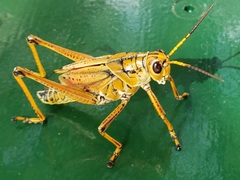
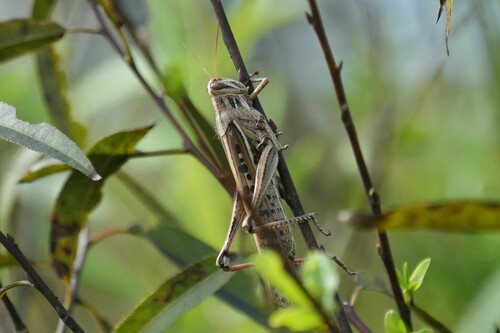
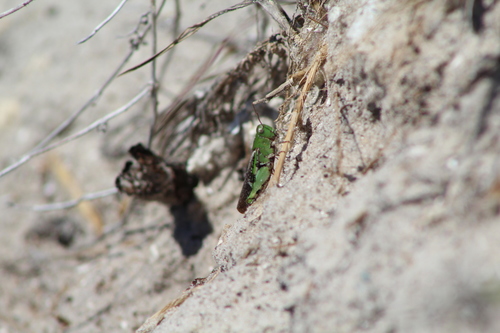
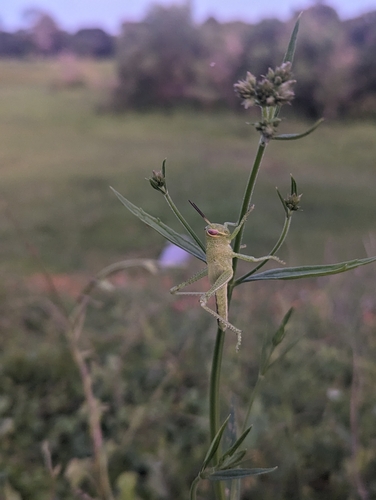
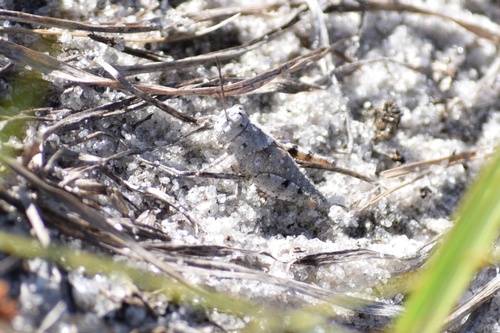
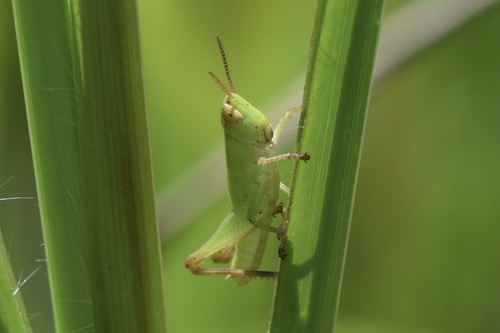
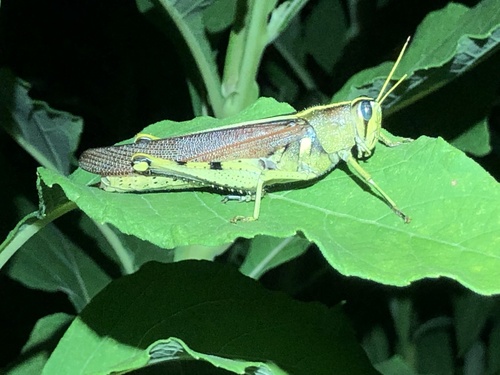
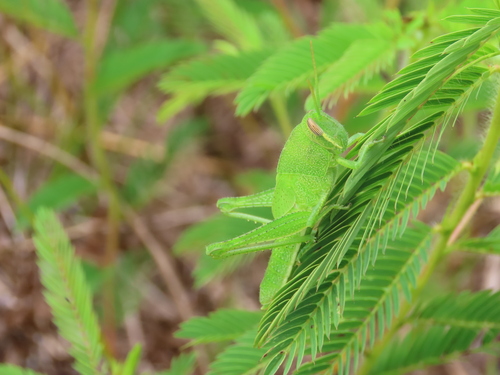
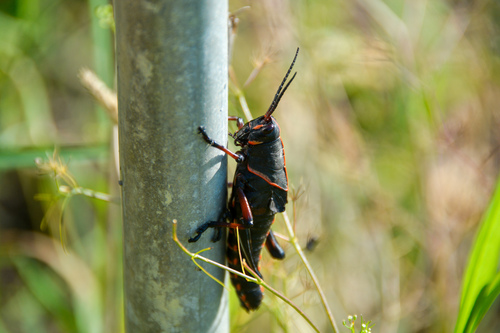
Eastern Lubber Grasshopper

Eastern Lubber Grasshopper

Romalea microptera

Endemic
Daily sighting probability ~20% · Possible
at Merritt Island National Wildlife Refuge

In 3 days ~50% in a week ~80%

85 Verified sightings at Merritt Island National Wildlife Refuge From 2019 to 2026
2,497 In all 3 parks
June Best month
☀️ Diurnal When it's spotted

About the Eastern Lubber Grasshopper

Romalea is a genus of grasshoppers native to the Southeastern and South-central United States. As traditionally defined, it contains a single species, Romalea microptera, known commonly as the Georgia thumper, eastern lubber grasshopper, Florida lubber, or Florida lubber grasshopper, although some recent authorities regard Taeniopoda as a junior synonym, in which case there are about a dozen Romalea species in the southern United States, Mexico and Central America.

R. microptera is one of the most distinctive grasshopper species within the Southeastern US, and is well known for its relatively large size and its unique coloration. Romalea is the type genus of the family Romaleidae and tribe Romaleini. It has been suggested that the valid name for Romalea microptera is Romalea guttata. However, microptera has been marked as a nomen protectum by the ICZN, making guttata a synonym.

As traditionally defined, Romalea only contains the species R. microptera, but recent authorities regard Taeniopoda as a synonym, in which case there are about a dozen Romalea species. Romalea and Taeniopoda have generally been separated based on color and pronotum, but more comprehensive morphological... Wikipedia →
Global Distribution

Parks Where Found

# Park Country Daily sighting probability
1 Big Cypress National Preserve 🇺🇸 United States
~80%
2 Everglades National Park 🇺🇸 United States
~70%
3 Merritt Island National Wildlife Refuge 🇺🇸 United States
~20%

Cities Where Found

# City Country Daily sighting probability
1 Orlando 🇺🇸 United States
~30%
2 Miami 🇺🇸 United States
~10%

Before you go

What are the chances of seeing an Eastern Lubber Grasshopper in Merritt Island National Wildlife Refuge?

Possible

About 20% of wildlife watchers report an Eastern Lubber Grasshopper sighting in Merritt Island National Wildlife Refuge on a given day, based on 85 verified sightings from GBIF citizen-science data from 2019 to 2026. It is the 13th most-seen of the 189 insects we can rate there. Over three days the chance rises to about 50%, and over a week to about 80%, if each day is a fresh chance.

When is the best time to see an Eastern Lubber Grasshopper in Merritt Island National Wildlife Refuge?

June

In that month about 40% of wildlife watchers report an Eastern Lubber Grasshopper in Merritt Island National Wildlife Refuge on a given day, against under 5% in January and February, the lowest months. That is one of Merritt Island National Wildlife Refuge's wettest months, with about 180 mm of rain against 50 mm in March.

What time of day is best to see an Eastern Lubber Grasshopper?

Between 10 am and 1 pm

Across all the parks we cover, that three-hour window holds the most Eastern Lubber Grasshopper sightings with a recorded time, and about 9 in 10 of them come between 6 am and 6 pm: it is a daytime animal.

Is Merritt Island National Wildlife Refuge the best place to see an Eastern Lubber Grasshopper?

3rd of 3

Of the 3 parks where we can rate Eastern Lubber Grasshopper sightings, Merritt Island National Wildlife Refuge ranks 3rd at about 20%. The best odds are in Big Cypress National Preserve (United States, about 80%) and Everglades National Park (United States, about 70%).

Which relatives of the Eastern Lubber Grasshopper live in Merritt Island National Wildlife Refuge?

Same order: Orthoptera

The closest relatives of the Eastern Lubber Grasshopper that you can see in Merritt Island National Wildlife Refuge (order Orthoptera, Grasshoppers, Crickets, and Katydids) are Cuban Bird Grasshopper (about 10%), Southern Green-Striped Grasshopper (about 10%) and American Bird Grasshopper (about 10%), with each one's daily chance of a sighting.

Where does the Eastern Lubber Grasshopper sighting chance come from?

GBIF citizen-science records

It is estimated from how often the Eastern Lubber Grasshopper is recorded against all the insects logged in Merritt Island National Wildlife Refuge (85 verified sightings from 2019 to 2026), calibrated against known sighting rates. Figures are rounded to the nearest 10% because citizen-science data supports honest approximations, not decimals, and months with records from fewer than five people show "—". How it works.

← Back to Merritt Island National Wildlife Refuge