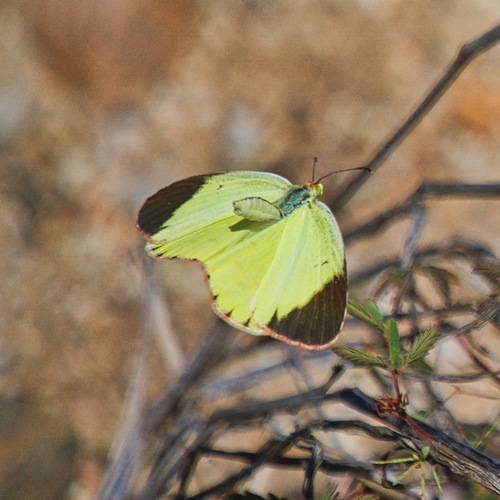
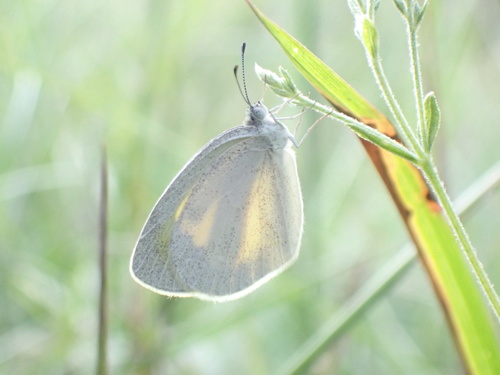
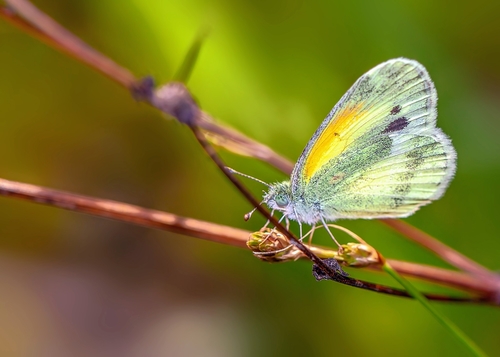
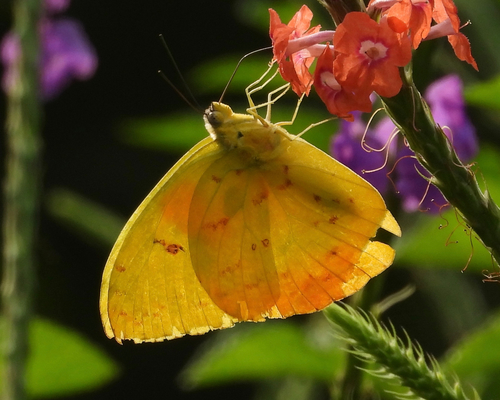
Great Southern White

Great Southern White

Ascia monuste

Daily sighting probability ~50% · Likely
at Merritt Island National Wildlife Refuge

In 3 days ~90% in a week >90%

498 Verified sightings at Merritt Island National Wildlife Refuge From 2019 to 2026
1,149 In all 31 parks
March Best month
☀️ Diurnal When it's spotted

About the Great Southern White

Ascia is a genus of butterflies in the family Pieridae. It is monotypic, being represented by the single species Ascia monuste, commonly known as the great southern white, In this species the sexes may differ with the female being either light or dark colored. It is found from the Atlantic and Gulf coasts of the United States, and south to Argentina. It is migratory along the south-eastern coast of the United States, with strays to Maryland, Kansas, and Colorado.

Larvae have distinct body segments within which there appears to be four to six subsegments. They are purplish-green with two longitudinal, greenish-yellow stripes on each side and the dorsal side. When full-grown, they are approximately one and a quarter inches long. The wingspan in adults is 63–86 mm (2.5–3.4 in). Adults are on wing all year round in southern Texas, peninsular Florida and along the Gulf Coast.

A. monuste is a migrating species that moves in one direction within its life span and does not return. It breeds in Florida but sometimes migrates along the coast up to 160 km (99 mi) to breed in more suitable areas. This species seeks out appropriate plant hosts for oviposition by detection of compounds... Wikipedia →

Global Distribution

Parks Where Found

# Park Country Daily sighting probability
1 Merritt Island National Wildlife Refuge 🇺🇸 United States
~50%
2 Jaragua National Park 🇩🇴 Dominican Republic
~40%
3 Bahía de Loreto National Park 🇲🇽 Mexico
~40%
4 Los Haitises National Park 🇩🇴 Dominican Republic
~30%
5 El Impenetrable National Park 🇦🇷 Argentina
~30%
6 Cabo Pulmo National Park 🇲🇽 Mexico
~30%
7 Caroni Swamp 🇹🇹 Trinidad and Tobago
~30%
8 Everglades National Park 🇺🇸 United States
~30%
9 Anavilhanas National Park 🇧🇷 Brazil
~30%
10 El Vizcaíno Biosphere Reserve 🇲🇽 Mexico
~20%
11 Lago de Yojoa 🇭🇳 Honduras
~20%
12 Ría Lagartos Biosphere Reserve 🇲🇽 Mexico
~20%
13 Machalilla National Park 🇪🇨 Ecuador
~20%
14 Serra dos Órgãos National Park 🇧🇷 Brazil
~10%
15 Big Cypress National Preserve 🇺🇸 United States
~10%
16 Iguazú National Park 🇦🇷 Argentina
~10%
17 Iguaçu National Park 🇧🇷 Brazil
~10%
18 Cerro Azul Meámbar National Park 🇭🇳 Honduras
~10%
19 Volcán Barú National Park 🇵🇦 Panama
~10%
20 Piedras Blancas National Park 🇨🇷 Costa Rica
~10%
21 Carara National Park 🇨🇷 Costa Rica
~10%
22 Gandoca-Manzanillo Wildlife Refuge 🇨🇷 Costa Rica
~10%
23 La Amistad International Park (Panama) 🇵🇦 Panama
~10%
24 Calakmul Biosphere Reserve 🇲🇽 Mexico
~10%
25 Padre Island National Seashore 🇺🇸 United States
~10%
26 Cañón del Sumidero National Park 🇲🇽 Mexico
~10%
27 Tijuca National Park 🇧🇷 Brazil
~10%
28 Saguaro National Park 🇺🇸 United States
~10%
29 Arenal Volcano National Park 🇨🇷 Costa Rica
~10%
30 Cumbres de Monterrey National Park 🇲🇽 Mexico
<5%
31 Monteverde Cloud Forest Reserve 🇨🇷 Costa Rica
<5%

Cities Where Found

# City Country Daily sighting probability
1 San José 🇨🇷 Costa Rica
~20%
2 Goiânia 🇧🇷 Brazil
~20%
3 Salvador 🇧🇷 Brazil
~20%
4 Recife 🇧🇷 Brazil
~20%
5 Santo Domingo 🇩🇴 Dominican Republic
~20%
6 Guatemala City 🇬🇹 Guatemala
~20%
7 Manaus 🇧🇷 Brazil
~20%
8 San Pedro Sula 🇭🇳 Honduras
~20%
9 Vitória 🇧🇷 Brazil
~20%
10 Tegucigalpa 🇭🇳 Honduras
~20%

Before you go

What are the chances of seeing a Great Southern White in Merritt Island National Wildlife Refuge?

Likely

About 50% of wildlife watchers report a Great Southern White sighting in Merritt Island National Wildlife Refuge on a given day, based on 498 verified sightings from GBIF citizen-science data from 2019 to 2026. It is the most-seen of the 189 insects we can rate there. Over three days the chance rises to about 90%, and over a week to over 90%, if each day is a fresh chance.

When is the best time to see a Great Southern White in Merritt Island National Wildlife Refuge?

February and March

In those months about 60% of wildlife watchers report a Great Southern White in Merritt Island National Wildlife Refuge on a given day, against about 20% in July, the lowest month. Those are among Merritt Island National Wildlife Refuge's driest months, with about 60 mm of rain a month against 210 mm in September.

What time of day is best to see a Great Southern White?

Between 10 am and 1 pm

Across all the parks we cover, that three-hour window holds the most Great Southern White sightings with a recorded time, and about 9 in 10 of them come between 6 am and 6 pm: it is a daytime animal.

Is Merritt Island National Wildlife Refuge the best place to see a Great Southern White?

Yes

Of the 31 parks where we can rate Great Southern White sightings, Merritt Island National Wildlife Refuge has the highest daily chance: about 50%. Next come Jaragua National Park (Dominican Republic, about 40%) and Bahía de Loreto National Park (Mexico, about 40%). All parks ranked.

Which relatives of the Great Southern White live in Merritt Island National Wildlife Refuge?

Same family: Pieridae

The closest relatives of the Great Southern White that you can see in Merritt Island National Wildlife Refuge (family Pieridae, Whites, Yellows, and Sulphurs) are Cloudless Sulphur (about 20%), Little Yellow (about 10%) and Barred Yellow (about 10%), with each one's daily chance of a sighting.

Where does the Great Southern White sighting chance come from?

GBIF citizen-science records

It is estimated from how often the Great Southern White is recorded against all the insects logged in Merritt Island National Wildlife Refuge (498 verified sightings from 2019 to 2026), calibrated against known sighting rates. Figures are rounded to the nearest 10% because citizen-science data supports honest approximations, not decimals, and months with records from fewer than five people show "—". How it works.

← Back to Merritt Island National Wildlife Refuge