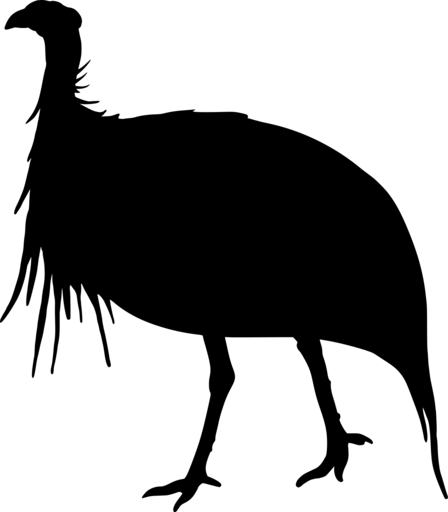
Vulturine Guineafowl

Vulturine Guineafowl

Acryllium vulturinum

Silhouette: James Klarevas · PhyloPic

LCLeast ConcernNTVUENCR
Daily sighting probability ~10% · With luck
at Meru National Park

In 3 days ~40% in a week ~70%

20 Verified sightings at Meru National Park From 2019 to 2026
1,506 In all 5 parks
December Best month
☀️ Diurnal When it's spotted

About the Vulturine Guineafowl

The vulturine guinea fowl (Acryllium vulturinum) is the largest extant species of guinea fowl. Systematically, it is only distantly related to other guinea fowl genera. Its closest living relative, the white breasted guinea fowl, Agelastes meleagrides inhabit primary forests in Central Africa. It is a member of the bird family Numididae, and is the only member of the genus Acryllium. It is a resident breeder in northeast Africa, from southern Ethiopia and Somalia through Kenya and just into northern Tanzania.

The vulturine guinea fowl is a large (61–71 centimetres (24–28 in)) bird with a round body and small head. Its average weight is between 1kg to 1.6kg and it has longer wings, neck, legs and tail than other guinea fowl. The adult has a bare blue face and black neck, and although all other guinea fowl have unfeathered heads, this species looks particularly like a vulture because of the long bare neck and head.

The slim neck projects from a cape of long, glossy, blue and white hackles. The breast is cobalt blue, and the rest of the body plumage is black, finely spangled with white. The wings are short and rounded, and the tail is longer than others in the family... Wikipedia →

Sounds

Call0:38

Kenya · 2024

© Peter Boesman · XC947898 · CC BY-NC-ND 4.0

Call0:13

Kenya · 2023

© Brendan Sloan · XC794887 · CC BY-NC-ND 4.0

Call0:57

Kenya · 2022

© Alexander Schlatmann · XC748405 · CC BY-NC-SA 4.0

Global Distribution

Parks Where Found

# Park Country Daily sighting probability
1 Samburu National Reserve 🇰🇪 Kenya
~60%
2 Tsavo West National Park 🇰🇪 Kenya
~30%
3 Tsavo East National Park 🇰🇪 Kenya
~30%
4 Mkomazi National Park 🇹🇿 Tanzania
~20%
5 Meru National Park 🇰🇪 Kenya
~10%

Zoos & Centres Where Found

# Zoo / Centre Country
1 Prague Zoo 🇨🇿 Czechia In captivity
2 Antwerp Zoo 🇧🇪 Belgium In captivity
3 Barcelona Zoo 🇪🇸 Spain In captivity
4 Zlín-Lešná Zoo 🇨🇿 Czechia In captivity
5 Paris Zoological Park 🇫🇷 France In captivity
6 Réserve africaine de Sigean 🇫🇷 France In captivity
7 Walsrode World Bird Park 🇩🇪 Germany In captivity
8 Parc des oiseaux 🇫🇷 France In captivity
9 Zoo de Doué 🇫🇷 France In captivity
10 Abilene Zoological Gardens 🇺🇸 United States In captivity
11 Zoobotánico Jerez 🇪🇸 Spain In captivity
12 Zoo Miami 🇺🇸 United States In captivity
13 Al Ain Zoo 🇦🇪 United Arab Emirates In captivity
14 Safari West 🇺🇸 United States In captivity
15 Ramat Gan Safari 🇮🇱 Israel In captivity
16 Wow Safari Thoiry 🇫🇷 France In captivity
17 Selwo Aventura 🇪🇸 Spain In captivity
18 Warsaw Zoo 🇵🇱 Poland In captivity
19 Kyiv Zoo 🇺🇦 Ukraine In captivity
20 Woodland Park Zoo 🇺🇸 United States In captivity
21 Wrocław Zoological Garden 🇵🇱 Poland In captivity
22 Edinburgh Zoo 🇬🇧 United Kingdom In captivity
23 Temaikén 🇦🇷 Argentina In captivity
24 Fort Worth Zoo 🇺🇸 United States In captivity
25 Indianapolis Zoo 🇺🇸 United States In captivity
26 GaiaZOO 🇳🇱 Netherlands In captivity
27 Gembira Loka Zoo 🇮🇩 Indonesia In captivity
28 Cameron Park Zoo 🇺🇸 United States In captivity
29 Cologne Zoological Garden 🇩🇪 Germany In captivity
30 Philadelphia Zoo 🇺🇸 United States In captivity
31 Budapest Zoo & Botanical Garden 🇭🇺 Hungary In captivity
32 Krakow Zoo 🇵🇱 Poland In captivity
33 Bird Paradise 🇸🇬 Singapore In captivity
34 Green World Ecological Farm 🇹🇼 Taiwan In captivity
35 Riverbanks Zoo 🇺🇸 United States In captivity
36 Aquarama Barcelona 🇪🇸 Spain In captivity
37 Rainforest Wild Asia 🇸🇬 Singapore In captivity
38 Seville Zoo 🇪🇸 Spain In captivity
39 Valencia Bioparc 🇪🇸 Spain In captivity
40 Biotropica 🇫🇷 France In captivity
41 Reserva Zoológica Oasys MiniHollywood 🇪🇸 Spain In captivity
42 Vogelpark Avifauna 🇳🇱 Netherlands In captivity
43 Paphos Zoo 🇨🇾 Cyprus In captivity
44 Monkeyland 🇿🇦 South Africa In captivity
45 The Abilene Zoo 🇺🇸 United States In captivity
46 Giraffe House 🇿🇦 South Africa In captivity
47 Discovery Cove 🇺🇸 United States In captivity
48 Inokashira Park Zoo 🇯🇵 Japan In captivity
49 Exmoor Zoo 🇬🇧 United Kingdom In captivity
50 African Dawn Bird and Wildlife Sanctuary 🇿🇦 South Africa In captivity

Before you go

What are the chances of seeing a Vulturine Guineafowl in Meru National Park?

With luck

About 10% of wildlife watchers report a Vulturine Guineafowl sighting in Meru National Park on a given day, based on 20 verified sightings from GBIF citizen-science data from 2019 to 2026. It is the 140th most-seen of the 243 birds we can rate there. Over three days the chance rises to about 40%, and over a week to about 70%, if each day is a fresh chance.

When is the best time to see a Vulturine Guineafowl in Meru National Park?

December

In that month about 30% of wildlife watchers report a Vulturine Guineafowl in Meru National Park on a given day, against about 10% in February–April, September and November, the lowest months. May and July–August have too few records to rate.

What time of day is best to see a Vulturine Guineafowl?

Between 5 and 8 am

Across all the parks we cover, that three-hour window holds the most Vulturine Guineafowl sightings with a recorded time, and about 8 in 10 of them come between 6 am and 6 pm: it is a daytime animal.

Which relatives of the Vulturine Guineafowl live in Meru National Park?

Same family: Numididae

The closest relatives of the Vulturine Guineafowl that you can see in Meru National Park (family Numididae, Guineafowl) are Helmeted Guineafowl (about 80%) and Crested Guineafowl (about 20%), with each one's daily chance of a sighting.

Where does the Vulturine Guineafowl sighting chance come from?

GBIF citizen-science records

It is estimated from how often the Vulturine Guineafowl is recorded against all the birds logged in Meru National Park (20 verified sightings from 2019 to 2026), calibrated against known sighting rates. Figures are rounded to the nearest 10% because citizen-science data supports honest approximations, not decimals, and months with records from fewer than five people show "—". How it works.

← Back to Meru National Park