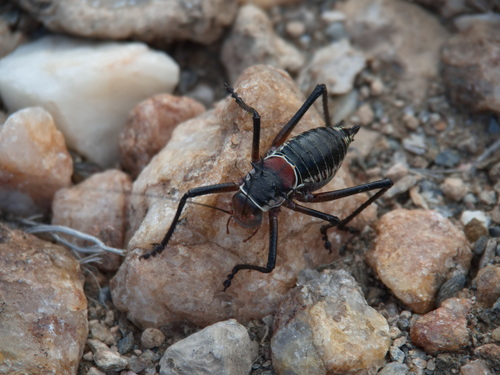
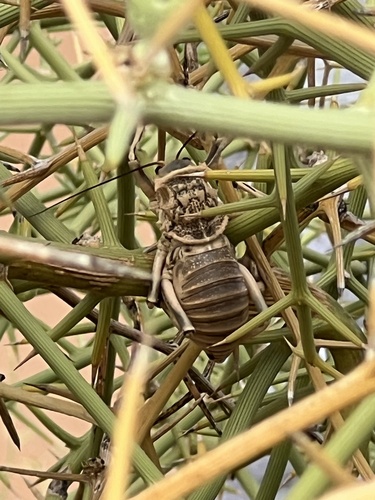
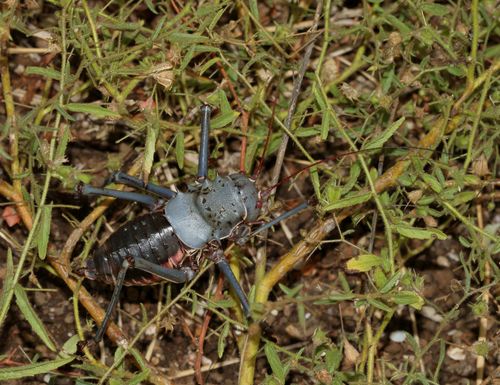
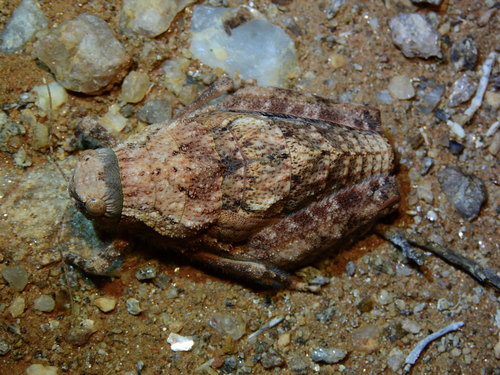
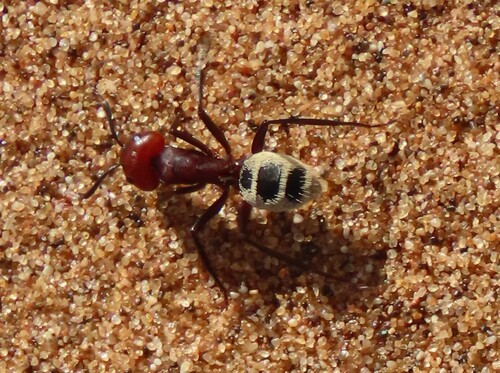
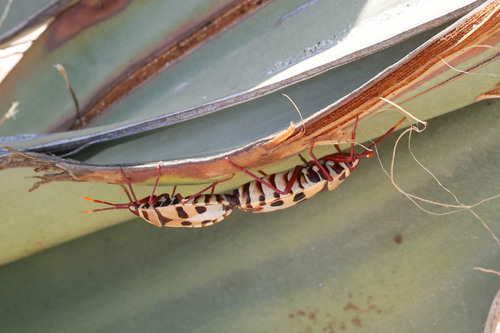
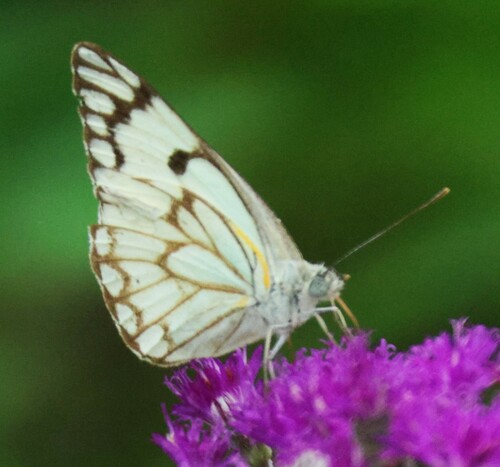
Desert Locust
Daily sighting probability ~20% · Possible
at Namib-Naukluft National Park

In 3 days ~60% in a week ~90%

49 Verified sightings at Namib-Naukluft National Park From 2019 to 2026
61 In all 2 parks
October Best month
☀️ Diurnal When it's spotted

About the Desert Locust

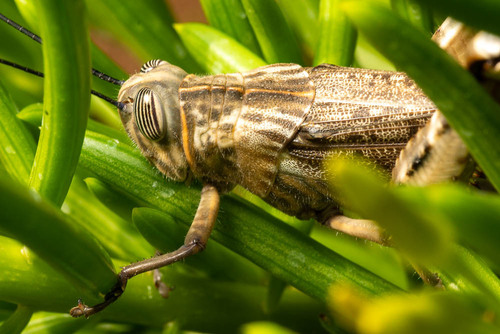
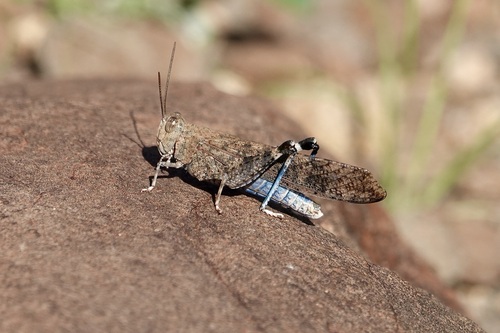
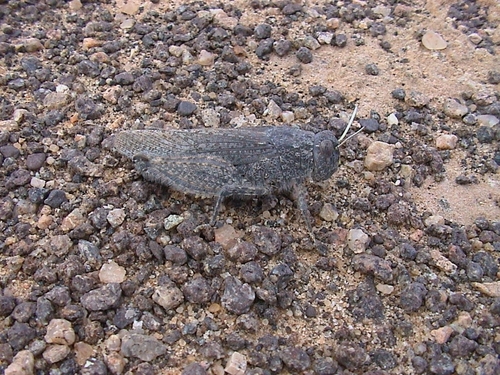
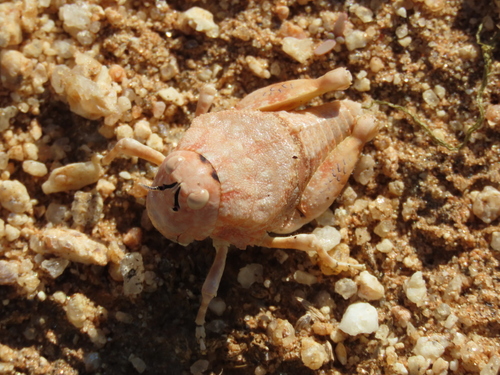
The desert locust (Schistocerca gregaria) is a species of locust in the grasshopper family, Acrididae. A periodically swarming, short-horned bird grasshopper, it is found primarily in the deserts and dry areas of northern and eastern Africa, Arabia, and southwest Asia. During population surge years, its range may extend north into parts of Southern Europe, Eastern Africa, and Northern India. The desert locust shows periodic changes in its body form and can change in response to environmental conditions over several generations. It begins life as a solitary, shorter-winged, highly fecund (producing enormous amounts of offspring), non-migratory form, to a gregarious, long-winged, and migratory phase in which it may travel long distances into new areas. Due to this traveling, it may join groups, thus, forming locust plagues. This involves invading new areas where it may consume all vegetation including valuable crops. Although at other times, it may live unnoticed in small numbers in various areas.

During plague years, when the desert locust does group with others, it can cause widespread damage to crops as it is highly mobile and feeds on large quantities of any kind of green vegetation. A typical swarm can be made up of 150 million locusts per square kilometre (390,000,000 per square mile) and fly in the direction of the prevailing wind, up to 150 km (93 mi) in one day. Even a very small, 1-square-kilometre (0.39 sq mi) locust swarm can eat the same amount of food in a day as about 35,000 people.

As an international transboundary pest that threatens agricultural production and livelihoods in many countries in Africa, the Near East, and southwest Asia, its population has been routinely monitored through a collaborative effort between countries and the United Nations Food and Agriculture Organization (FAO) Desert Locust Information Service (DLIS), which provides global and national assessments, forecasts, and early warning to affected countries and the international community. The desert locust's migratory nature and capacity for rapid population growth present major challenges for control, particularly in remote semiarid areas, which characterize much of its range.

Locusts differ from other grasshoppers in their ability to change from a solitary living form into gregarious, highly mobile, adult swarms and hopper bands, as their numbers and densities increase. Wikipedia →

Global Distribution

Parks Where Found

# Park Country Daily sighting probability
1 Namib-Naukluft National Park 🇳🇦 Namibia
~20%
2 Table Mountain National Park 🇿🇦 South Africa
<5%

Cities Where Found

# City Country Daily sighting probability
1 Kuwait City 🇰🇼 Kuwait
~10%
2 Cape Town 🇿🇦 South Africa
<5%
3 Vienna 🇦🇹 Austria
<5%

Before you go

What are the chances of seeing a Desert Locust in Namib-Naukluft National Park?

Possible

About 20% of wildlife watchers report a Desert Locust sighting in Namib-Naukluft National Park on a given day, based on 49 verified sightings from GBIF citizen-science data from 2019 to 2026. It is the 4th most-seen of the 60 insects we can rate there. Over three days the chance rises to about 60%, and over a week to about 90%, if each day is a fresh chance.

When is the best time to see a Desert Locust in Namib-Naukluft National Park?

October

In that month about 40% of wildlife watchers report a Desert Locust in Namib-Naukluft National Park on a given day, against under 5% in September, the lowest month.

What time of day is best to see a Desert Locust?

Between 9 am and noon

Across all the parks we cover, that three-hour window holds the most Desert Locust sightings with a recorded time, and about 9 in 10 of them come between 6 am and 6 pm: it is a daytime animal.

Is Namib-Naukluft National Park the best place to see a Desert Locust?

Yes

Of the 2 parks where we can rate Desert Locust sightings, Namib-Naukluft National Park has the highest daily chance: about 20%. Next come Table Mountain National Park (South Africa, under 5%).

Which relatives of the Desert Locust live in Namib-Naukluft National Park?

Same family: Acrididae

The closest relatives of the Desert Locust that you can see in Namib-Naukluft National Park (family Acrididae, Short-horned Grasshoppers) are Tree Locust (about 30%), Scintharista magnifica (about 10%) and Pink Agile Grasshopper (about 10%), with each one's daily chance of a sighting.

Where does the Desert Locust sighting chance come from?

GBIF citizen-science records

It is estimated from how often the Desert Locust is recorded against all the insects logged in Namib-Naukluft National Park (49 verified sightings from 2019 to 2026), calibrated against known sighting rates. Figures are rounded to the nearest 10% because citizen-science data supports honest approximations, not decimals, and months with records from fewer than five people show "—". How it works.

← Back to Namib-Naukluft National Park