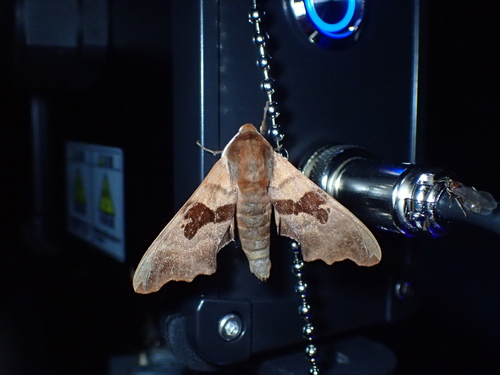
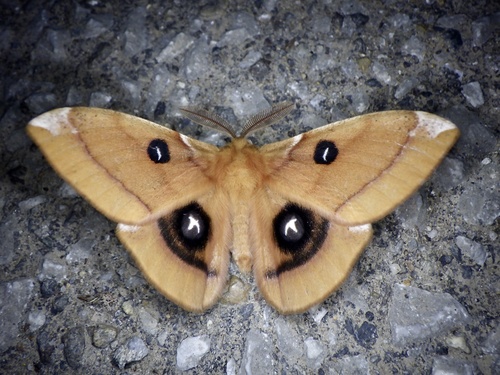
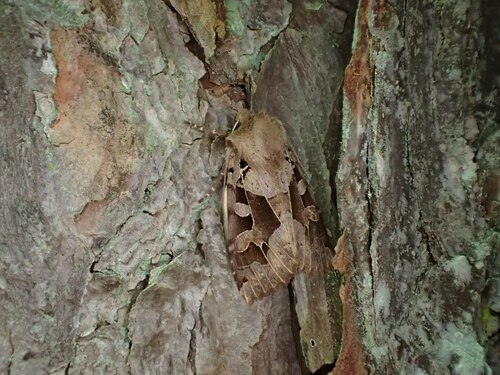
Phyllosphingia dissimilis

Phyllosphingia dissimilis

Phyllosphingia dissimilis

Daily sighting probability ~20% · Possible
at Nikko National Park

In 3 days ~40% in a week ~70%

5 Verified sightings at Nikko National Park From 2019 to 2026
11 In all 2 parks
June Best month
☀️🌙 Day & Night When it's spotted

About the Phyllosphingia dissimilis

Phyllosphingia is a monotypic moth genus in the family Sphingidae erected by Charles Swinhoe in 1897. Its only species, Phyllosphingia dissimilis, the buff-leaf hawkmoth, was described by Otto Vasilievich Bremer in 1861.

It is known from the south-eastern Russian Far East, eastern and central China, Taiwan, the Korean Peninsula and Japan. There is also a record from Luzon in the Philippines. Subspecies P. d. perundulans is found from Nepal, east through north-eastern India, Myanmar and northern Thailand to southwestern China. The habitat consists of open parklands and forest edges.

The wingspan is 93–130 mm. There is one generation per year in northern China, with adults on wing from May to July. Farther south, there are two generations. Adults have been recorded from mid-May to mid-August in Korea.

The larvae have been recorded feeding on Carya cathayensis, Juglans mandschurica and Juglans regia in China, Juglans mandschurica in Primorskiy Kray and Prunus serrulata var. spontanea in Korea. Phyllosphingia dissimilis dissimilis (south-eastern Russian Far East, eastern and central China, Taiwan, the Korean Peninsula and... Wikipedia →
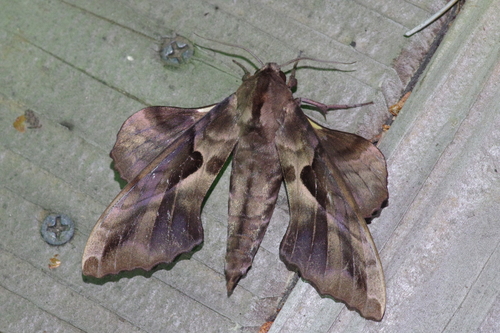
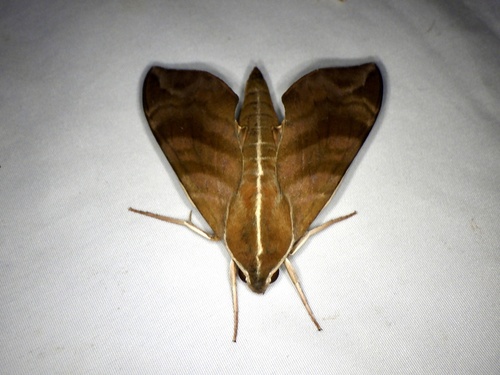
Global Distribution

Parks Where Found

# Park Country Daily sighting probability
1 Nikko National Park 🇯🇵 Japan
~20%
2 Taroko National Park 🇹🇼 Taiwan
~10%

Before you go

What are the chances of seeing a Phyllosphingia dissimilis in Nikko National Park?

Possible

About 20% of wildlife watchers report a Phyllosphingia dissimilis sighting in Nikko National Park on a given day, based on 5 verified sightings from GBIF citizen-science data from 2019 to 2026. It is the 53rd most-seen of the 86 insects we can rate there. Over three days the chance rises to about 40%, and over a week to about 70%, if each day is a fresh chance.

When is the best time to see a Phyllosphingia dissimilis in Nikko National Park?

June

In that month about 40% of wildlife watchers report a Phyllosphingia dissimilis in Nikko National Park on a given day, against under 5% in February–April and July–December, the lowest months.

What time of day is best to see a Phyllosphingia dissimilis?

Between 8 and 11 pm

Across all the parks we cover, that three-hour window holds the most Phyllosphingia dissimilis sightings with a recorded time, and about half of them come between 6 pm and 6 am: it is seen both by day and at night.

Is Nikko National Park the best place to see a Phyllosphingia dissimilis?

Yes

Of the 2 parks where we can rate Phyllosphingia dissimilis sightings, Nikko National Park has the highest daily chance: about 20%. Next come Taroko National Park (Taiwan, about 10%).

Which relatives of the Phyllosphingia dissimilis live in Nikko National Park?

Same family: Sphingidae

The closest relatives of the Phyllosphingia dissimilis that you can see in Nikko National Park (family Sphingidae, Sphinx Moths) are Ampelophaga rubiginosa (about 20%) and Mimas christophi (about 20%), with each one's daily chance of a sighting.

Where does the Phyllosphingia dissimilis sighting chance come from?

GBIF citizen-science records

It is estimated from how often the Phyllosphingia dissimilis is recorded against all the insects logged in Nikko National Park (5 verified sightings from 2019 to 2026), calibrated against known sighting rates. Figures are rounded to the nearest 10% because citizen-science data supports honest approximations, not decimals, and months with records from fewer than five people show "—". How it works.

← Back to Nikko National Park