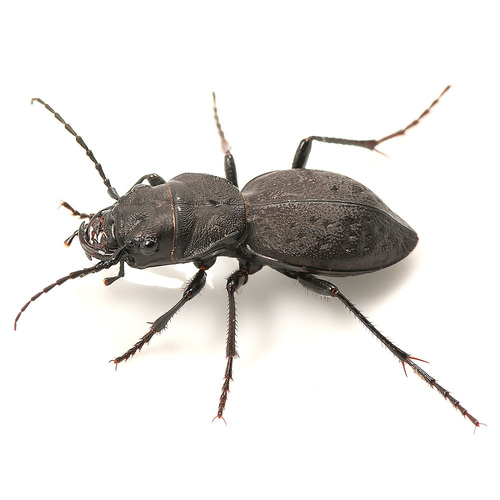
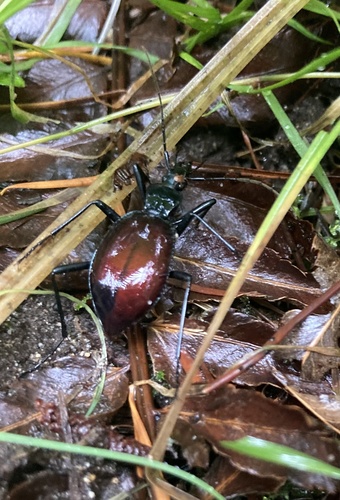
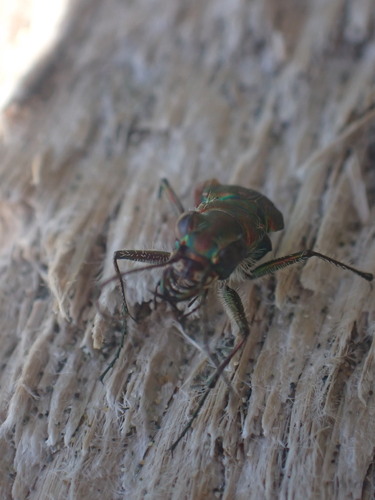
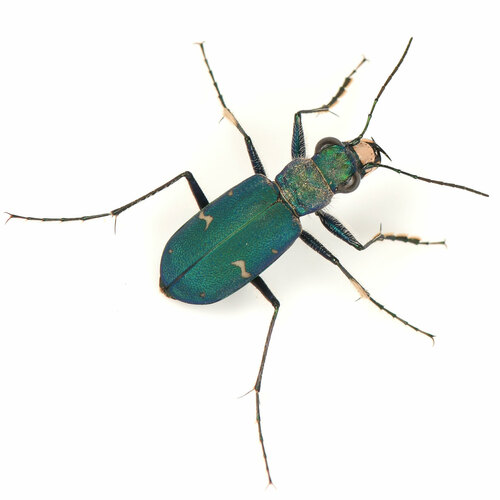
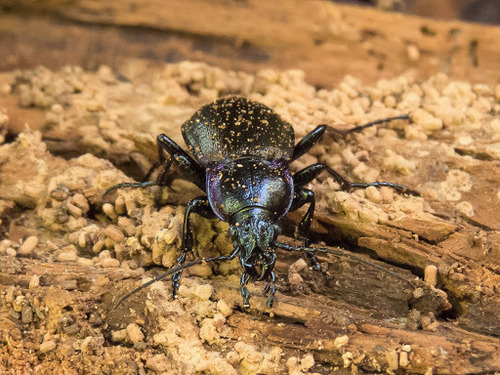
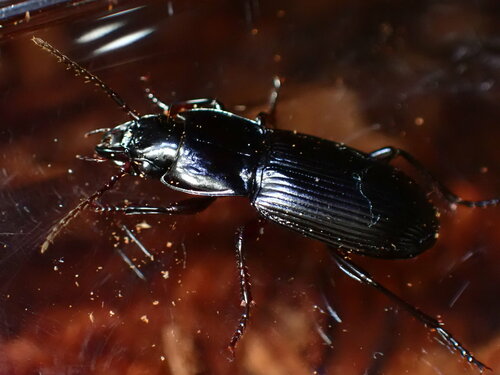
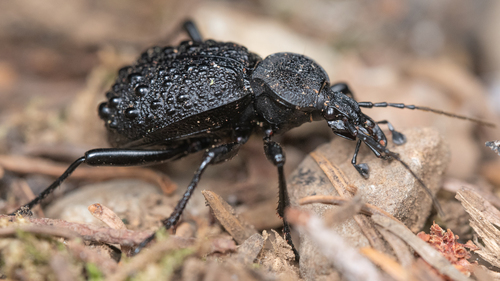
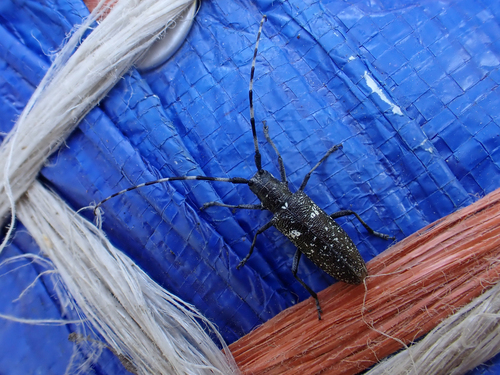
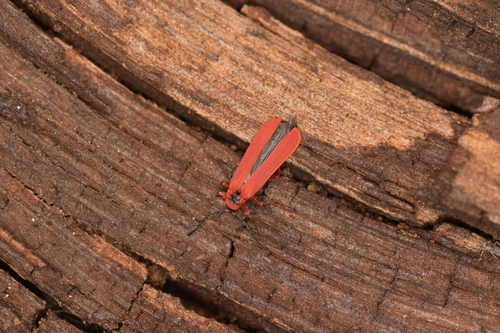


Greater Night-Stalking Tiger Beetle

Greater Night-Stalking Tiger Beetle

Omus dejeanii

Daily sighting probability <5% · Rare
at Olympic National Park

In 3 days ~10% in a week ~30%

11 Verified sightings at Olympic National Park From 2019 to 2026
11 In 1 park
June Best month
☀️ Diurnal When it's spotted

About the Greater Night-Stalking Tiger Beetle

Omus dejeani is a species of flightless tiger beetle (Cicindelidae) that is found from British Columbia almost to northern California in dense, coastal forests. It can be found quite commonly in suitable habitats in the spring. It is most often collected with pitfall traps, but can be found walking along trails at night and on cloudy days during the right time.

Night-stalking tiger beetles (Cicindelinae: Omus) are members of the Carabid sub-family to Cicindelinae, the tiger beetles. The genus Omus is placed within the tribe Omini, and is considered the most primitive of the tiger beetles. Omus is placed in Omini with the North American genera Amblycheila and the African Platychile.The genus Omus currently contains five recognized species, Omus dejeani (Greater night-stalking tiger beetle) being the largest species of the genus, between 15 and 20 mm.

Populations of Omus are a common occurring species among terrestrial arthropods of old growth forests specifically duff habitats of the West coastal portions of North America. Field studies report two recognized species of Omus were extant in forested areas of Powell Butte Nature Park, Portland, Oregon, USA... Wikipedia →

Global Distribution

Parks Where Found

# Park Country Daily sighting probability
1 Olympic National Park 🇺🇸 United States
<5%

More parks will be added in future updates.

Cities Where Found

# City Country Daily sighting probability
1 Portland 🇺🇸 United States
<5%
2 Seattle 🇺🇸 United States
<5%
3 Vancouver 🇨🇦 Canada
<5%

Before you go

What are the chances of seeing a Greater Night-Stalking Tiger Beetle in Olympic National Park?

Rare

Under 5% of wildlife watchers report a Greater Night-Stalking Tiger Beetle sighting in Olympic National Park on a given day, based on 11 verified sightings from GBIF citizen-science data from 2019 to 2026. It is the 113th most-seen of the 207 insects we can rate there. Over three days the chance rises to about 10%, and over a week to about 30%, if each day is a fresh chance.

When is the best time to see a Greater Night-Stalking Tiger Beetle in Olympic National Park?

June and July

In those months about 10% of wildlife watchers report a Greater Night-Stalking Tiger Beetle in Olympic National Park on a given day, against under 5% in August to May, the lowest months. Those are among Olympic National Park's driest months, with about 60 mm of rain a month against 370 mm in November.

What time of day is best to see a Greater Night-Stalking Tiger Beetle?

Between noon and 3 pm

Across all the parks we cover, that three-hour window holds the most Greater Night-Stalking Tiger Beetle sightings with a recorded time, and nearly all of them come between 6 am and 6 pm: it is a daytime animal.

Where else can you see a Greater Night-Stalking Tiger Beetle?

Only Olympic National Park, in our data

Olympic National Park is the only park on Wallace's Line with enough records to rate Greater Night-Stalking Tiger Beetle sightings: under 5% of wildlife watchers there report one on a given day.

Where does the Greater Night-Stalking Tiger Beetle sighting chance come from?

GBIF citizen-science records

It is estimated from how often the Greater Night-Stalking Tiger Beetle is recorded against all the insects logged in Olympic National Park (11 verified sightings from 2019 to 2026), calibrated against known sighting rates. Figures are rounded to the nearest 10% because citizen-science data supports honest approximations, not decimals, and months with records from fewer than five people show "—". How it works.

← Back to Olympic National Park