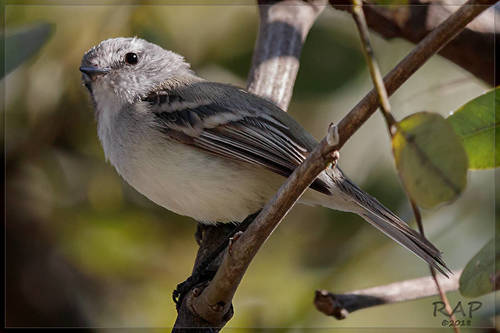
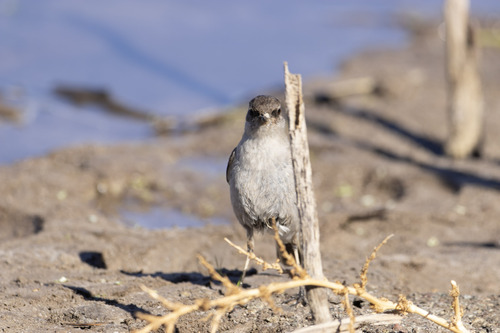
Rusty-backed Monjita

Rusty-backed Monjita

Xolmis rubetra

Silhouette: Edwin Price · PhyloPic

LCLeast ConcernNTVUENCR
Daily sighting probability ~10% · With luck
at Península Valdés

In 3 days ~20% in a week ~50%

36 Verified sightings at Península Valdés From 2019 to 2026
36 In 1 park
January Best month
☀️ Diurnal When it's spotted

About the Rusty-backed Monjita

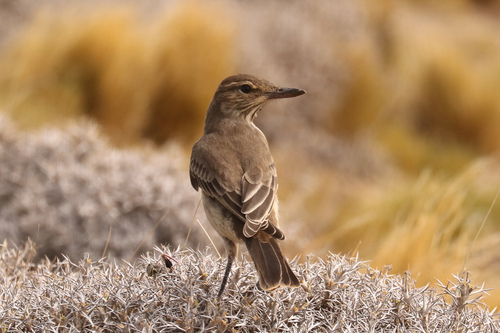
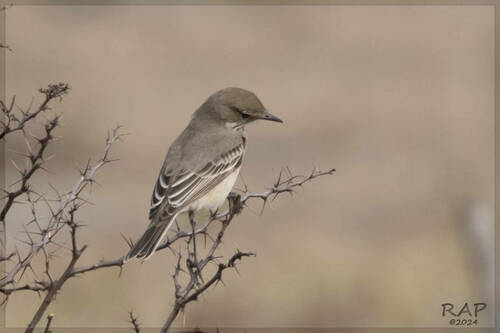
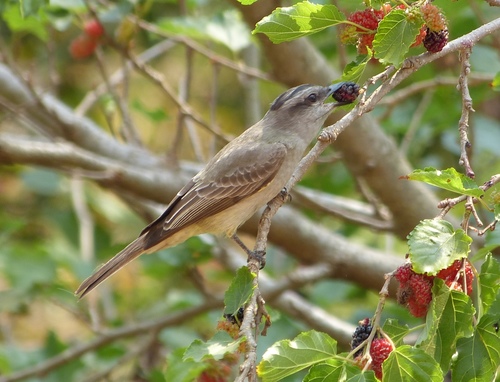
The rusty-backed monjita (Neoxolmis rubetra) is a species of bird in the family Tyrannidae, the tyrant flycatchers. It is endemic to Argentina but has been recorded as a vagrant in Brazil and Chile. The rusty-backed monjita has a complicated taxonomic history. It was formally described in 1860 as "Taenioptera Rubetra". In 1927 it was moved to genus Xolmis. Late in the twentieth century some authors moved it to genus Neoxolmis that had been erected in 1927 for what became the chocolate-vented tyrant (N. rufiventris); others retained it in Xolmis. A 2018 study determined it did not belong in Xolmis and two 2020 studies moved it to genus Nengetus. The South American Classification Committee of the American Ornithological Society (SACC) restored it instead to genus Neoxolmis. The IOC and the Clements taxonomy soon adopted that change. However, as of December 2024 BirdLife International's Handbook of the Birds of the World retained the species in Xolmis. Because the reassignment to Neoxolmis resulted in species of several genera having the English name "monjita", the SACC is seeking a proposal to consider English name changes.

The rusty-backed monjita is monotypic. However... Wikipedia →

Global Distribution

Parks Where Found

# Park Country Daily sighting probability
1 Península Valdés 🇦🇷 Argentina
~10%

More parks will be added in future updates.

Before you go

What are the chances of seeing a Rusty-backed Monjita in Península Valdés?

With luck

About 10% of wildlife watchers report a Rusty-backed Monjita sighting in Península Valdés on a given day, based on 36 verified sightings from GBIF citizen-science data from 2019 to 2026. It is the 57th most-seen of the 96 birds we can rate there. Over three days the chance rises to about 20%, and over a week to about 50%, if each day is a fresh chance.

When is the best time to see a Rusty-backed Monjita in Península Valdés?

September to January

In those months about 10% of wildlife watchers report a Rusty-backed Monjita in Península Valdés on a given day, against under 5% in February–May and August, the lowest months. June and July have too few records to rate.

What time of day is best to see a Rusty-backed Monjita?

Between 3 and 6 pm

Across all the parks we cover, that three-hour window holds the most Rusty-backed Monjita sightings with a recorded time, and about 8 in 10 of them come between 6 am and 6 pm: it is a daytime animal.

Where else can you see a Rusty-backed Monjita?

Only Península Valdés, in our data

Península Valdés is the only park on Wallace's Line with enough records to rate Rusty-backed Monjita sightings: about 10% of wildlife watchers there report one on a given day.

Which relatives of the Rusty-backed Monjita live in Península Valdés?

Same family: Tyrannidae

The closest relatives of the Rusty-backed Monjita that you can see in Península Valdés (family Tyrannidae, Tyrant Flycatchers) are Gray-bellied Shrike-Tyrant (about 20%), Lesser Shrike-Tyrant (about 10%) and Tufted Tit-Tyrant (about 10%), with each one's daily chance of a sighting.

Where does the Rusty-backed Monjita sighting chance come from?

GBIF citizen-science records

It is estimated from how often the Rusty-backed Monjita is recorded against all the birds logged in Península Valdés (36 verified sightings from 2019 to 2026), calibrated against known sighting rates. Figures are rounded to the nearest 10% because citizen-science data supports honest approximations, not decimals, and months with records from fewer than five people show "—". How it works.

← Back to Península Valdés