Patagonian Mockingbird

Patagonian Mockingbird

Mimus patagonicus

Silhouette: Andy Wilson · PhyloPic

LCLeast ConcernNTVUENCR
Daily sighting probability ~80% · Very likely
at Península Valdés

In 3 days >90%

620 Verified sightings at Península Valdés From 2019 to 2026
654 In all 3 parks
January Best month
☀️ Diurnal When it's spotted

About the Patagonian Mockingbird

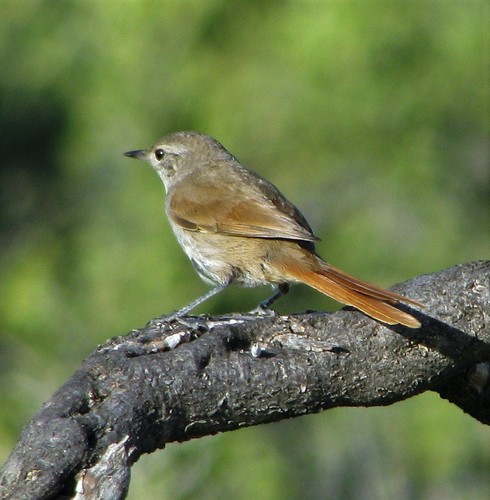
The Patagonian mockingbird (Mimus patagonicus) is a species of bird in the family Mimidae. It is found in much of Argentina and locally in Chile. The Clements taxonomy and BirdLife International consider the Patagonian mockingbird to be a sister species to the Chilean mockingbird (Mimus thenca). The International Ornithological Committee (IOC) does not treat them as that closely related. The Patagonian mockingbird is monotypic.

The Patagonian mockingbird is 22 to 25 cm (8.7 to 9.8 in) long. Males weigh 44.4 to 61.8 g (1.57 to 2.18 oz) and females 43.8 to 65.4 g (1.54 to 2.31 oz). Adults have a brown crown, a whitish supercilium, and a blackish line through the eye. Their upperparts are plain grayish brown that is paler on the rump. The wings are blackish and show two thin pale bars when folded. Their tail is blackish except for the white outer edge of the outermost feathers and white tips on the others. They are buffy gray below that is paler on the throat and belly. The juvenile is essentially the same with the addition of blackish spots on the breast.

The Patagonian mockingbird is a year round resident... Wikipedia →

Sounds

Imitation1:06

Argentina · 2020

© AGUSTIN ESMORIS · XC550047 · CC BY-NC-SA 4.0

Song0:32

Argentina · 2019

© Ana Laura Sureda · XC507524 · CC BY-NC-SA 4.0

Call0:36

Argentina · 2017

© Barry Edmonston · XC391506 · CC BY-NC-SA 4.0

Global Distribution

Parks Where Found

# Park Country Daily sighting probability
1 Península Valdés 🇦🇷 Argentina
~80%
2 Nahuel Huapi National Park 🇦🇷 Argentina
<5%
3 Torres del Paine National Park 🇨🇱 Chile
<5%

Cities Where Found

# City Country Daily sighting probability
1 Mendoza 🇦🇷 Argentina
~10%
2 Buenos Aires 🇦🇷 Argentina
<5%
3 Cordoba 🇦🇷 Argentina
<5%

Before you go

What are the chances of seeing a Patagonian Mockingbird in Península Valdés?

Very likely

About 80% of wildlife watchers report a Patagonian Mockingbird sighting in Península Valdés on a given day, based on 620 verified sightings from GBIF citizen-science data from 2019 to 2026. It is the 3rd most-seen of the 96 birds we can rate there. Over three days the chance rises to over 90%, if each day is a fresh chance.

When is the best time to see a Patagonian Mockingbird in Península Valdés?

January and March

In those months about 90% of wildlife watchers report a Patagonian Mockingbird in Península Valdés on a given day, against about 60% in April–May, August and December, the lowest months. June and July have too few records to rate.

What time of day is best to see a Patagonian Mockingbird?

Between 11 am and 2 pm

Across all the parks we cover, that three-hour window holds the most Patagonian Mockingbird sightings with a recorded time, and about 9 in 10 of them come between 6 am and 6 pm: it is a daytime animal.

Is Península Valdés the best place to see a Patagonian Mockingbird?

Yes

Of the 3 parks where we can rate Patagonian Mockingbird sightings, Península Valdés has the highest daily chance: about 80%. Next come Nahuel Huapi National Park (Argentina, under 5%) and Torres del Paine National Park (Chile, under 5%).

Which relatives of the Patagonian Mockingbird live in Península Valdés?

Same genus: Mimus

The closest relatives of the Patagonian Mockingbird that you can see in Península Valdés (genus Mimus, Typical Mockingbirds) are Chalk-browed Mockingbird (about 10%) and White-banded Mockingbird (about 10%), with each one's daily chance of a sighting.

Where does the Patagonian Mockingbird sighting chance come from?

GBIF citizen-science records

It is estimated from how often the Patagonian Mockingbird is recorded against all the birds logged in Península Valdés (620 verified sightings from 2019 to 2026), calibrated against known sighting rates. Figures are rounded to the nearest 10% because citizen-science data supports honest approximations, not decimals, and months with records from fewer than five people show "—". How it works.

← Back to Península Valdés