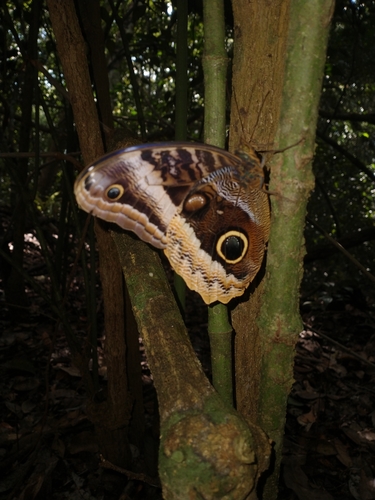
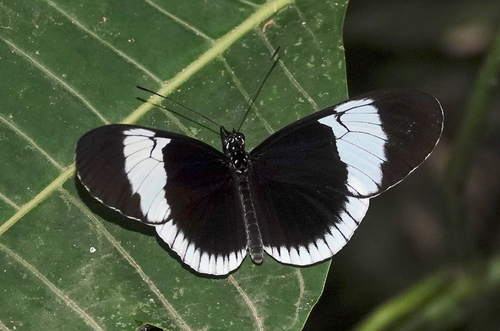
Heliconius sapho
Daily sighting probability ~20% · Possible
at Pico Bonito National Park

In 3 days ~50% in a week ~80%

5 Verified sightings at Pico Bonito National Park From 2019 to 2026
24 In all 2 parks
October Best month
☀️ Diurnal When it's spotted

About the Heliconius sapho

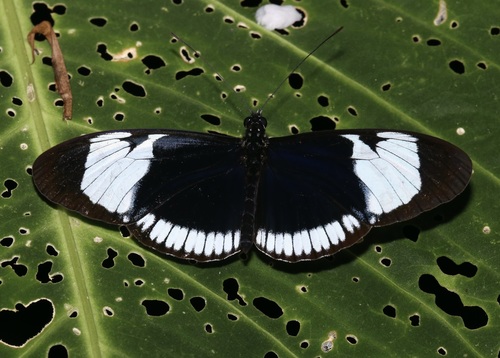
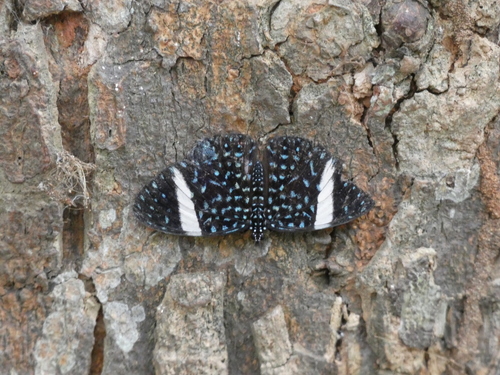
Heliconius sapho, the Sapho longwing, is a butterfly of the family Nymphalidae. It was described by Dru Drury in 1782. It is found from Mexico southward to Ecuador. Drury left no notes on the origin of the name, but the spelling (and the naming conventions of the time) suggests it derives from the mythological Queen Sapho, not the historical poet Sappho. Subsequent authors, from John O. Westwood onwards, have unjustifiably "corrected" the spelling.

Upperside: Antennae black. Eyes brown. Thorax and abdomen black. Wings mazarine blue; the anterior ones having a white band crossing them from the middle of the anterior edges to the lower corners; the posterior edged with a white border, intersected by the blue tendons of the wings.

Underside: Palpi grey. Breast and abdomen black, streaked with white. Wings black where they are blue on the upper side, with the same white markings; but next the body are adorned with beautiful red streaks, ending in points resembling rays issuing from it. Margins of the wings entire. Wingspan 3+1⁄4 inches (82 mm). Wikipedia →
Global Distribution

Parks Where Found

# Park Country Daily sighting probability
1 Pico Bonito National Park 🇭🇳 Honduras
~20%
2 Soberanía National Park 🇵🇦 Panama
~10%

Before you go

What are the chances of seeing a Heliconius sapho in Pico Bonito National Park?

Possible

About 20% of wildlife watchers report a Heliconius sapho sighting in Pico Bonito National Park on a given day, based on 5 verified sightings from GBIF citizen-science data from 2019 to 2026. It is the 23rd most-seen of the 33 insects we can rate there. Over three days the chance rises to about 50%, and over a week to about 80%, if each day is a fresh chance.

When is the best time to see a Heliconius sapho in Pico Bonito National Park?

October

In that month about 40% of wildlife watchers report a Heliconius sapho in Pico Bonito National Park on a given day, against under 5% in March, May, July–September and November–December, the lowest months. That is one of Pico Bonito National Park's wettest months, with about 310 mm of rain against 80 mm in April.

What time of day is best to see a Heliconius sapho?

Between 11 am and 2 pm

Across all the parks we cover, that three-hour window holds the most Heliconius sapho sightings with a recorded time, and about 9 in 10 of them come between 6 am and 6 pm: it is a daytime animal.

Is Pico Bonito National Park the best place to see a Heliconius sapho?

Yes

Of the 2 parks where we can rate Heliconius sapho sightings, Pico Bonito National Park has the highest daily chance: about 20%. Next come Soberanía National Park (Panama, about 10%).

Which relatives of the Heliconius sapho live in Pico Bonito National Park?

Same genus: Heliconius

The closest relatives of the Heliconius sapho that you can see in Pico Bonito National Park (genus Heliconius, Longwings and Heliconians) are Ismenius Tiger (about 30%), Cydno Longwing (about 30%) and Doris Longwing (about 30%), with each one's daily chance of a sighting.

Where does the Heliconius sapho sighting chance come from?

GBIF citizen-science records

It is estimated from how often the Heliconius sapho is recorded against all the insects logged in Pico Bonito National Park (5 verified sightings from 2019 to 2026), calibrated against known sighting rates. Figures are rounded to the nearest 10% because citizen-science data supports honest approximations, not decimals, and months with records from fewer than five people show "—". How it works.

← Back to Pico Bonito National Park