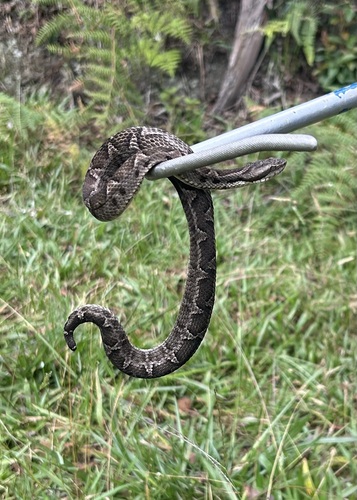
Black-and-white Worm Lizard

Black-and-white Worm Lizard

Amphisbaena fuliginosa

Silhouette: Roberto Díaz Sibaja · PhyloPic

LCLeast ConcernNTVUENCR
Daily sighting probability ~20% · Possible
at Podocarpus National Park

In 3 days ~40% in a week ~70%

5 Verified sightings at Podocarpus National Park From 2019 to 2026
5 In 1 park
December Best month
☀️ Diurnal When it's spotted

About the Black-and-white Worm Lizard

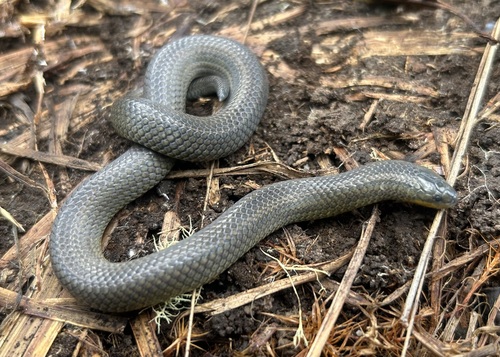
Amphisbaena fuliginosa, also known as the black-and-white worm lizard, speckled worm lizard or spotted worm lizard, is a species of amphisbaenian in the genus Amphisbaena. The ecology of A. fuliginosa is poorly known due to its fossorial habits. However, this species can be easily distinguished from others because of its characteristic white and black mosaic pattern that covers both the dorsal and ventral side.

It is found in northern South America including the island of Trinidad, and southwards to the Brazilian Cerrado biome. The southernmost areas of the Brazilian Cerrado where A. fuliginosa is found are Minas Gerais and Goiás.

Amphisbaena fuliginosa grows to a total length (body + tail) of 30–45 centimetres (12–18 in). It inhabits Amazonian forest areas. It is a burrowing nocturnal species and spends most of its time underground. A. fuliginosa will feed on any small invertebrate, or insect, that it can find while burrowing. Some of those insects include beetles, ants (especially adults of the subfamily Ecitoninae), termites, and other arthropods (such as spiders, centipedes, millipedes, and earthworms... Wikipedia →

Global Distribution

Parks Where Found

# Park Country Daily sighting probability
1 Podocarpus National Park 🇪🇨 Ecuador
~20%

More parks will be added in future updates.

Cities Where Found

# City Country Daily sighting probability
1 Manaus 🇧🇷 Brazil
~30%

Before you go

What are the chances of seeing a Black-and-white Worm Lizard in Podocarpus National Park?

Possible

About 20% of wildlife watchers report a Black-and-white Worm Lizard sighting in Podocarpus National Park on a given day, based on 5 verified sightings from GBIF citizen-science data from 2019 to 2026. It is the 5th most-seen of the 7 reptiles we can rate there. Over three days the chance rises to about 40%, and over a week to about 70%, if each day is a fresh chance.

When is the best time to see a Black-and-white Worm Lizard in Podocarpus National Park?

June, September and December

In those months about 30% of wildlife watchers report a Black-and-white Worm Lizard in Podocarpus National Park on a given day, against under 5% in January–May, July and October–November, the lowest months.

What time of day is best to see a Black-and-white Worm Lizard?

Between 9 am and noon

Across all the parks we cover, that three-hour window holds the most Black-and-white Worm Lizard sightings with a recorded time, and about 9 in 10 of them come between 6 am and 6 pm: it is a daytime animal.

Where else can you see a Black-and-white Worm Lizard?

Only Podocarpus National Park, in our data

Podocarpus National Park is the only park on Wallace's Line with enough records to rate Black-and-white Worm Lizard sightings: about 20% of wildlife watchers there report one on a given day.

Where does the Black-and-white Worm Lizard sighting chance come from?

GBIF citizen-science records

It is estimated from how often the Black-and-white Worm Lizard is recorded against all the reptiles logged in Podocarpus National Park (5 verified sightings from 2019 to 2026), calibrated against known sighting rates. Figures are rounded to the nearest 10% because citizen-science data supports honest approximations, not decimals, and months with records from fewer than five people show "—". How it works.

← Back to Podocarpus National Park