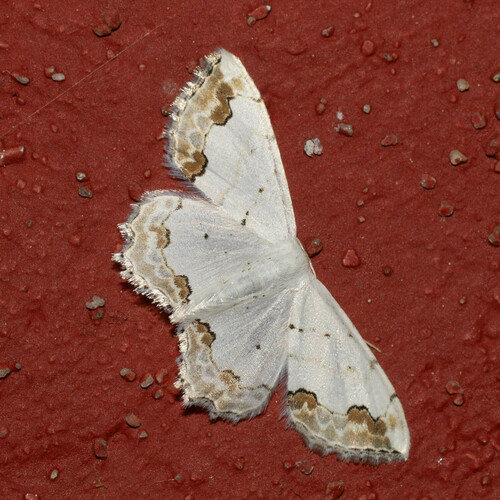
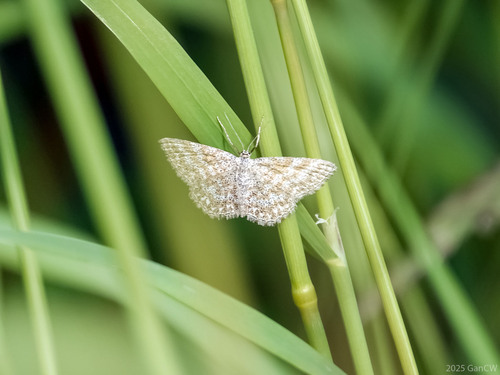
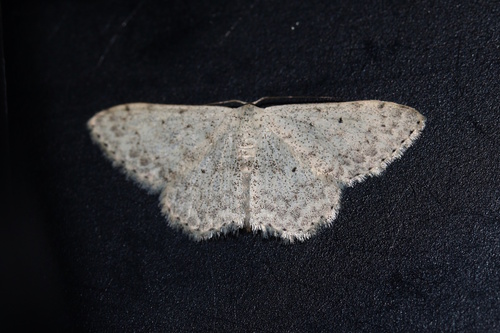
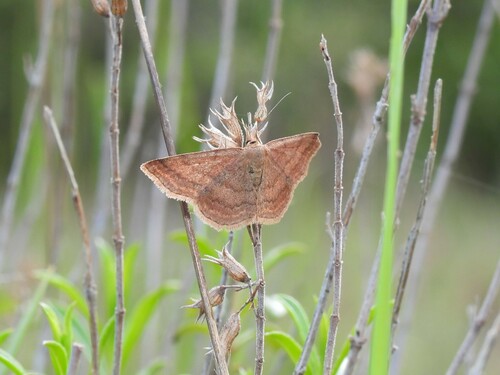
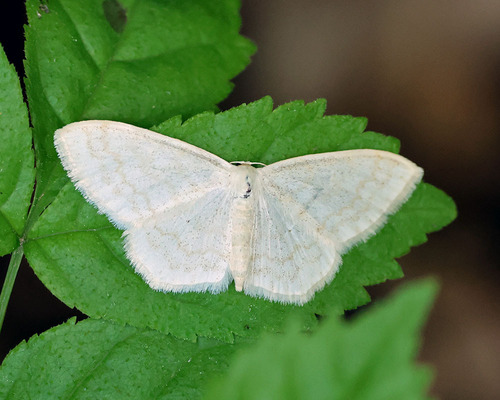
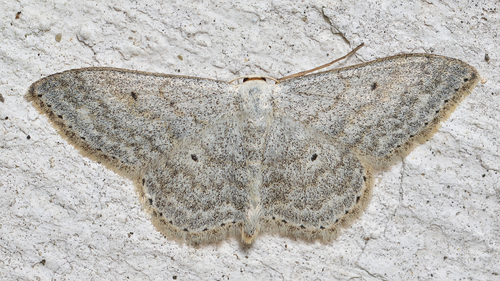
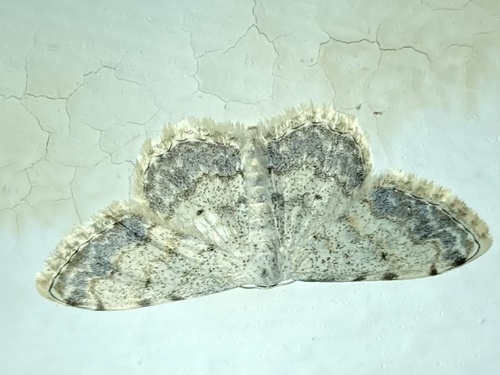
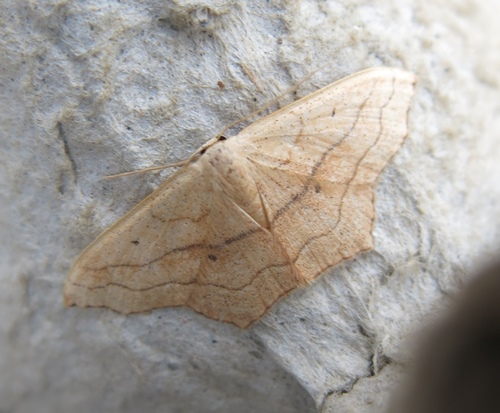
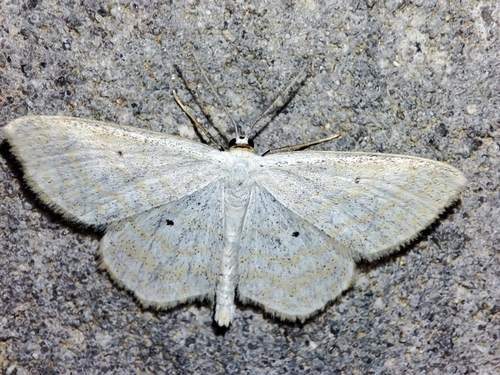
Lesser Cream Wave

Lesser Cream Wave

Scopula immutata

Daily sighting probability <5% · Rare
at Pyrénées National Park

In 3 days ~10% in a week ~20%

7 Verified sightings at Pyrénées National Park From 2019 to 2026
16 In all 2 parks
August Best month
🌙 Nocturnal When it's spotted

About the Lesser Cream Wave

Scopula immutata, the lesser cream wave, is a moth of the family Geometridae. It was described by Carl Linnaeus in his 1758 10th edition of Systema Naturae. It is found throughout Europe. A typical temperate to boreal Palearctic species. In Europe it ranges from the west coast of France and the British Isles to the Urals. In the north it extends from central Scandinavia, south to central Italy and south Bulgaria. This latter occurrence is isolated from the main populations and is limited to higher regions. There are also isolated, very much small occurrences in northern Portugal and north-eastern Spain, as well as evidence in Corsica and Sardinia. However, these findings must still be confirmed. Outside Europe the species spreads east across the Caucasus, Kazakhstan, southern Siberia, Mongolia and the Russian Far East and Sakhalin.

The species is moisture loving and is therefore found in humid forests, swamps, bogs, wet meadows and along rivers. In the Alps and southern Europe it rises up to 1,200 metres (3,900 ft), rarely even higher (max. 1,850 meters).

The wingspan is 24–27 millimetres (0.94–1.06 in). The length of the forewings is 12–13 millimetres... Wikipedia →
Global Distribution

Parks Where Found

# Park Country Daily sighting probability
1 Bavarian Forest National Park 🇩🇪 Germany
~10%
2 Pyrénées National Park 🇫🇷 France
<5%

Cities Where Found

# City Country Daily sighting probability
1 Helsinki 🇫🇮 Finland
~10%
2 Saint Petersburg 🇷🇺 Russia
<5%
3 Vienna 🇦🇹 Austria
<5%
4 Moscow 🇷🇺 Russia
<5%

Before you go

What are the chances of seeing a Lesser Cream Wave in Pyrénées National Park?

Rare

Under 5% of wildlife watchers report a Lesser Cream Wave sighting in Pyrénées National Park on a given day, based on 7 verified sightings from GBIF citizen-science data from 2019 to 2026. It is the 940th most-seen of the 1277 insects we can rate there. Over three days the chance rises to about 10%, and over a week to about 20%, if each day is a fresh chance.

When is the best time to see a Lesser Cream Wave in Pyrénées National Park?

August

In that month about 10% of wildlife watchers report a Lesser Cream Wave in Pyrénées National Park on a given day, against under 5% in September to July, the lowest months.

What time of day is best to see a Lesser Cream Wave?

Between 10 pm and 1 am

Across all the parks we cover, that three-hour window holds the most Lesser Cream Wave sightings with a recorded time, and about 8 in 10 of them come between 6 pm and 6 am: it is mostly seen at night.

Is Pyrénées National Park the best place to see a Lesser Cream Wave?

2nd of 2

Of the 2 parks where we can rate Lesser Cream Wave sightings, Pyrénées National Park ranks 2nd at under 5%. The best odds are in Bavarian Forest National Park (Germany, about 10%).

Which relatives of the Lesser Cream Wave live in Pyrénées National Park?

Same genus: Scopula

The closest relatives of the Lesser Cream Wave that you can see in Pyrénées National Park (genus Scopula) are Lace Border (about 10%), Lewes Wave (about 10%) and Sub-Angled Wave (about 10%), with each one's daily chance of a sighting.

Where does the Lesser Cream Wave sighting chance come from?

GBIF citizen-science records

It is estimated from how often the Lesser Cream Wave is recorded against all the insects logged in Pyrénées National Park (7 verified sightings from 2019 to 2026), calibrated against known sighting rates. Figures are rounded to the nearest 10% because citizen-science data supports honest approximations, not decimals, and months with records from fewer than five people show "—". How it works.

← Back to Pyrénées National Park