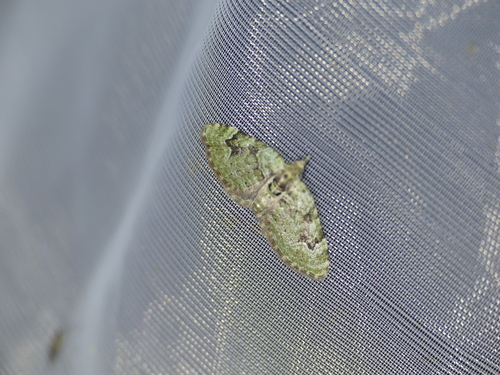
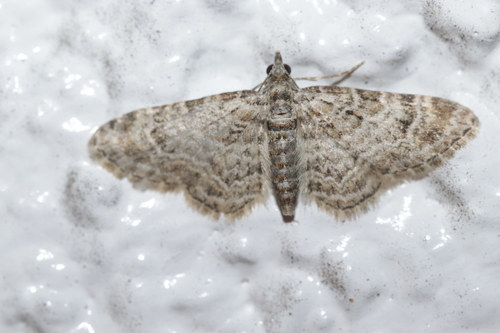
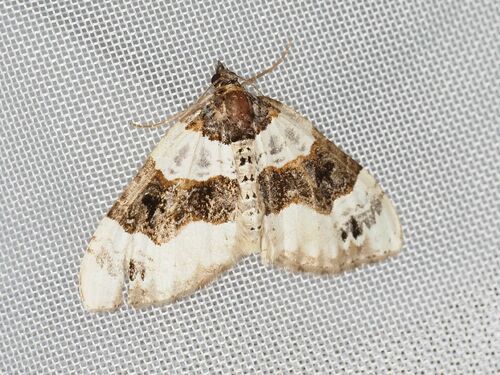
Small Yellow Wave

Small Yellow Wave

Hydrelia flammeolaria

Daily sighting probability <5% · Rare
at Pyrénées National Park

In 3 days ~10% in a week ~20%

5 Verified sightings at Pyrénées National Park From 2019 to 2026
12 In all 2 parks
June Best month
☀️🌙 Day & Night When it's spotted

About the Small Yellow Wave

Hydrelia flammeolaria, the small yellow wave, is a moth of the family Geometridae. The species was first described by Johann Siegfried Hufnagel in 1767 It is found in most of the Palearctic realm, from western Europe to Japan.

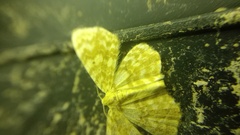
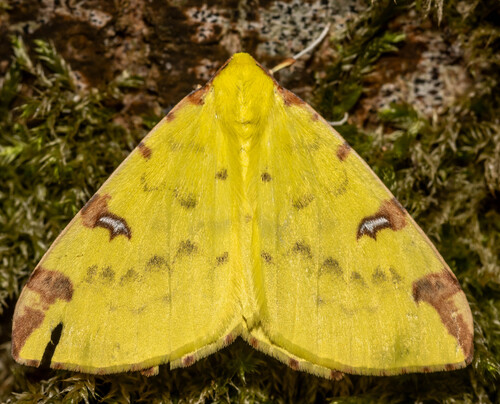
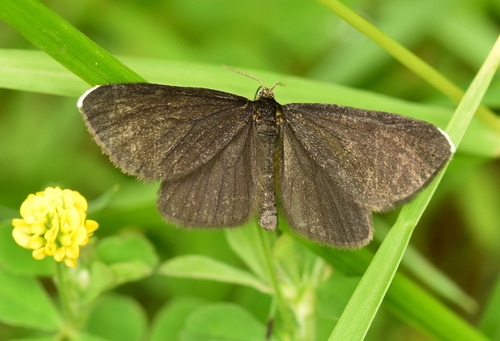
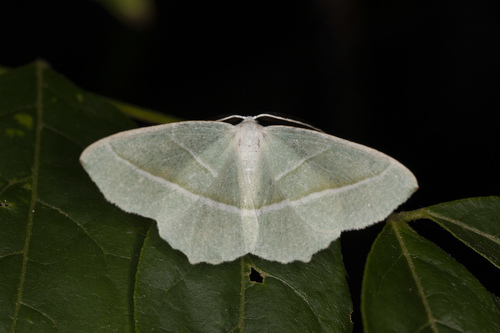
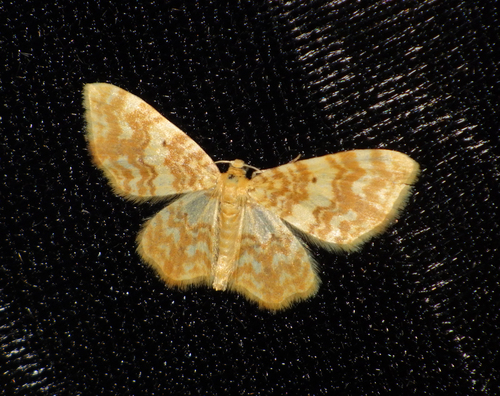
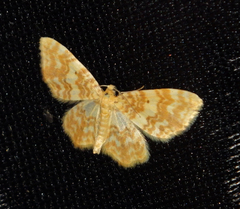
The wingspan is 14–20 mm. It is similar to Asthena albulata, but can be distinguished from this on the fact that the brown-yellow areas of the wings are about the same size as the white (in A.albulata the white colour dominates) and that the forewing has a small, brown spot. The forewings are white with about six fairly wide, wavy, brownish-yellow cross-bands that sometimes flow partially together. In the middle of the wing there is a small, brown spot. The hindwings are white with three brownish-yellow cross-bands. The larva is light green with white longitudinal stripes on either side of the back.

There is one generation per year, with adults on wing from mid-May to August. The larvae feed on various deciduous trees, including Alnus (including Alnus glutinosa and Alnus incana) and Acer (including Acer campestris) species. Larvae can be found from July to September. It overwinters as a pupa. Wikipedia →
Global Distribution

Parks Where Found

# Park Country Daily sighting probability
1 Bavarian Forest National Park 🇩🇪 Germany
~10%
2 Pyrénées National Park 🇫🇷 France
<5%

Before you go

What are the chances of seeing a Small Yellow Wave in Pyrénées National Park?

Rare

Under 5% of wildlife watchers report a Small Yellow Wave sighting in Pyrénées National Park on a given day, based on 5 verified sightings from GBIF citizen-science data from 2019 to 2026. It is the 1144th most-seen of the 1277 insects we can rate there. Over three days the chance rises to about 10%, and over a week to about 20%, if each day is a fresh chance.

When is the best time to see a Small Yellow Wave in Pyrénées National Park?

June

In that month about 10% of wildlife watchers report a Small Yellow Wave in Pyrénées National Park on a given day, against under 5% in July to May, the lowest months.

What time of day is best to see a Small Yellow Wave?

Between 9 pm and midnight

Across all the parks we cover, that three-hour window holds the most Small Yellow Wave sightings with a recorded time, and about 7 in 10 of them come between 6 pm and 6 am: it is seen both by day and at night.

Is Pyrénées National Park the best place to see a Small Yellow Wave?

2nd of 2

Of the 2 parks where we can rate Small Yellow Wave sightings, Pyrénées National Park ranks 2nd at under 5%. The best odds are in Bavarian Forest National Park (Germany, about 10%).

Which relatives of the Small Yellow Wave live in Pyrénées National Park?

Same family: Geometridae

The closest relatives of the Small Yellow Wave that you can see in Pyrénées National Park (family Geometridae, Geometer Moths) are Latticed Heath (about 10%), Common Heath (about 10%) and Willow Beauty (about 10%), with each one's daily chance of a sighting.

Where does the Small Yellow Wave sighting chance come from?

GBIF citizen-science records

It is estimated from how often the Small Yellow Wave is recorded against all the insects logged in Pyrénées National Park (5 verified sightings from 2019 to 2026), calibrated against known sighting rates. Figures are rounded to the nearest 10% because citizen-science data supports honest approximations, not decimals, and months with records from fewer than five people show "—". How it works.

← Back to Pyrénées National Park