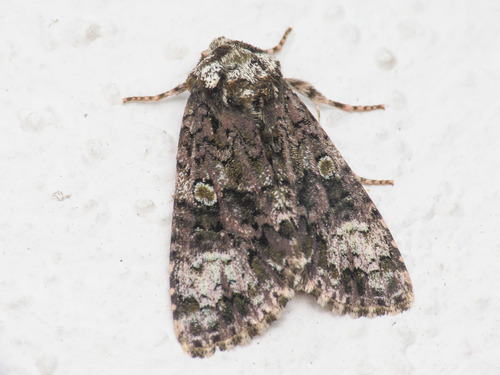
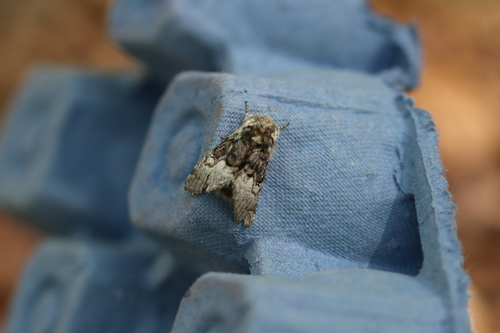
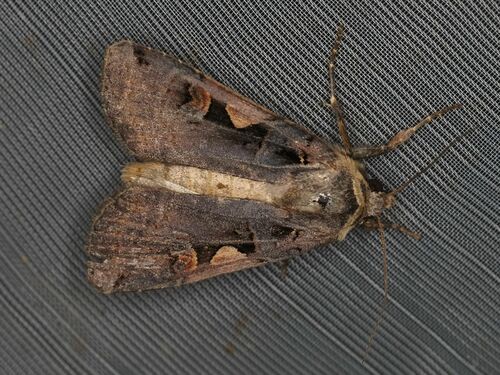
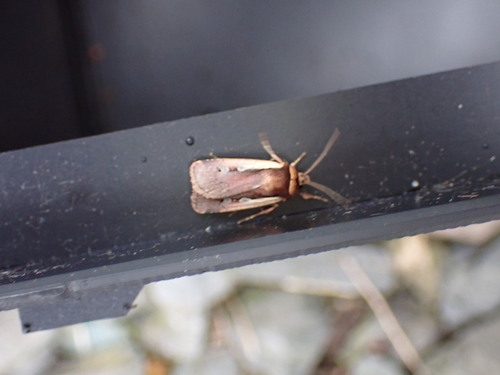
The Confused

The Confused

Apamea furva

Daily sighting probability <5% · Rare
at Pyrénées National Park

In 3 days ~10% in a week ~20%

9 Verified sightings at Pyrénées National Park From 2019 to 2026
9 In 1 park
August Best month
🌙 Nocturnal When it's spotted

About the The Confused

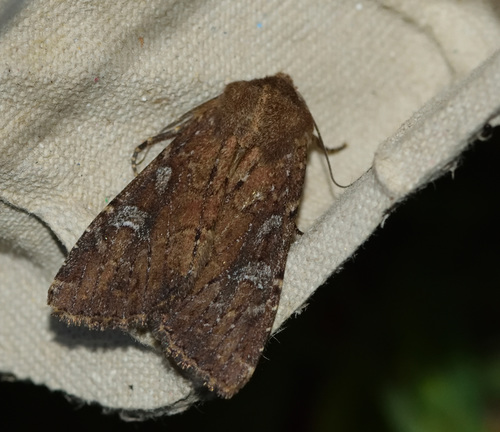
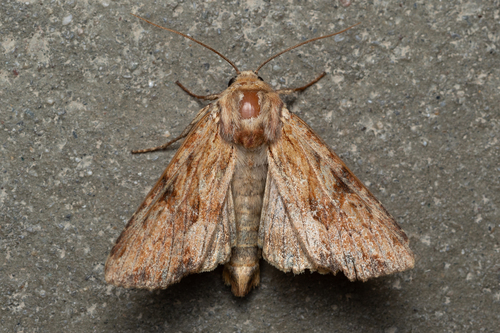
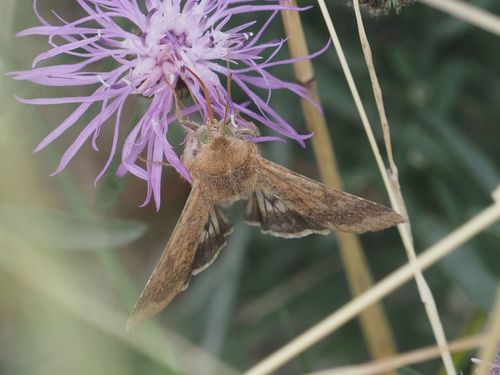
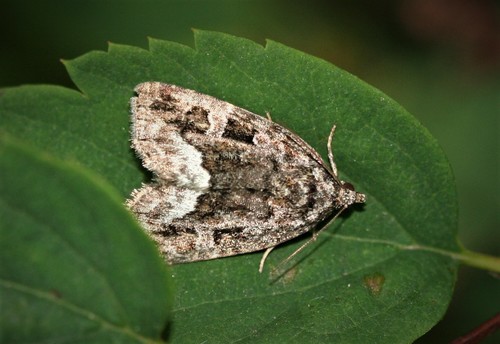
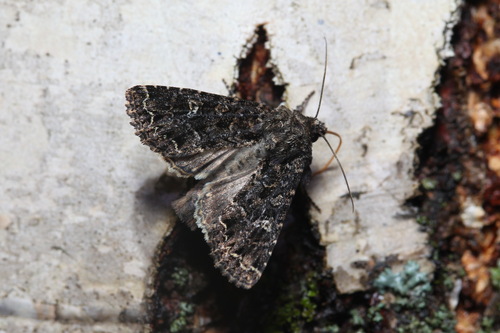
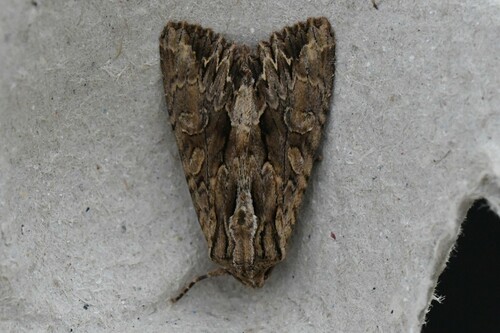
Apamea furva, the confused, is a moth of the family Noctuidae. The species was first described by Michael Denis and Ignaz Schiffermüller in 1775. It is found throughout Europe. In southwestern Europe it is primarily montane. It is found as far north as the Arctic Circle. From Europe its range extends to Siberia, Turkey, Iran, Kyrgyzstan, Mongolia and Xinjiang in China.

The population in Great Britain and Ireland is sometimes treated as a subspecies, Apamea furva britannica. The wingspan is 34–42 mm. Forewing varying from brownish to blackish fuscous, more or less dusted with grey or whitish scales, especially along the costa and inner margin and along the veins; lines conversely edged with pale; claviform stigma black-edged, or filled in with black; orbicular grey, with pale ring and black outline, often obscure; reniform always whiter, especially on outer edge; submarginal line whitish, waved, always preceded by distinct black wedge-shaped marks; the brown fringe finely cut by pale dashes; hindwing smoky grey, the terminal half smoky fuscous; veins and cellspot darker; the blackish fuscous forms, still with paler dusting, are ab. freyeri [Boie] and infernalis Ev. the latter being the darker. Apamea furva is difficult to certainly distinguish from its congener Apamea remissa (Hübner, 1809). See Townsend et al.

Adults are on wing from July to August. The larvae feed on the roots and stem bases of various grasses, including meadowgrasses, fescues, slimstem reedgrass, and wavy hairgrass. Wikipedia →
Global Distribution

Parks Where Found

# Park Country Daily sighting probability
1 Pyrénées National Park 🇫🇷 France
<5%

More parks will be added in future updates.

Before you go

What are the chances of seeing a The Confused in Pyrénées National Park?

Rare

Under 5% of wildlife watchers report a The Confused sighting in Pyrénées National Park on a given day, based on 9 verified sightings from GBIF citizen-science data from 2019 to 2026. It is the 869th most-seen of the 1277 insects we can rate there. Over three days the chance rises to about 10%, and over a week to about 20%, if each day is a fresh chance.

When is the best time to see a The Confused in Pyrénées National Park?

August

In that month about 10% of wildlife watchers report a The Confused in Pyrénées National Park on a given day, against under 5% in September to July, the lowest months.

What time of day is best to see a The Confused?

Between 9 pm and midnight

Across all the parks we cover, that three-hour window holds the most The Confused sightings with a recorded time, and about 9 in 10 of them come between 6 pm and 6 am: it is mostly seen at night.

Where else can you see a The Confused?

Only Pyrénées National Park, in our data

Pyrénées National Park is the only park on Wallace's Line with enough records to rate The Confused sightings: under 5% of wildlife watchers there report one on a given day.

Where does the The Confused sighting chance come from?

GBIF citizen-science records

It is estimated from how often the The Confused is recorded against all the insects logged in Pyrénées National Park (9 verified sightings from 2019 to 2026), calibrated against known sighting rates. Figures are rounded to the nearest 10% because citizen-science data supports honest approximations, not decimals, and months with records from fewer than five people show "—". How it works.

← Back to Pyrénées National Park