Giant Hooded Katydid

Giant Hooded Katydid

Siliquofera grandis

Daily sighting probability ~10% · With luck
at Raja Ampat

In 3 days ~40% in a week ~70%

7 Verified sightings at Raja Ampat From 2019 to 2026
7 In 1 park
April Best month
☀️ Diurnal When it's spotted

About the Giant Hooded Katydid

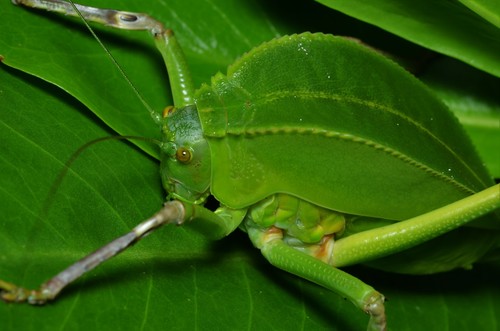
Siliquofera is a genus of bush cricket in the subfamily Phyllophorinae that includes only one species, Siliquofera grandis, which is fairly common and widespread in rainforest canopies of New Guinea and nearby smaller islands, and seemingly rare (possibly overlooked) in Australia where only found in the remote Iron Range region. This very well-camouflaged, green and leaf-like bush cricket is one of the world's largest Orthoptera (grasshopper, crickets and alike), with adults typically having a length of 10.7–13 cm (4.2–5.1 in) and a wingspan of 25–27 cm (9.8–10.6 in); it can weigh more than 30 g (1.1 oz).

English names include Hooded katydid and Giant katydid indicating its size and the shape of the pronotum, but both names are also used for other species. S. grandis was first scientifically described by Émile Blanchard in 1853, who placed it in the genus Phyllophora. The type locality was described as "Hollandia" (Jayapura) in Irian Jaya, with the type specimen placed in the National Museum of Natural History, France. The species was only moved to its own genus Siliquofera in 1903 by Ignacio Bolívar. Phyllophora and Siliquofera generally resemble each other, but the adults can easily be separate by the pronotum. In both, there are ridges with serrations along the pronotum's sides, but in Phyllophora there is also a spine on each side. This species has also been confused with Arachnacris (= Macrolyristes) corporalis in the Mecopodini. Wikipedia →

Global Distribution

Parks Where Found

# Park Country Daily sighting probability
1 Raja Ampat 🇮🇩 Indonesia
~10%

More parks will be added in future updates.

Before you go

What are the chances of seeing a Giant Hooded Katydid in Raja Ampat?

With luck

About 10% of wildlife watchers report a Giant Hooded Katydid sighting in Raja Ampat on a given day, based on 7 verified sightings from GBIF citizen-science data from 2019 to 2026. It is the 27th most-seen of the 46 insects we can rate there. Over three days the chance rises to about 40%, and over a week to about 70%, if each day is a fresh chance.

When is the best time to see a Giant Hooded Katydid in Raja Ampat?

April

In that month about 30% of wildlife watchers report a Giant Hooded Katydid in Raja Ampat on a given day, against under 5% in February, June, August–October and December, the lowest months.

What time of day is best to see a Giant Hooded Katydid?

Between noon and 3 pm

Across all the parks we cover, that three-hour window holds the most Giant Hooded Katydid sightings with a recorded time, and about 8 in 10 of them come between 6 am and 6 pm: it is a daytime animal.

Where else can you see a Giant Hooded Katydid?

Only Raja Ampat, in our data

Raja Ampat is the only park on Wallace's Line with enough records to rate Giant Hooded Katydid sightings: about 10% of wildlife watchers there report one on a given day.

Which relatives of the Giant Hooded Katydid live in Raja Ampat?

Same order: Orthoptera

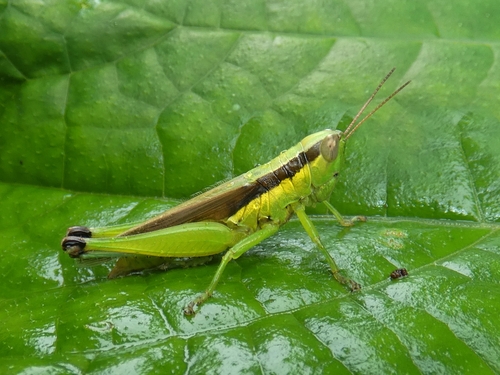
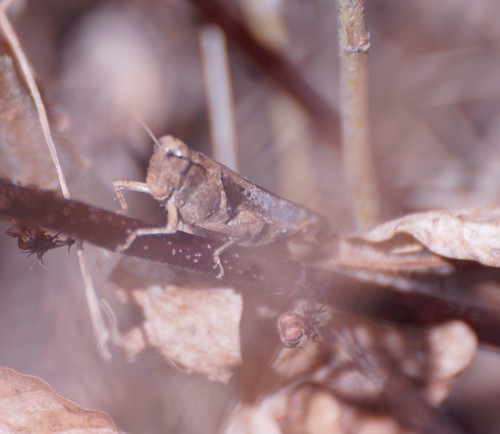
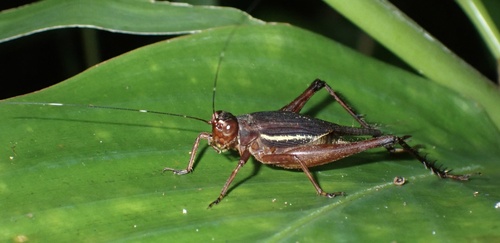
The closest relatives of the Giant Hooded Katydid that you can see in Raja Ampat (order Orthoptera, Grasshoppers, Crickets, and Katydids) are Japanese Rice Grasshopper (about 20%), Tropical Sharptail (about 20%) and Javanese Grasshopper (about 20%), with each one's daily chance of a sighting.

Where does the Giant Hooded Katydid sighting chance come from?

GBIF citizen-science records

It is estimated from how often the Giant Hooded Katydid is recorded against all the insects logged in Raja Ampat (7 verified sightings from 2019 to 2026), calibrated against known sighting rates. Figures are rounded to the nearest 10% because citizen-science data supports honest approximations, not decimals, and months with records from fewer than five people show "—". How it works.

← Back to Raja Ampat