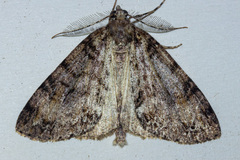
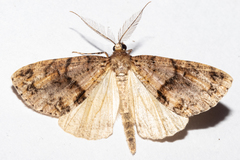
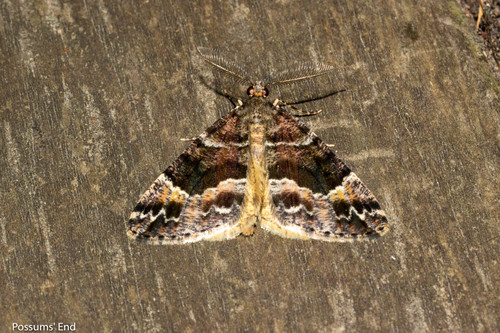
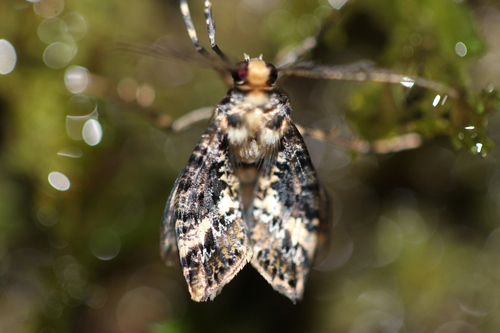
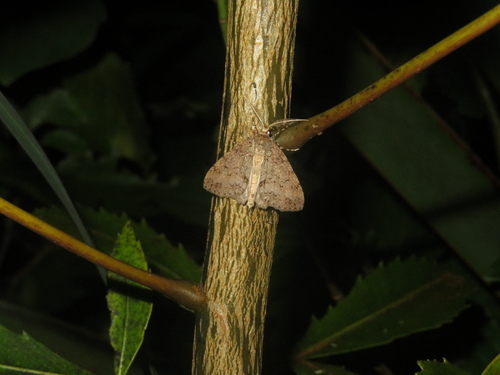
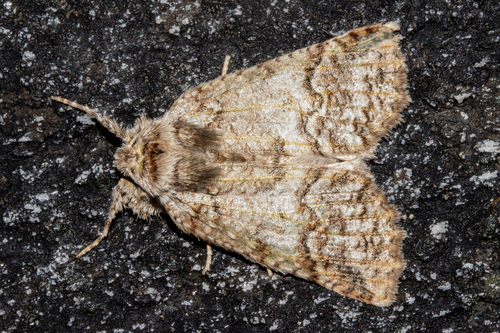
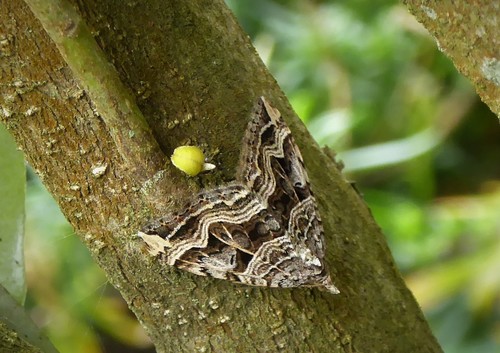
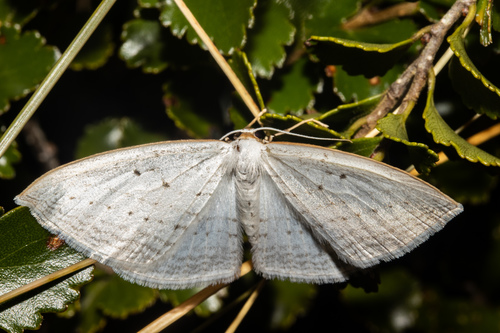
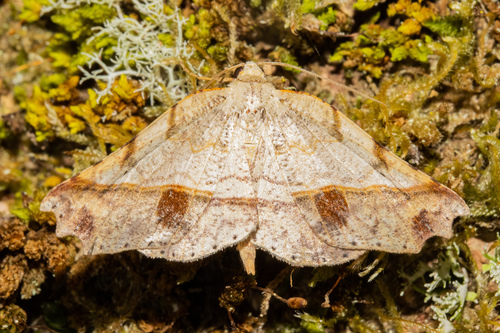
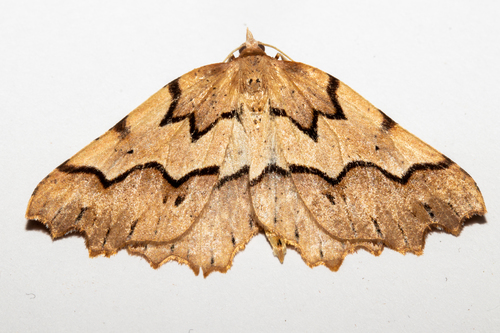
Common Forest Looper

Common Forest Looper

Pseudocoremia suavis

Endemic
Daily sighting probability ~30% · Possible
at Rakiura National Park

In 3 days ~70% in a week ~90%

69 Verified sightings at Rakiura National Park From 2019 to 2026
128 In all 3 parks
June Best month
☀️🌙 Day & Night When it's spotted

About the Common Forest Looper

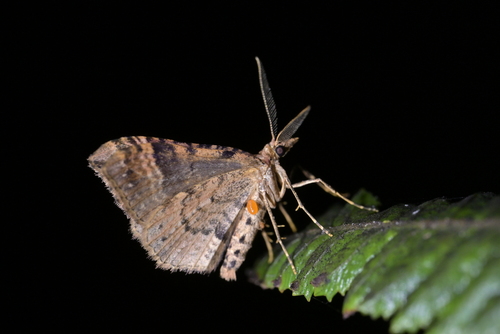
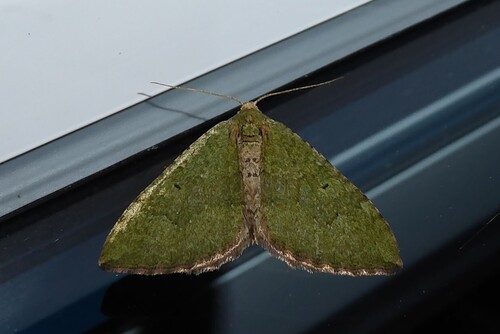
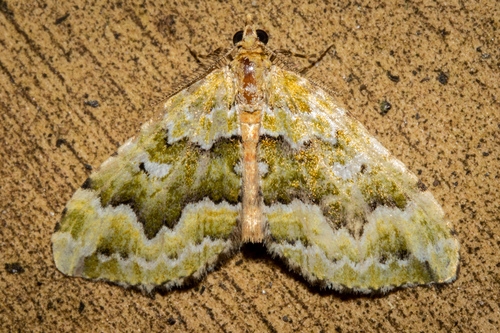
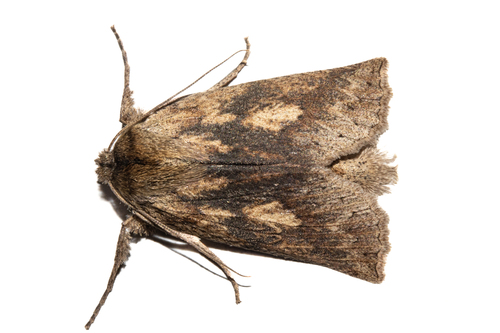
Pseudocoremia suavis, the common forest looper, is a species of moth in the family Geometridae. It is regarded as being endemic to New Zealand. In 2007, however, the moth was found in west Cornwall, Great Britain, the first time it has been found outside of New Zealand.

The common forest looper is endemic and common throughout New Zealand feeding on many species of trees and shrubs. An unidentified specimen was caught on 15 April 2007 by Tony James at a regular garden light trap, approximately, near Tregonning Hill in the parish of Breage. By October a further four were caught in the same garden; although it took a year before the specimens were identified by the Natural History Museum, London. The garden is adjacent to a small plant nursery and it is possible the moth may have been introduced on plants from another British nursery.

The descriptions below are mainly from an individual female caught on 30 October 2015 in west Cornwall and retained for breeding. The larvae were reared at 15–20 °C, in air-tight plastic boxes. The female laid sixty eggs, some individually but most in groups of fourteen to twenty along the edge of tissue paper. When... Wikipedia →
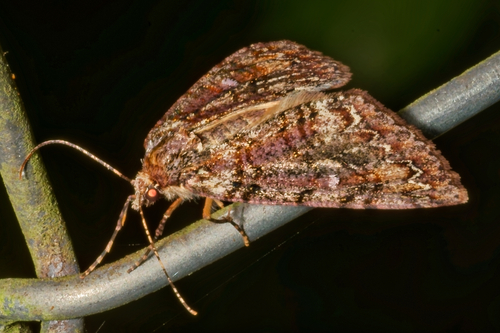
Global Distribution

Parks Where Found

# Park Country Daily sighting probability
1 Rakiura National Park 🇳🇿 New Zealand
~30%
2 Egmont National Park 🇳🇿 New Zealand
~20%
3 Fiordland National Park 🇳🇿 New Zealand
~20%

Cities Where Found

# City Country Daily sighting probability
1 Auckland 🇳🇿 New Zealand
~10%

Before you go

What are the chances of seeing a Common Forest Looper in Rakiura National Park?

Possible

About 30% of wildlife watchers report a Common Forest Looper sighting in Rakiura National Park on a given day, based on 69 verified sightings from GBIF citizen-science data from 2019 to 2026. It is the 3rd most-seen of the 118 insects we can rate there. Over three days the chance rises to about 70%, and over a week to about 90%, if each day is a fresh chance.

When is the best time to see a Common Forest Looper in Rakiura National Park?

May and June

In those months about 50% of wildlife watchers report a Common Forest Looper in Rakiura National Park on a given day, against about 20% in February–March and December, the lowest months.

What time of day is best to see a Common Forest Looper?

Between 9 pm and midnight

Across all the parks we cover, that three-hour window holds the most Common Forest Looper sightings with a recorded time, and about 6 in 10 of them come between 6 pm and 6 am: it is seen both by day and at night.

Is Rakiura National Park the best place to see a Common Forest Looper?

Yes

Of the 3 parks where we can rate Common Forest Looper sightings, Rakiura National Park has the highest daily chance: about 30%. Next come Egmont National Park (New Zealand, about 20%) and Fiordland National Park (New Zealand, about 20%).

Which relatives of the Common Forest Looper live in Rakiura National Park?

Same genus: Pseudocoremia

The closest relatives of the Common Forest Looper that you can see in Rakiura National Park (genus Pseudocoremia) are Brown Forest Flash (about 10%), Forest Looper (about 10%) and Pseudocoremia fenerata (about 10%), with each one's daily chance of a sighting.

Where does the Common Forest Looper sighting chance come from?

GBIF citizen-science records

It is estimated from how often the Common Forest Looper is recorded against all the insects logged in Rakiura National Park (69 verified sightings from 2019 to 2026), calibrated against known sighting rates. Figures are rounded to the nearest 10% because citizen-science data supports honest approximations, not decimals, and months with records from fewer than five people show "—". How it works.

← Back to Rakiura National Park