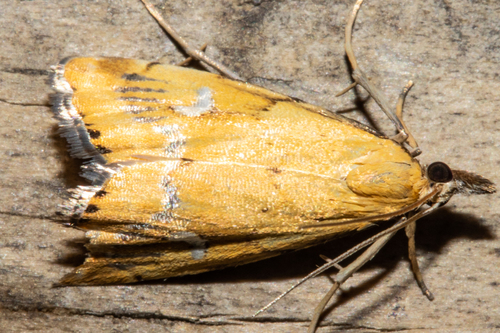
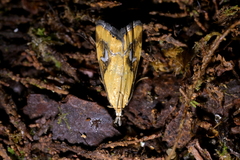
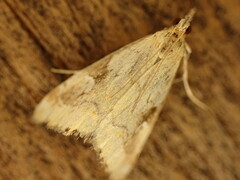
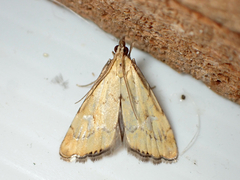
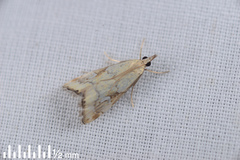
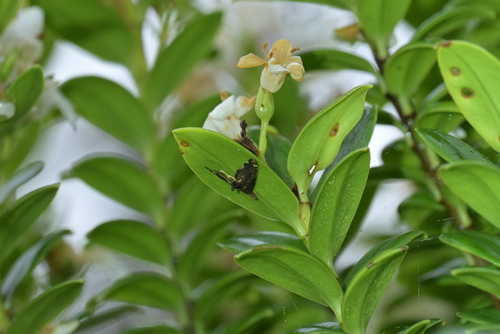
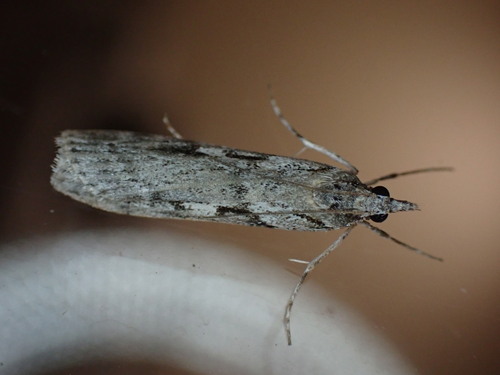
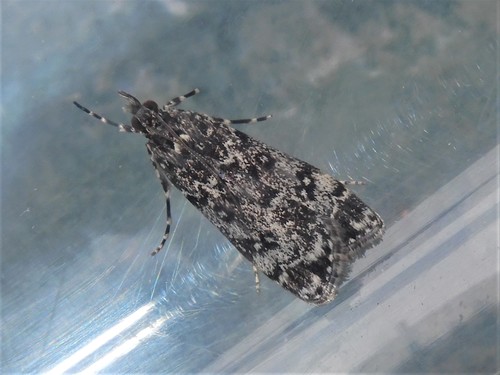
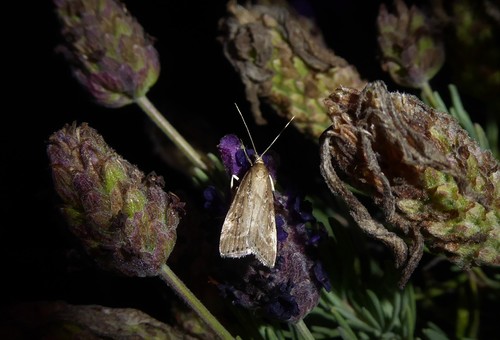
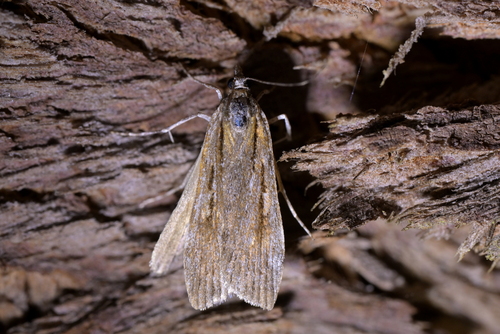
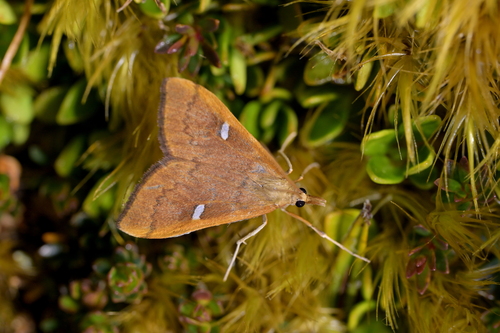
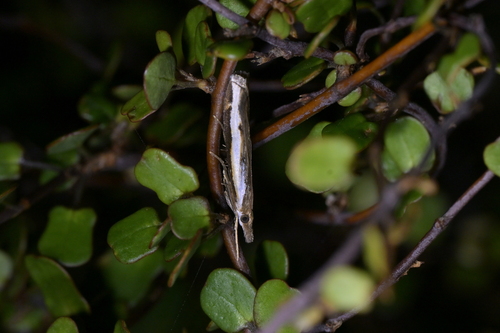
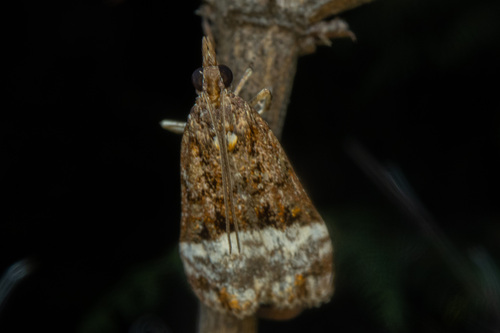
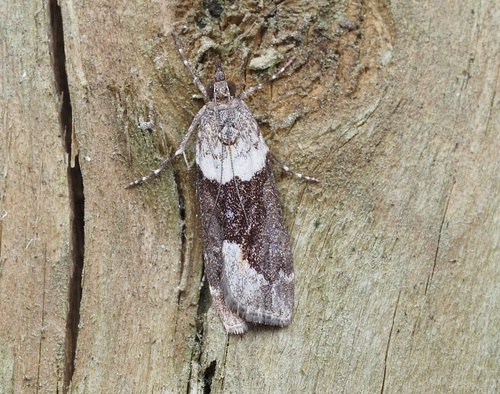
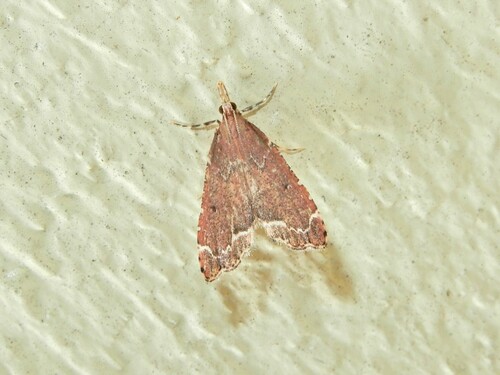
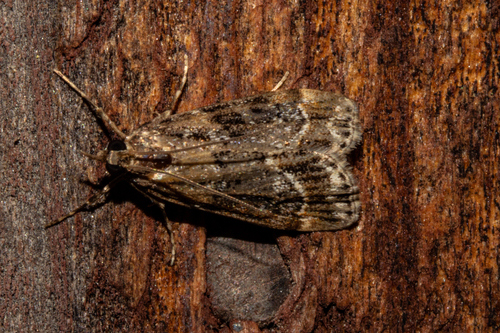
Glaucocharis lepidella

Glaucocharis lepidella

Glaucocharis lepidella

Endemic
Daily sighting probability ~20% · Possible
at Rakiura National Park

In 3 days ~40% in a week ~70%

16 Verified sightings at Rakiura National Park From 2019 to 2026
29 In all 2 parks
January Best month
☀️🌙 Day & Night When it's spotted

About the Glaucocharis lepidella

Glaucocharis lepidella is a species of moth in the family Crambidae. It was described by Francis Walker in 1866. It is endemic to New Zealand and is found in both the North and South Island. The species inhabits lowland to subalpine native forest. Larvae may feed on mosses. Adults are on the wing from November to February and are attracted to light.

This species was first described by Francis Walker in 1866 using a specimen collected by T. R. Oxley in Nelson and named Eromene lepidella. In 1875 Cajetan von Felder, Rudolf Felder and Alois Friedrich Rogenhofer, thinking they were describing a new species, named it Crambus gracilis. In 1882 Edward Meyrick placed this species in the genus Diptychophora. In 1883 Meyrick gave a more detailed description of the specie and synonymised Crambus gracilis into D. lepidella. George Hudson discussed and illustrated this species under this name in his 1928 book The butterflies and moths of New Zealand. In 1929 Alfred Philpott described the genitalia of the male of this species. In 1971 David E. Gaskin placed this species in the genus Pareromene. In 1985 Gaskin again discussed this species and placed it in the genus Glaucocharis. The... Wikipedia →

Global Distribution

Parks Where Found

# Park Country Daily sighting probability
1 Rakiura National Park 🇳🇿 New Zealand
~20%
2 Fiordland National Park 🇳🇿 New Zealand
~10%

Before you go

What are the chances of seeing a Glaucocharis lepidella in Rakiura National Park?

Possible

About 20% of wildlife watchers report a Glaucocharis lepidella sighting in Rakiura National Park on a given day, based on 16 verified sightings from GBIF citizen-science data from 2019 to 2026. It is the 41st most-seen of the 118 insects we can rate there. Over three days the chance rises to about 40%, and over a week to about 70%, if each day is a fresh chance.

When is the best time to see a Glaucocharis lepidella in Rakiura National Park?

December and January

In those months about 30% of wildlife watchers report a Glaucocharis lepidella in Rakiura National Park on a given day, against under 5% in March to November, the lowest months.

What time of day is best to see a Glaucocharis lepidella?

Between 10 pm and 1 am

Across all the parks we cover, that three-hour window holds the most Glaucocharis lepidella sightings with a recorded time, and about 6 in 10 of them come between 6 pm and 6 am: it is seen both by day and at night.

Is Rakiura National Park the best place to see a Glaucocharis lepidella?

Yes

Of the 2 parks where we can rate Glaucocharis lepidella sightings, Rakiura National Park has the highest daily chance: about 20%. Next come Fiordland National Park (New Zealand, about 10%).

Where does the Glaucocharis lepidella sighting chance come from?

GBIF citizen-science records

It is estimated from how often the Glaucocharis lepidella is recorded against all the insects logged in Rakiura National Park (16 verified sightings from 2019 to 2026), calibrated against known sighting rates. Figures are rounded to the nearest 10% because citizen-science data supports honest approximations, not decimals, and months with records from fewer than five people show "—". How it works.

← Back to Rakiura National Park