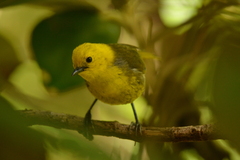
Mōhua (Yellowhead)

Mōhua (Yellowhead)

Mohoua ochrocephala

Silhouette: Amy Whitehead · PhyloPic

LCNTNear ThreatenedVUENCR Endemic
Daily sighting probability ~50% · Likely
at Rakiura National Park

In 3 days ~90% in a week >90%

940 Verified sightings at Rakiura National Park From 2019 to 2026
1,251 In all 3 parks
August Best month
☀️ Diurnal When it's spotted

About the Mōhua (Yellowhead)

The yellowhead or mohua (Mohoua ochrocephala) is a small insectivorous passerine bird endemic to the South Island of New Zealand. Once a common forest bird, its numbers declined drastically after the introduction of rats and stoats, and its IUCN conservation status is now near threatened.

The yellowhead was formally described in 1789 by the German naturalist Johann Friedrich Gmelin in his revised and expanded edition of Carl Linnaeus's Systema Naturae. He placed it with the flycatchers in the genus Muscicapa and coined the binomial name Muscicapa ochrocephala. The specific epithet is derived from the Ancient Greek ōkhros meaning "pale yellow" and -kephalos meaning "-headed". Gmelin based his account on the "yellow-headed fly-catcher" that had been described in 1783 by the English ornithologist John Latham in his book A General Synopsis of Birds. The naturalist Joseph Banks had provided Latham with a watercolour painting of the bird by Georg Forster who had accompanied James Cook on his second voyage to the Pacific Ocean. The inscription on the painting includes the year 1774 and the location "Queen Charlotte's Sound". Queen Charlotte Sound is on the north coast of the... Wikipedia →

Sounds

Recording0:36

New Zealand · 2023

© Dave Pullan · XC872111 · CC BY-NC-SA 4.0

Call0:51

New Zealand · 2022

© Barry Edmonston · XC796799 · CC BY-NC-SA 4.0

?0:34

New Zealand · 2011

© George Armistead · XC90259 · CC BY-NC-ND 2.5

Global Distribution

Parks Where Found

# Park Country Daily sighting probability
1 Rakiura National Park 🇳🇿 New Zealand
~50%
2 Arthur's Pass National Park 🇳🇿 New Zealand
~10%
3 Fiordland National Park 🇳🇿 New Zealand
~10%

Before you go

What are the chances of seeing a Mōhua (Yellowhead) in Rakiura National Park?

Likely

About 50% of wildlife watchers report a Mōhua (Yellowhead) sighting in Rakiura National Park on a given day, based on 940 verified sightings from GBIF citizen-science data from 2019 to 2026. It is the 13th most-seen of the 80 birds we can rate there. Over three days the chance rises to about 90%, and over a week to over 90%, if each day is a fresh chance.

When is the best time to see a Mōhua (Yellowhead) in Rakiura National Park?

August and October–April

In those months about 50% of wildlife watchers report a Mōhua (Yellowhead) in Rakiura National Park on a given day, against about 30% in September, the lowest month.

What time of day is best to see a Mōhua (Yellowhead)?

Between 11 am and 2 pm

Across all the parks we cover, that three-hour window holds the most Mōhua (Yellowhead) sightings with a recorded time, and about 9 in 10 of them come between 6 am and 6 pm: it is a daytime animal.

Is Rakiura National Park the best place to see a Mōhua (Yellowhead)?

Yes

Of the 3 parks where we can rate Mōhua (Yellowhead) sightings, Rakiura National Park has the highest daily chance: about 50%. Next come Arthur's Pass National Park (New Zealand, about 10%) and Fiordland National Park (New Zealand, about 10%).

Which relatives of the Mōhua (Yellowhead) live in Rakiura National Park?

Same family: Acanthizidae

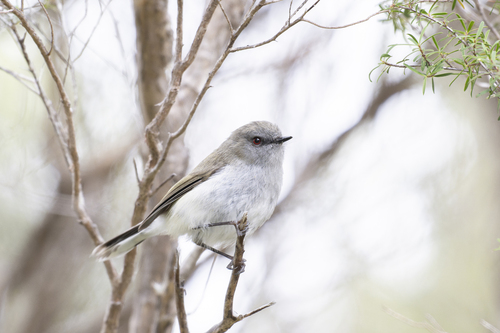
The closest relatives of the Mōhua (Yellowhead) that you can see in Rakiura National Park (family Acanthizidae, Thornbills and Allies) are Grey Warbler (about 60%) and Pipipi (about 50%), with each one's daily chance of a sighting.

Where does the Mōhua (Yellowhead) sighting chance come from?

GBIF citizen-science records

It is estimated from how often the Mōhua (Yellowhead) is recorded against all the birds logged in Rakiura National Park (940 verified sightings from 2019 to 2026), calibrated against known sighting rates. Figures are rounded to the nearest 10% because citizen-science data supports honest approximations, not decimals, and months with records from fewer than five people show "—". How it works.

← Back to Rakiura National Park