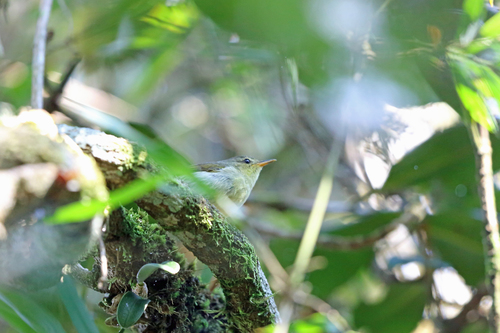
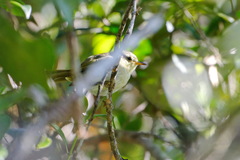

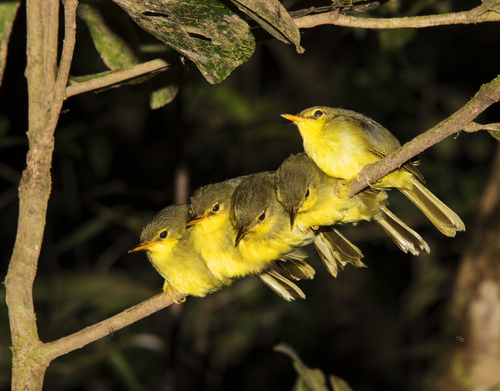
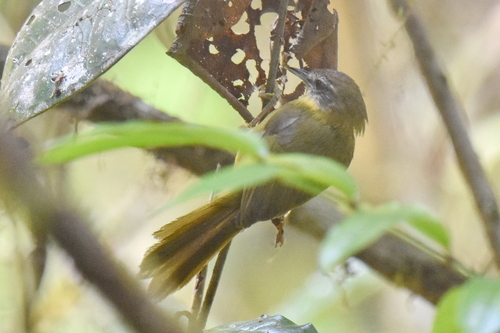
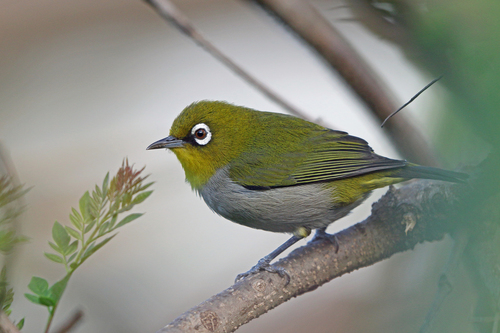
Cryptic Warbler

Cryptic Warbler

Cryptosylvicola randrianasoloi

Silhouette: Sheatherius · PhyloPic

LCLeast ConcernNTVUENCR Endemic
Daily sighting probability ~10% · With luck
at Ranomafana National Park

In 3 days ~40% in a week ~60%

112 Verified sightings at Ranomafana National Park From 2019 to 2026
112 In 1 park
March Best month
☀️ Diurnal When it's spotted

About the Cryptic Warbler

The cryptic warbler (Cryptosylvicola randrianasoloi) is a species of Malagasy warbler in the family Bernieridae. It was formerly placed in the Old World warbler family Sylviidae. It was first discovered in 1992 near the Analamazaotra Special Reserve in Madagascar, and is endemic to the forests on the eastern part of island between Anjanaharibe-Sud Special Reserve and Andohahela National Park.

The cryptic warbler was first identified as a new species in November 1992, when an unknown passerine was photographed, tape recorded and collected from Maromizaha Forest, Eastern Madagascar. Seven days later, the same species was tape recorded at Ranomafana National Park. Additionally, two specimens of the unknown species were collected from Andrigitra Forest a year later in 1993.

The species was later described from these specimens as belonging to a new genus and species, Cryptosylvicola randrianasoloi. The generic name Cryptosylvicola was formed from Greek Kryptos, meaning hidden, Latin silva, meaning forest and Latin cola, meaning inhabitant. The name therefore translates to "hidden forest inhabitant". The specific epithet randrianasoloi honors the Malagasy ornithologist... Wikipedia →

Sounds

Song1:10

Madagascar · 2020

© Ken Behrens · XC622577 · CC BY-NC-SA 4.0

Call0:13

Madagascar · 2019

© Dries Van de Loock · XC536960 · CC BY-NC-SA 4.0

Song0:35

Madagascar · 2017

© Ross Gallardy · XC418937 · CC BY-NC-SA 4.0

Global Distribution

Parks Where Found

# Park Country Daily sighting probability
1 Ranomafana National Park 🇲🇬 Madagascar
~10%

More parks will be added in future updates.

Before you go

What are the chances of seeing a Cryptic Warbler in Ranomafana National Park?

With luck

About 10% of wildlife watchers report a Cryptic Warbler sighting in Ranomafana National Park on a given day, based on 112 verified sightings from GBIF citizen-science data from 2019 to 2026. It is the 61st most-seen of the 102 birds we can rate there. Over three days the chance rises to about 40%, and over a week to about 60%, if each day is a fresh chance.

When is the best time to see a Cryptic Warbler in Ranomafana National Park?

March

In that month about 30% of wildlife watchers report a Cryptic Warbler in Ranomafana National Park on a given day, against under 5% in August, the lowest month. That is one of Ranomafana National Park's wettest months, with about 380 mm of rain against 80 mm in September. January and June have too few records to rate.

What time of day is best to see a Cryptic Warbler?

Between 7 and 10 am

Across all the parks we cover, that three-hour window holds the most Cryptic Warbler sightings with a recorded time, and about 8 in 10 of them come between 6 am and 6 pm: it is a daytime animal.

Where else can you see a Cryptic Warbler?

Only Ranomafana National Park, in our data

Ranomafana National Park is the only park on Wallace's Line with enough records to rate Cryptic Warbler sightings: about 10% of wildlife watchers there report one on a given day.

Which relatives of the Cryptic Warbler live in Ranomafana National Park?

Same family: Bernieridae

The closest relatives of the Cryptic Warbler that you can see in Ranomafana National Park (family Bernieridae, Malagasy Warblers) are Spectacled Tetraka (about 40%), Rand's Warbler (about 40%) and Long-billed Bernieria (about 40%), with each one's daily chance of a sighting.

Where does the Cryptic Warbler sighting chance come from?

GBIF citizen-science records

It is estimated from how often the Cryptic Warbler is recorded against all the birds logged in Ranomafana National Park (112 verified sightings from 2019 to 2026), calibrated against known sighting rates. Figures are rounded to the nearest 10% because citizen-science data supports honest approximations, not decimals, and months with records from fewer than five people show "—". How it works.

← Back to Ranomafana National Park