
Wedge-tailed Jery

Wedge-tailed Jery

Hartertula flavoviridis

Silhouette: Sheatherius · PhyloPic

LCNTNear ThreatenedVUENCR Endemic
Daily sighting probability ~20% · Possible
at Ranomafana National Park

In 3 days ~50% in a week ~80%

177 Verified sightings at Ranomafana National Park From 2019 to 2026
219 In all 2 parks
November Best month
🌅 Crepuscular When it's spotted

About the Wedge-tailed Jery

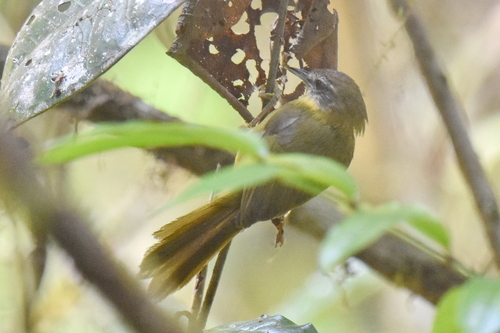
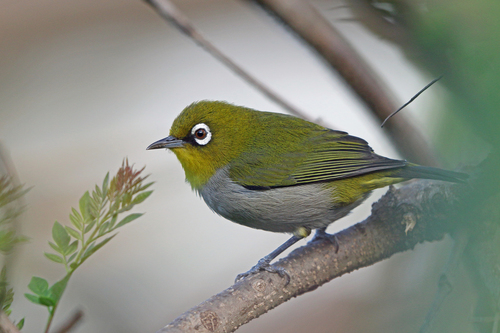
The wedge-tailed jery (Hartertula flavoviridis) is a small bird endemic to the east of Madagascar. The species has been the cause of some taxonomic confusion, it was originally placed with the jeries in the genus Neomixis (Cisticolidae) before being placed in its own monotypic genus Hartertula, but still considered close to Neomixis. Recent research indicates it is part of an endemic Malagasy radiation currently known as the Malagasy warblers (Cibois et al. 2001).

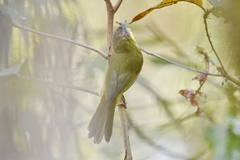
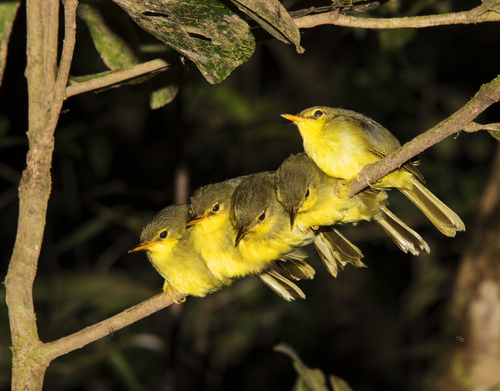
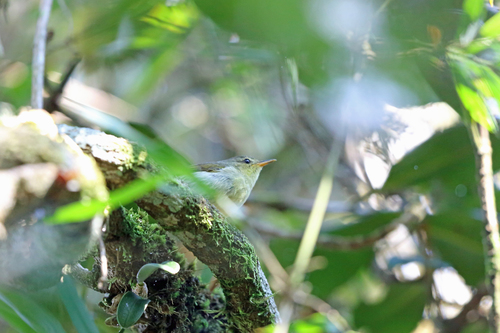
The wedge-tailed jery is a small, slender warbler-like bird between 12–13 cm long and weighing around 10 g. The plumage is bright yellow before and olive on the crown, wing and back. The eye has a pale white ring and is crossed with a pale supercilium. There is no sexual dimorphism in the plumage of adults, and juvenile birds have similar plumage as well.

The call, sung repetitively during foraging, is a nasal tsee zeezeezeezeezeezee. In the rainforest they forage in the low understory, gleaning insects from the undersides of leaves and branches, often hanging upside down to do so. They are also accomplished at extracting insects from clumps of leaves and spider web at the ends... Wikipedia →

Sounds

Call1:04

Madagascar · 2012

© Peter Boesman · XC762781 · CC BY-NC-ND 4.0

Song0:32

Madagascar · 2021

© Ken Behrens · XC624303 · CC BY-NC-SA 4.0

Call0:13

Madagascar · 2017

© Ross Gallardy · XC418927 · CC BY-NC-SA 4.0

Global Distribution

Parks Where Found

# Park Country Daily sighting probability
1 Ranomafana National Park 🇲🇬 Madagascar
~20%
2 Mantadia National Park 🇲🇬 Madagascar
~10%

Before you go

What are the chances of seeing a Wedge-tailed Jery in Ranomafana National Park?

Possible

About 20% of wildlife watchers report a Wedge-tailed Jery sighting in Ranomafana National Park on a given day, based on 177 verified sightings from GBIF citizen-science data from 2019 to 2026. It is the 52nd most-seen of the 102 birds we can rate there. Over three days the chance rises to about 50%, and over a week to about 80%, if each day is a fresh chance.

When is the best time to see a Wedge-tailed Jery in Ranomafana National Park?

July and November

In those months about 30% of wildlife watchers report a Wedge-tailed Jery in Ranomafana National Park on a given day, against about 10% in February, May and August–September, the lowest months. January and June have too few records to rate.

What time of day is best to see a Wedge-tailed Jery?

Between 8 and 11 am

Across all the parks we cover, that three-hour window holds the most Wedge-tailed Jery sightings with a recorded time, and about 6 in 10 of them come between 6 am and 6 pm: it is most active around dawn and dusk.

Is Ranomafana National Park the best place to see a Wedge-tailed Jery?

Yes

Of the 2 parks where we can rate Wedge-tailed Jery sightings, Ranomafana National Park has the highest daily chance: about 20%. Next come Mantadia National Park (Madagascar, about 10%).

Which relatives of the Wedge-tailed Jery live in Ranomafana National Park?

Same family: Bernieridae

The closest relatives of the Wedge-tailed Jery that you can see in Ranomafana National Park (family Bernieridae, Malagasy Warblers) are Spectacled Tetraka (about 40%), Rand's Warbler (about 40%) and Long-billed Bernieria (about 40%), with each one's daily chance of a sighting.

Where does the Wedge-tailed Jery sighting chance come from?

GBIF citizen-science records

It is estimated from how often the Wedge-tailed Jery is recorded against all the birds logged in Ranomafana National Park (177 verified sightings from 2019 to 2026), calibrated against known sighting rates. Figures are rounded to the nearest 10% because citizen-science data supports honest approximations, not decimals, and months with records from fewer than five people show "—". How it works.

← Back to Ranomafana National Park