
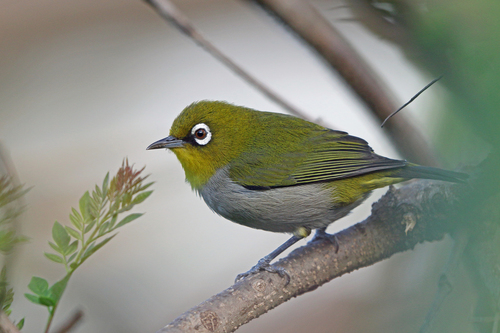
Nelicourvi Weaver

Nelicourvi Weaver

Ploceus nelicourvi

Silhouette: Sheatherius · PhyloPic

LCLeast ConcernNTVUENCR Endemic
Daily sighting probability ~60% · Likely
at Ranomafana National Park

In 3 days ~90% in a week >90%

478 Verified sightings at Ranomafana National Park From 2019 to 2026
702 In all 2 parks
July Best month
☀️ Diurnal When it's spotted

About the Nelicourvi Weaver

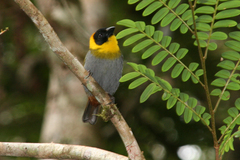
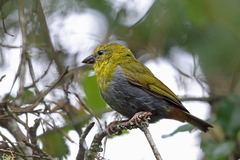
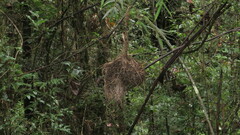
The nelicourvi weaver (Ploceus nelicourvi) is a species of bird in the family Ploceidae. It is endemic to Madagascar. Together with its closest relative, the sakalava weaver, it is sometimes placed in a separate genus Nelicurvius. A slender, sparrow-like bird, it is 15 cm (5.9 in) long and weighing 20–28 g (0.71–0.99 oz). Breeding males have a black bill and head, brown eyes, yellow collar, grey belly, chestnut-brown lower tail coverts, olive back, and blackish flight feathers edged greenish. Non-breeding males have mottled grey and green heads. In the breeding female the front of the head is yellow and the back olive green, with a broad yellow eyebrow. It builds solitary, roofed, retort-shaped nests, hanging by a rope from a branch, vine or bamboo stem, in an open space. It primarily feeds on insects, looking on its own or in very small groups, often together with long-billed bernieria. Its natural habitat is subtropical or tropical moist lowland and mountain forests. The conservation status of Nelicourvi weaver is least concern according to the IUCN Red List.

The nelicourvi weaver was first described by Italian naturalist and physician Giovanni Antonio Scopoli in 1786... Wikipedia →

Sounds

Call0:12

Madagascar · 2024

© Francesco Barberini · XC937167 · CC BY-NC-SA 4.0

Song0:23

Madagascar · 2012

© Peter Boesman · XC762941 · CC BY-NC-ND 4.0

Call0:36

Madagascar · 2020

© Ken Behrens · XC622519 · CC BY-NC-SA 4.0

Global Distribution

Parks Where Found

# Park Country Daily sighting probability
1 Ranomafana National Park 🇲🇬 Madagascar
~60%
2 Mantadia National Park 🇲🇬 Madagascar
~40%

Before you go

What are the chances of seeing a Nelicourvi Weaver in Ranomafana National Park?

Likely

About 60% of wildlife watchers report a Nelicourvi Weaver sighting in Ranomafana National Park on a given day, based on 478 verified sightings from GBIF citizen-science data from 2019 to 2026. It is the 15th most-seen of the 102 birds we can rate there. Over three days the chance rises to about 90%, and over a week to over 90%, if each day is a fresh chance.

When is the best time to see a Nelicourvi Weaver in Ranomafana National Park?

February, May, July–August and November–December

In those months about 60% of wildlife watchers report a Nelicourvi Weaver in Ranomafana National Park on a given day, against about 30% in March, the lowest month. January and June have too few records to rate.

What time of day is best to see a Nelicourvi Weaver?

Between 6 and 9 am

Across all the parks we cover, that three-hour window holds the most Nelicourvi Weaver sightings with a recorded time, and about 8 in 10 of them come between 6 am and 6 pm: it is a daytime animal.

Is Ranomafana National Park the best place to see a Nelicourvi Weaver?

Yes

Of the 2 parks where we can rate Nelicourvi Weaver sightings, Ranomafana National Park has the highest daily chance: about 60%. Next come Mantadia National Park (Madagascar, about 40%).

Which relatives of the Nelicourvi Weaver live in Ranomafana National Park?

Same family: Ploceidae

The closest relatives of the Nelicourvi Weaver that you can see in Ranomafana National Park (family Ploceidae, Weavers and Allies) are Forest Fody (about 30%) and Madagascar Fody (about 10%), with each one's daily chance of a sighting.

Where does the Nelicourvi Weaver sighting chance come from?

GBIF citizen-science records

It is estimated from how often the Nelicourvi Weaver is recorded against all the birds logged in Ranomafana National Park (478 verified sightings from 2019 to 2026), calibrated against known sighting rates. Figures are rounded to the nearest 10% because citizen-science data supports honest approximations, not decimals, and months with records from fewer than five people show "—". How it works.

← Back to Ranomafana National Park