
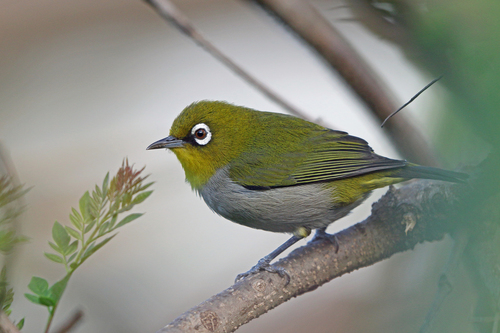
Velvet Asity

Velvet Asity

Philepitta castanea

Silhouette: Sheatherius · PhyloPic

LCLeast ConcernNTVUENCR Endemic
Daily sighting probability ~50% · Likely
at Ranomafana National Park

In 3 days ~90% in a week >90%

459 Verified sightings at Ranomafana National Park From 2019 to 2026
550 In all 2 parks
September Best month
☀️ Diurnal When it's spotted

About the Velvet Asity

The velvet asity (Philepitta castanea) is a bird species in the family Philepittidae that is endemic to Madagascar. Its natural habitat is subtropical or tropical moist lowland forests. Non-breeding males have yellow-tipped feathers, while breeding males have a velvety black plumage with a pair of green fleshy supraorbital caruncles above the eyes. Adult females are greenish and have underparts striped with pale yellow-green longitudinal lines. Velvet asities eat berries and other fruits in the undergrowth. They build hanging nests with a little roof over the entrance. The species is listed as “Least Concern” on the IUCN Red List.

The velvet asity is a member of a monophyletic group within the order Passeriformes and the family Philepittidae. Philepittidae was originally considered a distinct and isolated family within the suboscine passerines. However, phylogenetic analysis revealed that asities were closely related to the Old World broadbills (family Eurylaimidae).

Within Philepittidae, two genera are currently recognized: Philepitta and Neodrepanis. Philepitta and Neodrepanis comprise four species of asities, all of which are endemic to Madagascar. The genus Philepitta... Wikipedia →

Sounds

Call0:15

Madagascar · 2010

© Charles Hesse · XC86545 · CC BY-NC-ND 2.5

Song0:10

Madagascar · 2013

© Albert Lastukhin · XC983754 · CC BY-NC-ND 4.0

Call0:12

Madagascar · 2023

© Paul Lenrumé · XC861050 · CC BY-NC-SA 4.0

Global Distribution

Parks Where Found

# Park Country Daily sighting probability
1 Ranomafana National Park 🇲🇬 Madagascar
~50%
2 Mantadia National Park 🇲🇬 Madagascar
~20%

Before you go

What are the chances of seeing a Velvet Asity in Ranomafana National Park?

Likely

About 50% of wildlife watchers report a Velvet Asity sighting in Ranomafana National Park on a given day, based on 459 verified sightings from GBIF citizen-science data from 2019 to 2026. It is the 16th most-seen of the 102 birds we can rate there. Over three days the chance rises to about 90%, and over a week to over 90%, if each day is a fresh chance.

When is the best time to see a Velvet Asity in Ranomafana National Park?

July, September and November–December

In those months about 60% of wildlife watchers report a Velvet Asity in Ranomafana National Park on a given day, against about 40% in March to May, the lowest months. January and June have too few records to rate.

What time of day is best to see a Velvet Asity?

Between 6 and 9 am

Across all the parks we cover, that three-hour window holds the most Velvet Asity sightings with a recorded time, and about 8 in 10 of them come between 6 am and 6 pm: it is a daytime animal.

Is Ranomafana National Park the best place to see a Velvet Asity?

Yes

Of the 2 parks where we can rate Velvet Asity sightings, Ranomafana National Park has the highest daily chance: about 50%. Next come Mantadia National Park (Madagascar, about 20%).

Where does the Velvet Asity sighting chance come from?

GBIF citizen-science records

It is estimated from how often the Velvet Asity is recorded against all the birds logged in Ranomafana National Park (459 verified sightings from 2019 to 2026), calibrated against known sighting rates. Figures are rounded to the nearest 10% because citizen-science data supports honest approximations, not decimals, and months with records from fewer than five people show "—". How it works.

← Back to Ranomafana National Park