Arroyo Bluet

Arroyo Bluet

Enallagma praevarum

Daily sighting probability <5% · Rare
at Saguaro National Park

In 3 days ~10% in a week ~20%

6 Verified sightings at Saguaro National Park From 2019 to 2026
6 In 1 park
July Best month
☀️ Diurnal When it's spotted

About the Arroyo Bluet

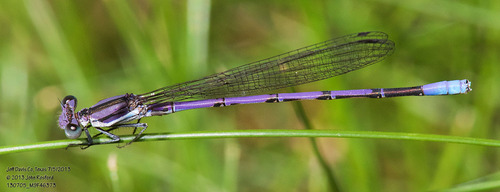
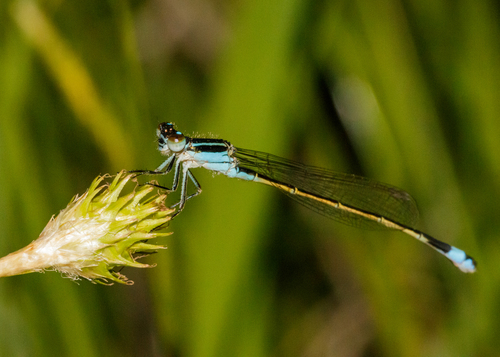
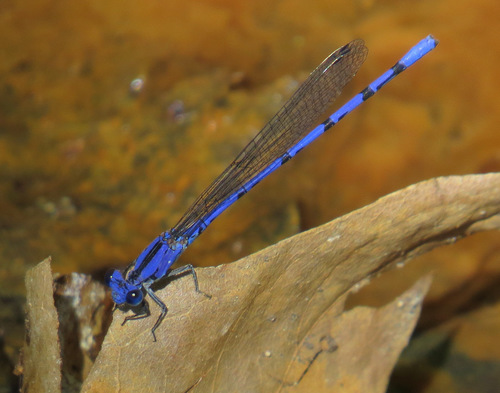
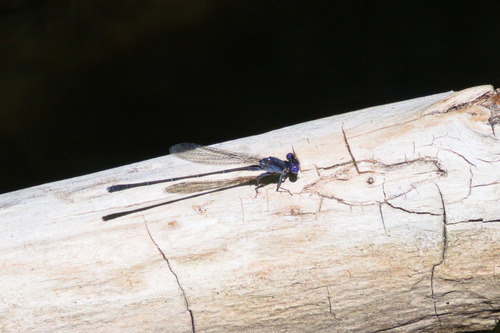
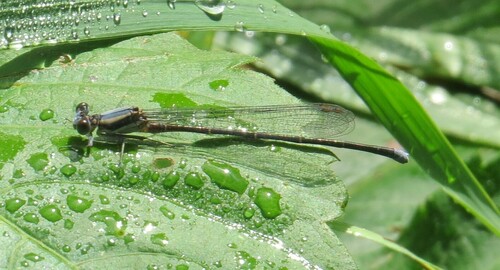
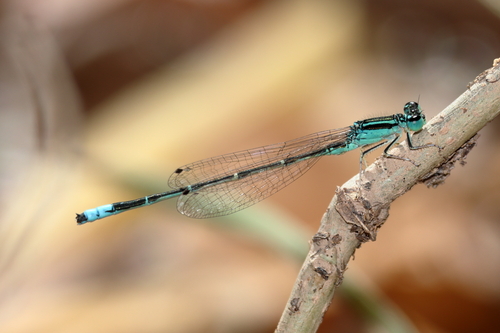
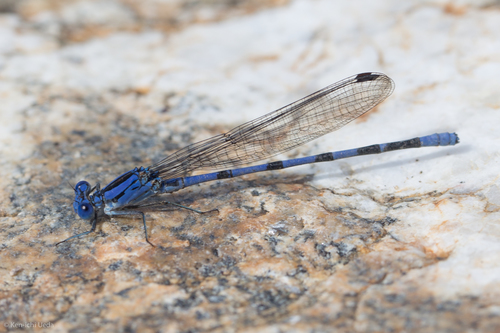
The arroyo bluet (Enallagma praevarum) is a damselfly of the family Coenagrionidae, native to the western United States, south to southern Mexico. It is associated with slow-flowing streams or lake margins with emergent vegetation.

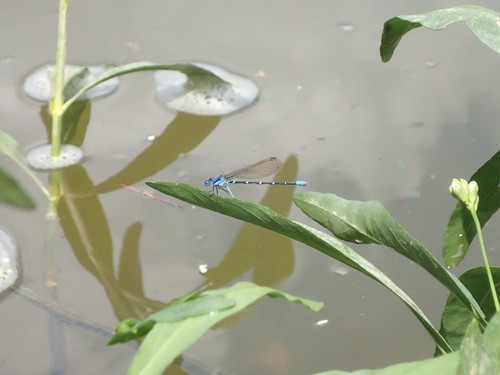
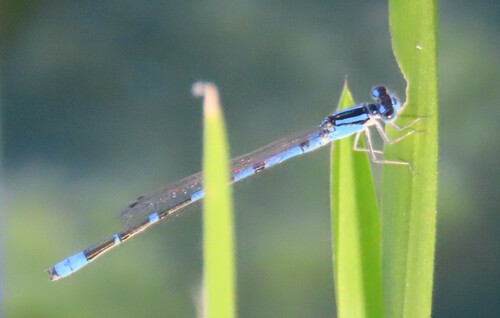
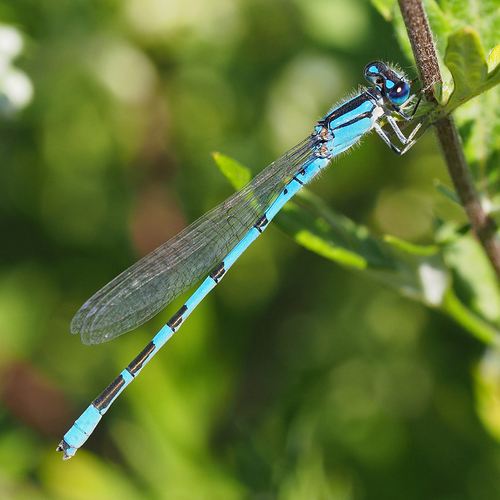
Males have blue eyes, accompanied by oval, raindrop shaped turquoise spots above each eye. Their abdomen is blue with large black rectangular spots lining the top, ending in an abdomen tip of the same color set. Females possess the same build as males, but can also be found in tan or lighter blue shades rather than turquoise. Their legs are a lighter brown color (as opposed to black), and the spots above their eyes are usually larger than their male counterparts.

Arroyo Bluets occupy both the west coast of Southern California and the region of sagebrush along the northeastern California border. The elevations at which the Arroyo bluet can be most commonly found are best described as intermediate. In northeastern California, the Arroyo Bluet has been recorded from sea level at elevations up to 4,600 feet or 1,400 meters. These damselflies are abundant in... Wikipedia →
Global Distribution

Parks Where Found

# Park Country Daily sighting probability
1 Saguaro National Park 🇺🇸 United States
<5%

More parks will be added in future updates.

Cities Where Found

# City Country Daily sighting probability
1 Sacramento 🇺🇸 United States
<5%
2 Denver 🇺🇸 United States
<5%
3 Los Angeles 🇺🇸 United States
<5%
4 San Francisco 🇺🇸 United States
<5%

Before you go

What are the chances of seeing an Arroyo Bluet in Saguaro National Park?

Rare

Under 5% of wildlife watchers report an Arroyo Bluet sighting in Saguaro National Park on a given day, based on 6 verified sightings from GBIF citizen-science data from 2019 to 2026. It is the 248th most-seen of the 354 insects we can rate there. Over three days the chance rises to about 10%, and over a week to about 20%, if each day is a fresh chance.

When is the best time to see an Arroyo Bluet in Saguaro National Park?

July, September and November

In those months about 10% of wildlife watchers report an Arroyo Bluet in Saguaro National Park on a given day, against under 5% in August, October and December–June, the lowest months. Those are among Saguaro National Park's wettest months, with about 40 mm of rain a month against almost none in May.

What time of day is best to see an Arroyo Bluet?

Between noon and 3 pm

Across all the parks we cover, that three-hour window holds the most Arroyo Bluet sightings with a recorded time, and nearly all of them come between 6 am and 6 pm: it is a daytime animal.

Where else can you see an Arroyo Bluet?

Only Saguaro National Park, in our data

Saguaro National Park is the only park on Wallace's Line with enough records to rate Arroyo Bluet sightings: under 5% of wildlife watchers there report one on a given day.

Where does the Arroyo Bluet sighting chance come from?

GBIF citizen-science records

It is estimated from how often the Arroyo Bluet is recorded against all the insects logged in Saguaro National Park (6 verified sightings from 2019 to 2026), calibrated against known sighting rates. Figures are rounded to the nearest 10% because citizen-science data supports honest approximations, not decimals, and months with records from fewer than five people show "—". How it works.

← Back to Saguaro National Park