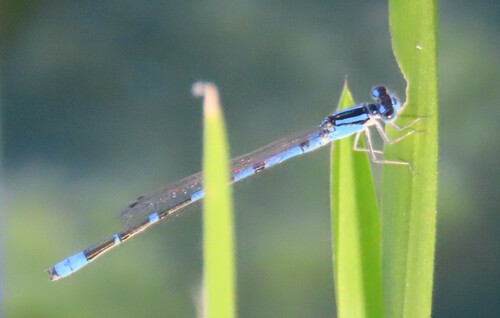
Powdered Dancer

Powdered Dancer

Argia moesta

Daily sighting probability <5% · Rare
at Saguaro National Park

In 3 days ~10% in a week ~20%

8 Verified sightings at Saguaro National Park From 2019 to 2026
147 In all 4 parks
December Best month
☀️ Diurnal When it's spotted

About the Powdered Dancer

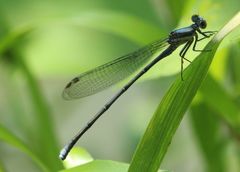
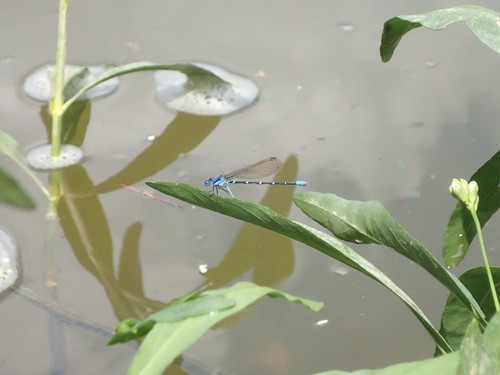
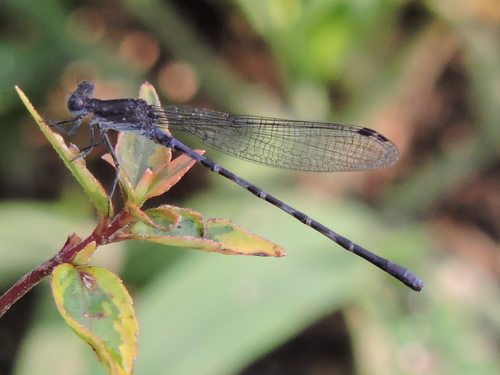
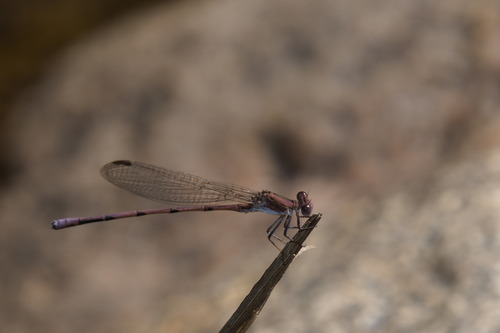
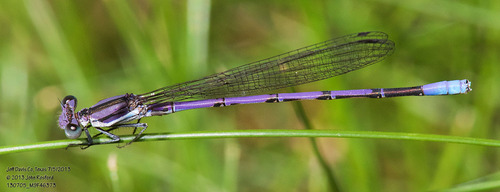
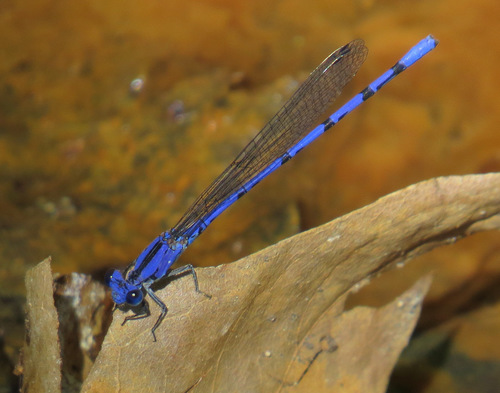
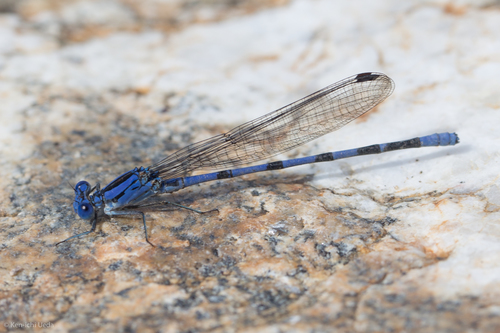
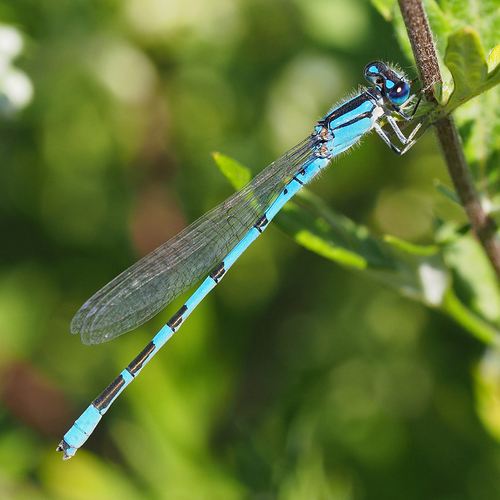
The powdered dancer (Argia moesta) is a damselfly of the family Coenagrionidae. It is native to North America. It may be seen year-round in at least some of its range. The common name refers directly to the male's pruinosity, appearing to be covered with a powdery blue or grayish substance. Older males are more pruinose, and may even be more ash white than blue. The specific epithet moesta, means sorrowful, and may refer to customs (such as those on Ash Wednesday) of dusting oneself with ashes to express sorrow or mourning.

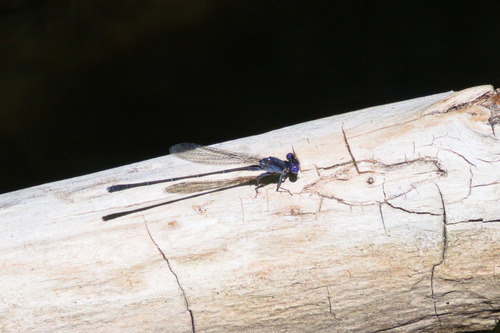
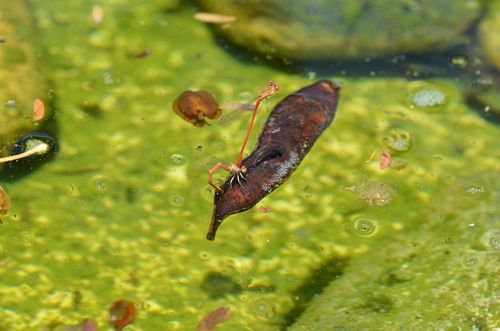
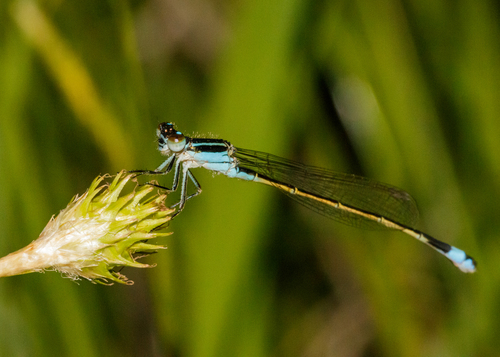
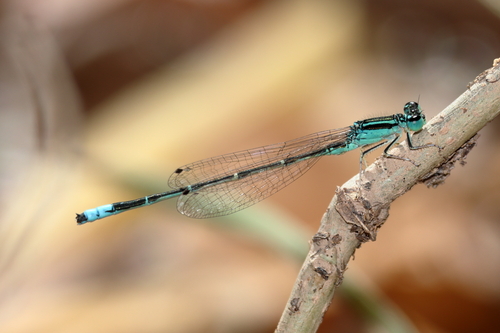
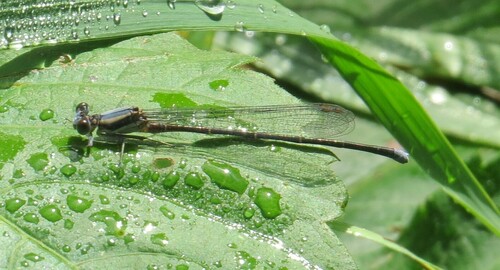
Males have a blue tip at the end of the abdomen. Immature (freshly moulted, or teneral) males are tan to dark brown, turning darker with age and becoming almost completely whitish (pruinose) at maturity. Females come in blue and brown forms based on the color of the thorax, which has hair thin dark shoulder stripes.

The blue form female is very similar to the female blue-fronted dancer; a key to separating these two is the number of cells below the stigma: our species has two cells below the stigma where a blue-fronted dancer has one.

During mating, a male uses claspers at the end of his abdomen to grab a female... Wikipedia →
Global Distribution

Parks Where Found

# Park Country Daily sighting probability
1 Big Bend National Park 🇺🇸 United States
~20%
2 Shenandoah National Park 🇺🇸 United States
~10%
3 Great Smoky Mountains National Park 🇺🇸 United States
~10%
4 Saguaro National Park 🇺🇸 United States
<5%

Cities Where Found

# City Country Daily sighting probability
1 Austin 🇺🇸 United States
~10%
2 Houston 🇺🇸 United States
~10%
3 Dallas 🇺🇸 United States
~10%
4 Baltimore 🇺🇸 United States
~10%
5 San Antonio 🇺🇸 United States
~10%
6 Minneapolis [Saint Paul] 🇺🇸 United States
~10%
7 Las Vegas 🇺🇸 United States
<5%
8 Montreal 🇨🇦 Canada
<5%
9 Toronto 🇨🇦 Canada
<5%
10 Philadelphia 🇺🇸 United States
<5%

Before you go

What are the chances of seeing a Powdered Dancer in Saguaro National Park?

Rare

Under 5% of wildlife watchers report a Powdered Dancer sighting in Saguaro National Park on a given day, based on 8 verified sightings from GBIF citizen-science data from 2019 to 2026. It is the 248th most-seen of the 354 insects we can rate there. Over three days the chance rises to about 10%, and over a week to about 20%, if each day is a fresh chance.

When is the best time to see a Powdered Dancer in Saguaro National Park?

October to December

In those months about 10% of wildlife watchers report a Powdered Dancer in Saguaro National Park on a given day, against under 5% in January to September, the lowest months.

What time of day is best to see a Powdered Dancer?

Between 10 am and 1 pm

Across all the parks we cover, that three-hour window holds the most Powdered Dancer sightings with a recorded time, and about 9 in 10 of them come between 6 am and 6 pm: it is a daytime animal.

Which relatives of the Powdered Dancer live in Saguaro National Park?

Same genus: Argia

The closest relatives of the Powdered Dancer that you can see in Saguaro National Park (genus Argia, Dancers) are Blue-Ringed Dancer (about 10%), Kiowa Dancer (about 10%) and Amethyst Dancer (about 10%), with each one's daily chance of a sighting.

Where does the Powdered Dancer sighting chance come from?

GBIF citizen-science records

It is estimated from how often the Powdered Dancer is recorded against all the insects logged in Saguaro National Park (8 verified sightings from 2019 to 2026), calibrated against known sighting rates. Figures are rounded to the nearest 10% because citizen-science data supports honest approximations, not decimals, and months with records from fewer than five people show "—". How it works.

← Back to Saguaro National Park