Black-Footed Drone Fly

Black-Footed Drone Fly

Eristalis hirta

Daily sighting probability ~10% · With luck
at Sequoia and Kings Canyon National Parks

In 3 days ~20% in a week ~40%

8 Verified sightings at Sequoia and Kings Canyon National Parks From 2019 to 2026
36 In all 5 parks
August Best month
☀️ Diurnal When it's spotted

About the Black-Footed Drone Fly

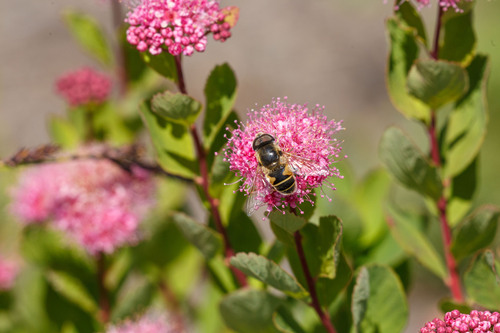
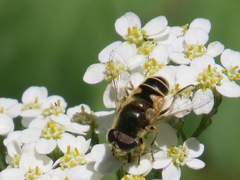
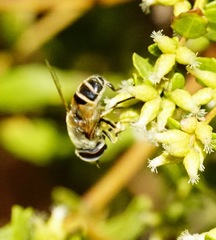
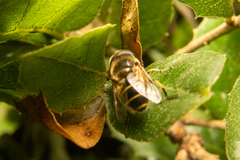
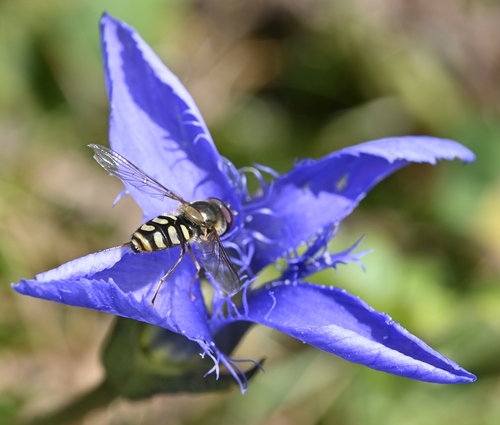
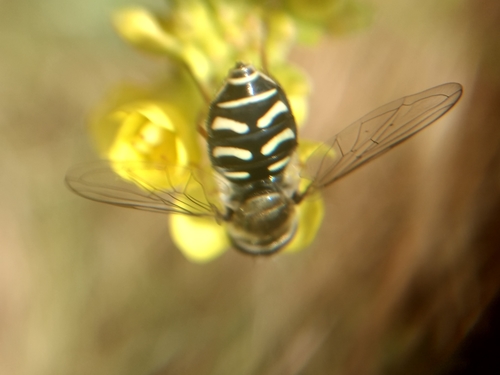
Eristalis hirta, the black-footed drone fly, is a common Western North American species of syrphid fly, first officially described by Loew in 1866. Hoverflies get their names from the ability to remain nearly motionless while in flight. The adults are also known as flower flies as they are commonly found on and around flowers, from which they get both energy-giving nectar and protein-rich pollen. The larvae are aquatic filter-feeders of the rat-tailed type.

This species is found in Western North America and Northern Europe in raised bogs, ditches and temporary pools. For terms see Morphology of Diptera Size Length: 10–15 mm (0.39–0.59 in) Head The frons are a shiny black with light brownish yellow pile. The face and frons of female is unusually broad. The pile of the face is light brownish yellow except the facial stripe (tubercle) and the cheeks which are a shiny black. The antennae are very dark brownish black. The arista is slightly plumose basally. The eyes are contiguous only in males.

Thorax The thorax is dark, shiny, brownish black with yellowish pile. The scutellum is lighter Brownish and shiny. The pleurae are covered with pale yellow... Wikipedia →

Global Distribution

Parks Where Found

# Park Country Daily sighting probability
1 Sequoia and Kings Canyon National Parks 🇺🇸 United States
~10%
2 Pacific Rim National Park Reserve 🇨🇦 Canada
~10%
3 Grand Teton National Park 🇺🇸 United States
~10%
4 Yellowstone National Park 🇺🇸 United States
<5%
5 Rocky Mountain National Park 🇺🇸 United States
<5%

Cities Where Found

# City Country Daily sighting probability
1 Sacramento 🇺🇸 United States
<5%
2 San Francisco 🇺🇸 United States
<5%
3 Vancouver 🇨🇦 Canada
<5%
4 Portland 🇺🇸 United States
<5%
5 Seattle 🇺🇸 United States
<5%
6 Los Angeles 🇺🇸 United States
<5%

Before you go

What are the chances of seeing a Black-Footed Drone Fly in Sequoia and Kings Canyon National Parks?

With luck

About 10% of wildlife watchers report a Black-Footed Drone Fly sighting in Sequoia and Kings Canyon National Parks on a given day, based on 8 verified sightings from GBIF citizen-science data from 2019 to 2026. It is the 95th most-seen of the 161 insects we can rate there. Over three days the chance rises to about 20%, and over a week to about 40%, if each day is a fresh chance.

When is the best time to see a Black-Footed Drone Fly in Sequoia and Kings Canyon National Parks?

June to September

In those months about 10% of wildlife watchers report a Black-Footed Drone Fly in Sequoia and Kings Canyon National Parks on a given day, against under 5% in October to May, the lowest months. Those are among Sequoia and Kings Canyon National Parks's driest months, with about 20 mm of rain a month against 190 mm in January.

What time of day is best to see a Black-Footed Drone Fly?

Between 11 am and 2 pm

Across all the parks we cover, that three-hour window holds the most Black-Footed Drone Fly sightings with a recorded time, and nearly all of them come between 6 am and 6 pm: it is a daytime animal.

Is Sequoia and Kings Canyon National Parks the best place to see a Black-Footed Drone Fly?

Yes

Of the 5 parks where we can rate Black-Footed Drone Fly sightings, Sequoia and Kings Canyon National Parks has the highest daily chance: about 10%. Next come Pacific Rim National Park Reserve (Canada, about 10%) and Grand Teton National Park (United States, about 10%).

Which relatives of the Black-Footed Drone Fly live in Sequoia and Kings Canyon National Parks?

Same family: Syrphidae

The closest relatives of the Black-Footed Drone Fly that you can see in Sequoia and Kings Canyon National Parks (family Syrphidae, Hover Flies) are Common Loopwing Aphideater (about 10%) and Large-Tailed Aphideater (about 10%), with each one's daily chance of a sighting.

Where does the Black-Footed Drone Fly sighting chance come from?

GBIF citizen-science records

It is estimated from how often the Black-Footed Drone Fly is recorded against all the insects logged in Sequoia and Kings Canyon National Parks (8 verified sightings from 2019 to 2026), calibrated against known sighting rates. Figures are rounded to the nearest 10% because citizen-science data supports honest approximations, not decimals, and months with records from fewer than five people show "—". How it works.

← Back to Sequoia and Kings Canyon National Parks