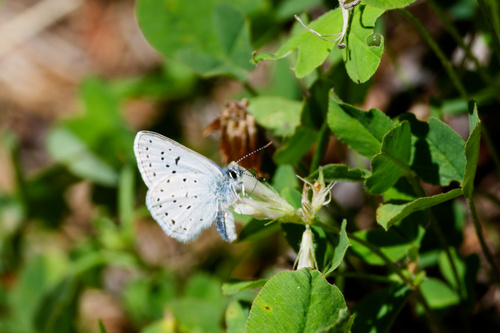
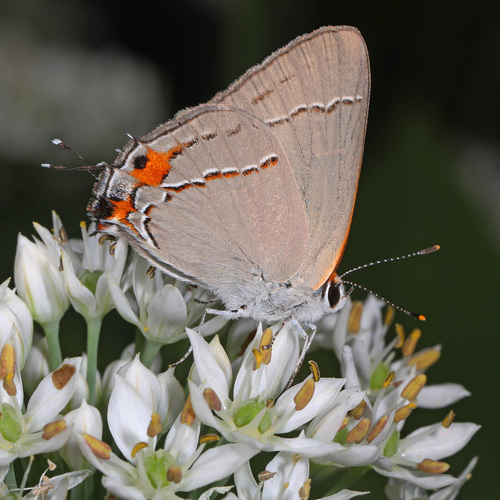
Golden Hairstreak

Golden Hairstreak

Habrodais grunus

Daily sighting probability ~10% · With luck
at Sequoia and Kings Canyon National Parks

In 3 days ~20% in a week ~40%

9 Verified sightings at Sequoia and Kings Canyon National Parks From 2019 to 2026
36 In all 2 parks
July Best month
☀️ Diurnal When it's spotted

About the Golden Hairstreak

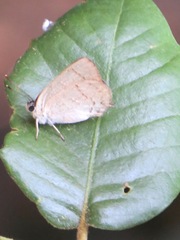
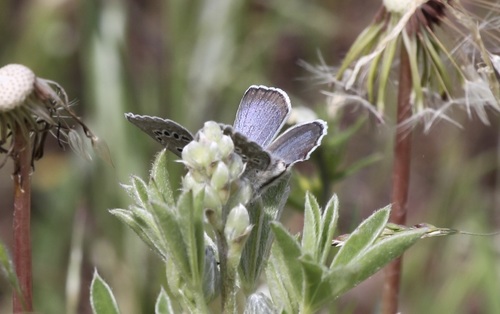
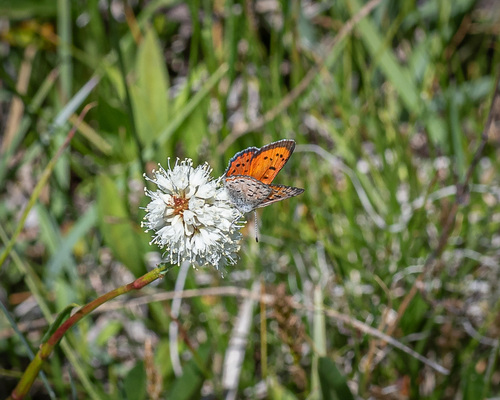
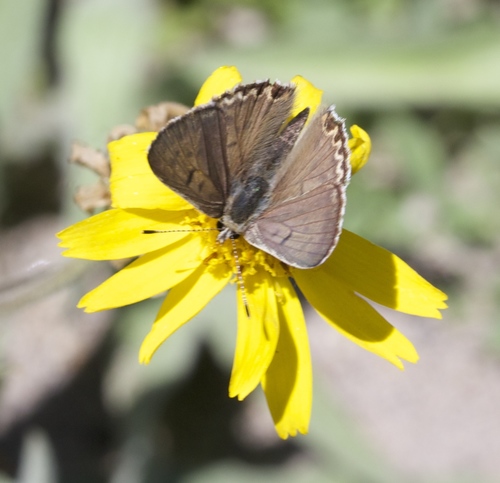
Habrodais grunus, the golden hairstreak, is a butterfly in the family Lycaenidae. It is found in North America in southern Arizona, Oregon, California, Washington, Idaho, and Mexico. The habitat consists of oak woodland, canyons and mountain ridges.

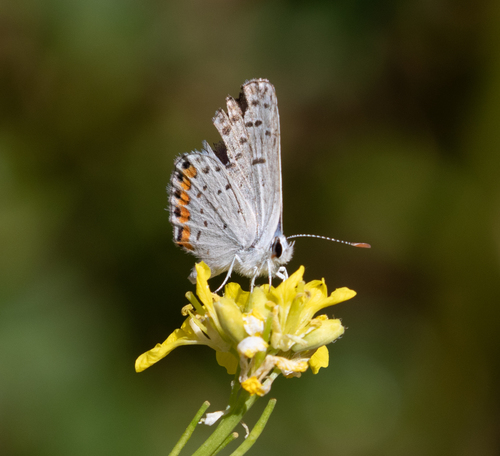
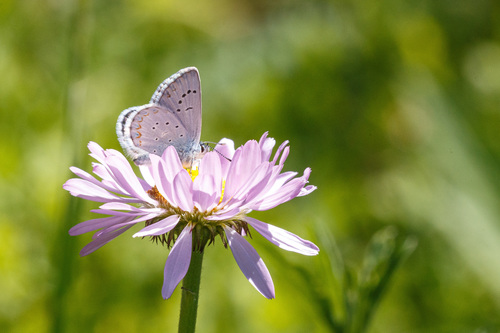
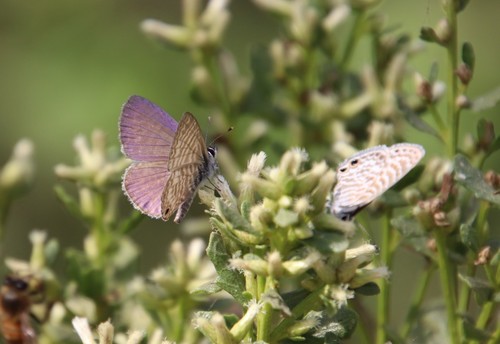
The wingspan is 25–32 mm. Adults have a golden-brown coloration on their body, and have a short tail. Adults are on wing from June to September in one generation per year. Adults are primarily crepuscular, being most active in the early morning and evening, while resting in shaded areas for the remainder of the day. They feed on moisture from various sources and possibly also feed on aphid honeydew or other exudates. They spend the majority of their time above in the trees, only descending for nectar.

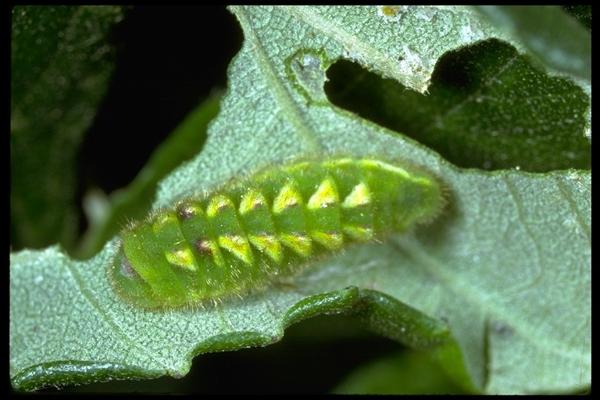
The larvae, which hatch from eggs laid on host twigs, feed on the young leaves of Chrysolepis chrysophylla, Quercus chrysolepis, Quercus vaccinifolia and Lithocarpus densiflorus. The caterpillars are blue-green in color on their body, and have silver hairs. In their subsequent pupa stage, they are bluish-green with brown dots. The caterpillars will mature to their adult stage in the span of approximately 2 weeks. Wikipedia →

Global Distribution

Parks Where Found

# Park Country Daily sighting probability
1 Yosemite National Park 🇺🇸 United States
~10%
2 Sequoia and Kings Canyon National Parks 🇺🇸 United States
~10%

Before you go

What are the chances of seeing a Golden Hairstreak in Sequoia and Kings Canyon National Parks?

With luck

About 10% of wildlife watchers report a Golden Hairstreak sighting in Sequoia and Kings Canyon National Parks on a given day, based on 9 verified sightings from GBIF citizen-science data from 2019 to 2026. It is the 84th most-seen of the 161 insects we can rate there. Over three days the chance rises to about 20%, and over a week to about 40%, if each day is a fresh chance.

When is the best time to see a Golden Hairstreak in Sequoia and Kings Canyon National Parks?

July to September

In those months about 10% of wildlife watchers report a Golden Hairstreak in Sequoia and Kings Canyon National Parks on a given day, against under 5% in October to June, the lowest months. Those are among Sequoia and Kings Canyon National Parks's driest months, with about 20 mm of rain a month against 190 mm in January.

What time of day is best to see a Golden Hairstreak?

Between noon and 3 pm

Across all the parks we cover, that three-hour window holds the most Golden Hairstreak sightings with a recorded time, and about 9 in 10 of them come between 6 am and 6 pm: it is a daytime animal.

Is Sequoia and Kings Canyon National Parks the best place to see a Golden Hairstreak?

Among the best

Of the 2 parks where we can rate Golden Hairstreak sightings, Sequoia and Kings Canyon National Parks ranks 2nd at about 10%, level with the leaders once rounded. The best odds are in Yosemite National Park (United States, about 10%).

Which relatives of the Golden Hairstreak live in Sequoia and Kings Canyon National Parks?

Same family: Lycaenidae

The closest relatives of the Golden Hairstreak that you can see in Sequoia and Kings Canyon National Parks (family Lycaenidae, Gossamer-winged Butterflies) are Spring Azure (about 30%), Boisduval's Blue (about 10%) and Sierra Blue (about 10%), with each one's daily chance of a sighting.

Where does the Golden Hairstreak sighting chance come from?

GBIF citizen-science records

It is estimated from how often the Golden Hairstreak is recorded against all the insects logged in Sequoia and Kings Canyon National Parks (9 verified sightings from 2019 to 2026), calibrated against known sighting rates. Figures are rounded to the nearest 10% because citizen-science data supports honest approximations, not decimals, and months with records from fewer than five people show "—". How it works.

← Back to Sequoia and Kings Canyon National Parks