About the Omnivorous Looper
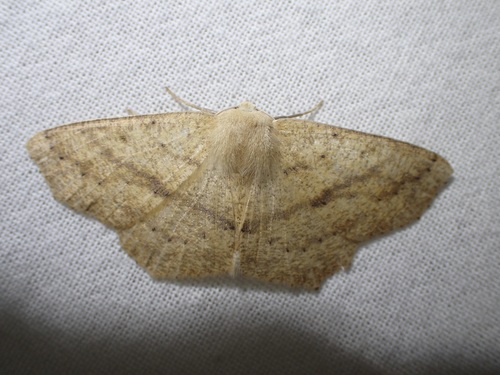
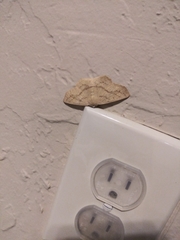
Sabulodes aegrotata, the Omnivorous Looper, is a moth of the family Geometridae. It is found in Western North America, from British Columbia to California. The larvae eat a wide variety of flowering trees and plants including some agricultural crops. Its distinguishing feature is that the medial and postmedial lines intersect near the trailing edge of the wing.
This moth is common in damp coastal forests along the west coast of North America from British Columbia to California. This species has three generations per year in coastal areas and four or five generations in inland locations. Depending on temperature, egg-to-adult development takes 2 to 5 months.
Eggs are barrel-shaped, light green to reddish brown with a ring of tiny projections. Eggs are laid in clusters on leaves of the host plants and hatch after 8 or 9 days. When mature caterpillars are ready to pupate, they make pearly white to brown cocoons, hidden in between leaves. Pupation lasts 1 to 4 weeks.
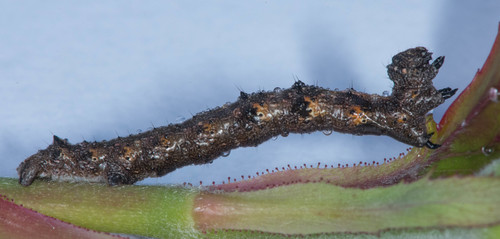
The larva make shelters from silk and folded leaves where they shelter during the day and come out at night to feed. The University of California IPM Program gives a description of... Wikipedia →