Contracted Darkling Beetle

Contracted Darkling Beetle

Meracantha contracta

Daily sighting probability <5% · Rare
at Shenandoah National Park

In 3 days ~10% in a week ~30%

6 Verified sightings at Shenandoah National Park From 2019 to 2026
15 In all 2 parks
June Best month
☀️ Diurnal When it's spotted

About the Contracted Darkling Beetle

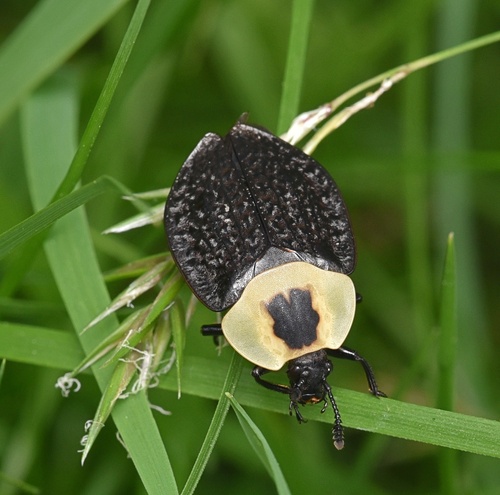
Meracantha contracta is a species of darkling beetle found in North America. Adult M. contracta are 11-14 mm in length. The pronotum is large, the abdomen and its overlying elytra are very convex (resulting in a humped appearance), and both pronotum and elytra are covered in punctures. The colour is bronze-black, though newly emerged adults are creamy-white and gradually darken until they take on the mature colour.

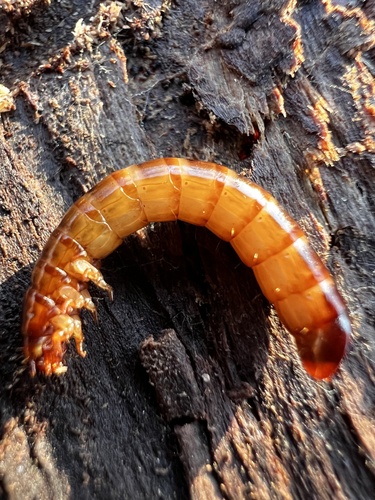
Larvae are elongate, cylindrical and reddish-brown. They are notable for the shape of the ninth abdominal segment, which is obliquely truncate (ending abruptly). The truncate surface is strongly concave and has acute margins. This is unique among larvae of North American darkling beetles.

Pupae are about 15 mm long. They are mostly cream-coloured with the head and legs darker but become much more strongly coloured just before emergence. The first five abdominal segments have a two-lobed protuberance on each side, while the eighth and final segment ends in two diverging points.

Like other beetles, M. contracta goes through the four stages of egg, larva, pupa and adult. This species overwinters in the larval stage and inside rotting logs... Wikipedia →

Global Distribution

Parks Where Found

# Park Country Daily sighting probability
1 Shenandoah National Park 🇺🇸 United States
<5%
2 Great Smoky Mountains National Park 🇺🇸 United States
<5%

Cities Where Found

# City Country Daily sighting probability
1 Washington 🇺🇸 United States
<5%

Before you go

What are the chances of seeing a Contracted Darkling Beetle in Shenandoah National Park?

Rare

Under 5% of wildlife watchers report a Contracted Darkling Beetle sighting in Shenandoah National Park on a given day, based on 6 verified sightings from GBIF citizen-science data from 2019 to 2026. It is the 571st most-seen of the 723 insects we can rate there. Over three days the chance rises to about 10%, and over a week to about 30%, if each day is a fresh chance.

When is the best time to see a Contracted Darkling Beetle in Shenandoah National Park?

June–July and September

In those months about 10% of wildlife watchers report a Contracted Darkling Beetle in Shenandoah National Park on a given day, against under 5% in August and October–May, the lowest months.

What time of day is best to see a Contracted Darkling Beetle?

Between 10 am and 1 pm

Across all the parks we cover, that three-hour window holds the most Contracted Darkling Beetle sightings with a recorded time, and about 9 in 10 of them come between 6 am and 6 pm: it is a daytime animal.

Is Shenandoah National Park the best place to see a Contracted Darkling Beetle?

Yes

Of the 2 parks where we can rate Contracted Darkling Beetle sightings, Shenandoah National Park has the highest daily chance: under 5%. Next come Great Smoky Mountains National Park (United States, under 5%).

Which relatives of the Contracted Darkling Beetle live in Shenandoah National Park?

Same order: Coleoptera

The closest relatives of the Contracted Darkling Beetle that you can see in Shenandoah National Park (order Coleoptera, Beetles) are Asian Lady Beetle (about 30%), Larger Elm Leaf Beetle (about 30%) and Seven-Spotted Lady Beetle (about 20%), with each one's daily chance of a sighting.

Where does the Contracted Darkling Beetle sighting chance come from?

GBIF citizen-science records

It is estimated from how often the Contracted Darkling Beetle is recorded against all the insects logged in Shenandoah National Park (6 verified sightings from 2019 to 2026), calibrated against known sighting rates. Figures are rounded to the nearest 10% because citizen-science data supports honest approximations, not decimals, and months with records from fewer than five people show "—". How it works.

← Back to Shenandoah National Park