Eastern Hercules Beetle

Eastern Hercules Beetle

Dynastes tityus

Endemic
Daily sighting probability ~10% · With luck
at Shenandoah National Park

In 3 days ~20% in a week ~50%

24 Verified sightings at Shenandoah National Park From 2019 to 2026
46 In all 2 parks
July Best month
☀️🌙 Day & Night When it's spotted

About the Eastern Hercules Beetle

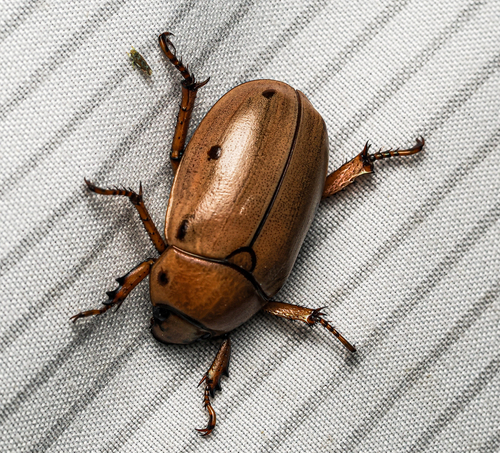
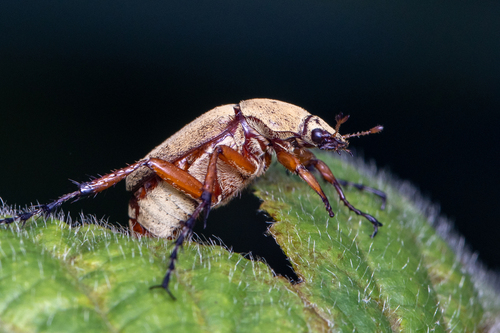
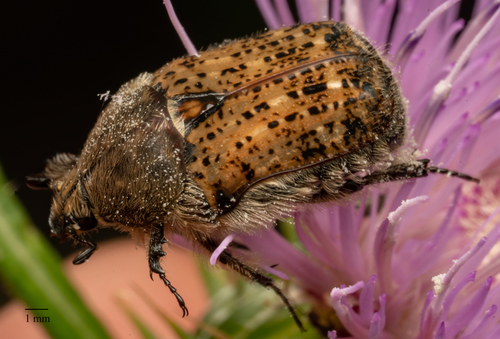
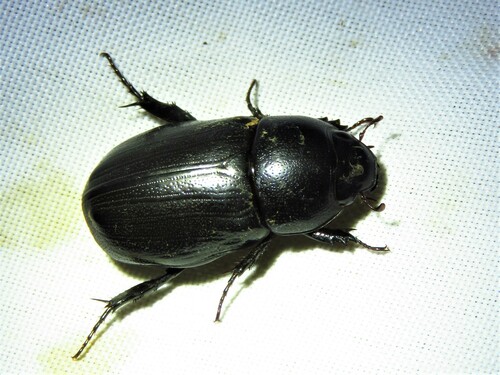
Dynastes tityus, the eastern Hercules beetle, is a species of rhinoceros beetle native to the Eastern United States. The adult's elytra are green, gray or tan, with black markings, and the whole animal, including the male's horns, may reach 60 mm (2.4 in) in length. The larvae feed on decaying wood from various trees.

Dynastes tityus is known by a number of common names, including eastern Hercules beetle, elephant beetle and ox beetle. It was first given a scientific name by Carl Linnaeus, in his 1763 work Centuria Insectorum, where it was called Scarabaeus tityus; when Linnaeus' genus Scarabaeus was divided into smaller genera, S. tityus was renamed Dynastes tityus.

Adults of both sexes are 20–27 millimeters (0.8–1.1 in) wide, and males are 40–60 millimeters (1.6–2.4 in) long, including a long horn (the pronotal horn) which projects forwards from the thorax of the male; a second horn (the clypeal horn) projects upwards from the head. Dynastes tityus is therefore "among the longest and heaviest beetles in the United States". The horns are used in battles between rival males competing for a mate; the size of the horn reflects the availability... Wikipedia →

Global Distribution

Parks Where Found

# Park Country Daily sighting probability
1 Shenandoah National Park 🇺🇸 United States
~10%
2 Great Smoky Mountains National Park 🇺🇸 United States
~10%

Cities Where Found

# City Country Daily sighting probability
1 Washington 🇺🇸 United States
~10%
2 Baltimore 🇺🇸 United States
<5%
3 Dallas 🇺🇸 United States
<5%
4 Austin 🇺🇸 United States
<5%

Before you go

What are the chances of seeing an Eastern Hercules Beetle in Shenandoah National Park?

With luck

About 10% of wildlife watchers report an Eastern Hercules Beetle sighting in Shenandoah National Park on a given day, based on 24 verified sightings from GBIF citizen-science data from 2019 to 2026. It is the 156th most-seen of the 723 insects we can rate there. Over three days the chance rises to about 20%, and over a week to about 50%, if each day is a fresh chance.

When is the best time to see an Eastern Hercules Beetle in Shenandoah National Park?

July

In that month about 20% of wildlife watchers report an Eastern Hercules Beetle in Shenandoah National Park on a given day, against under 5% in October to May, the lowest months.

What time of day is best to see an Eastern Hercules Beetle?

Between 9 am and noon

Across all the parks we cover, that three-hour window holds the most Eastern Hercules Beetle sightings with a recorded time, and about 7 in 10 of them come between 6 am and 6 pm: it is seen both by day and at night.

Is Shenandoah National Park the best place to see an Eastern Hercules Beetle?

Yes

Of the 2 parks where we can rate Eastern Hercules Beetle sightings, Shenandoah National Park has the highest daily chance: about 10%. Next come Great Smoky Mountains National Park (United States, about 10%).

Which relatives of the Eastern Hercules Beetle live in Shenandoah National Park?

Same family: Scarabaeidae

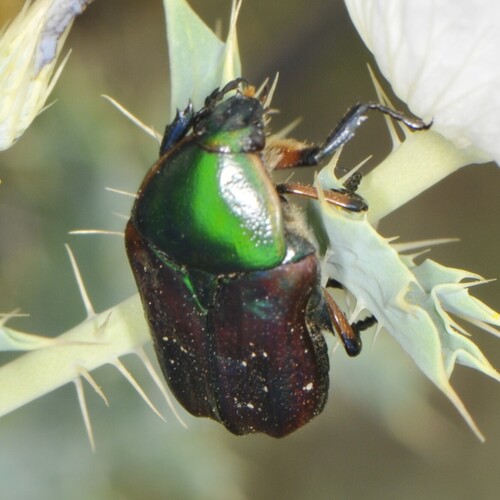
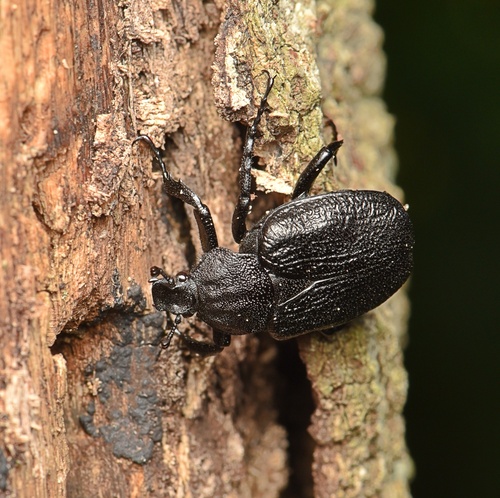
The closest relatives of the Eastern Hercules Beetle that you can see in Shenandoah National Park (family Scarabaeidae, Scarabs) are Common Green June Beetle (about 20%), Japanese Beetle (about 20%) and Grapevine Beetle (about 10%), with each one's daily chance of a sighting.

Where does the Eastern Hercules Beetle sighting chance come from?

GBIF citizen-science records

It is estimated from how often the Eastern Hercules Beetle is recorded against all the insects logged in Shenandoah National Park (24 verified sightings from 2019 to 2026), calibrated against known sighting rates. Figures are rounded to the nearest 10% because citizen-science data supports honest approximations, not decimals, and months with records from fewer than five people show "—". How it works.

← Back to Shenandoah National Park