Greenhouse Camel Cricket

Greenhouse Camel Cricket

Tachycines asynamorus

Daily sighting probability <5% · Rare
at Shenandoah National Park

In 3 days ~10% in a week ~30%

5 Verified sightings at Shenandoah National Park From 2019 to 2026
5 In 1 park
December Best month
☀️🌙 Day & Night When it's spotted

About the Greenhouse Camel Cricket

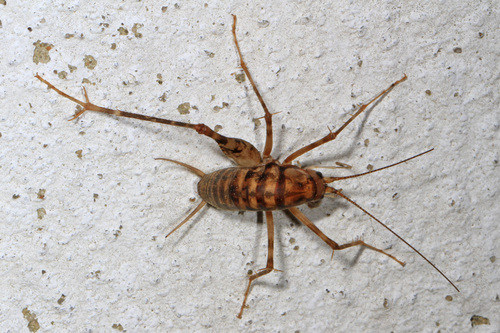
Tachycines asynamorus is a cave cricket and the type species of the genus Tachycines (Rhaphidophoridae). In English-speaking countries it is known as the greenhouse camel cricket or greenhouse stone cricket for its propensity for living in greenhouses. It was first described in 1902 by Russian entomologist Nicolai Adelung on the basis of specimens caught in the palm houses of St. Petersburg. Some authorities have placed this species in the genus Diestrammena, but it has now restored to its basonym.

The warmth-loving, tropical species was introduced worldwide by humans and today often occurs synanthropically in the vicinity of humans, especially in greenhouses. The animals are crepuscular and nocturnal. They feed carnivorously on various small insects as well as on plant material such as fruits, seeds, seedlings or young leaves and flowers.

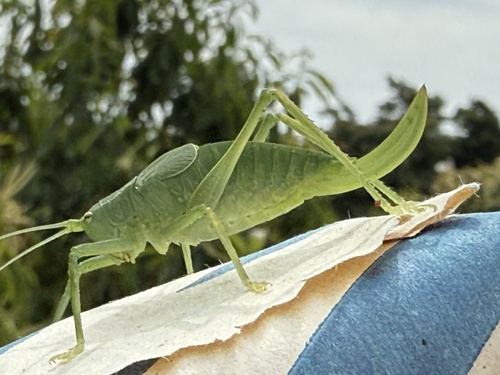
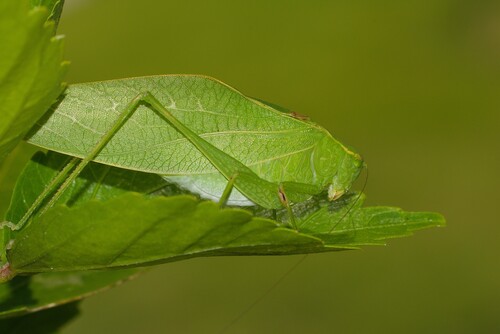
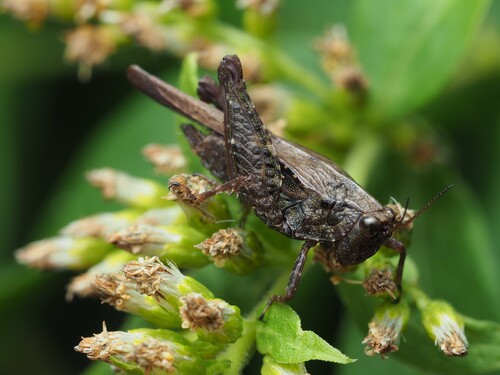
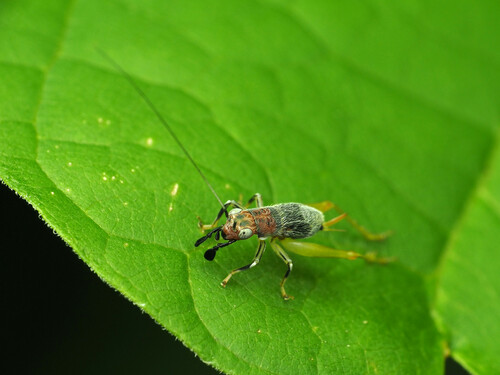
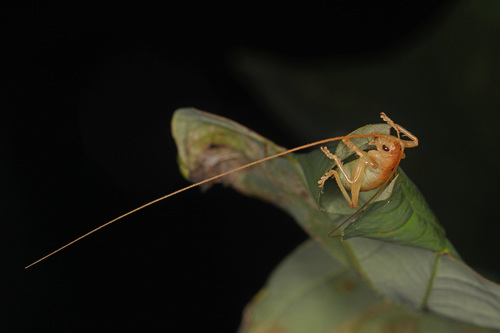
Tachycines asynamorus is a medium-sized, apterous camel cricket. Its body length ranges from 11.3–14.6 mm (0.4–0.6 in). It has very long antennae, palps, and cerci. The female has a long, gently upcurved ovipositor, 10.7–12 mm (0.4–0.5 in) in length.

Their coloration is gray to yellow-brown or even reddish-brown ground color, with... Wikipedia →
Global Distribution

Parks Where Found

# Park Country Daily sighting probability
1 Shenandoah National Park 🇺🇸 United States
<5%

More parks will be added in future updates.

Cities Where Found

# City Country Daily sighting probability
1 Daejeon 🇰🇷 South Korea
~10%
2 Turin 🇮🇹 Italy
~10%
3 Nagoya 🇯🇵 Japan
~10%
4 Seoul 🇰🇷 South Korea
~10%
5 Kyiv 🇺🇦 Ukraine
~10%
6 Baltimore 🇺🇸 United States
~10%
7 Sendai 🇯🇵 Japan
~10%
8 Washington 🇺🇸 United States
~10%
9 Philadelphia 🇺🇸 United States
~10%
10 New York City 🇺🇸 United States
<5%

Before you go

What are the chances of seeing a Greenhouse Camel Cricket in Shenandoah National Park?

Rare

Under 5% of wildlife watchers report a Greenhouse Camel Cricket sighting in Shenandoah National Park on a given day, based on 5 verified sightings from GBIF citizen-science data from 2019 to 2026. It is the 630th most-seen of the 723 insects we can rate there. Over three days the chance rises to about 10%, and over a week to about 30%, if each day is a fresh chance.

When is the best time to see a Greenhouse Camel Cricket in Shenandoah National Park?

December and January

In those months about 20% of wildlife watchers report a Greenhouse Camel Cricket in Shenandoah National Park on a given day, against under 5% in February–August and November, the lowest months.

What time of day is best to see a Greenhouse Camel Cricket?

Between noon and 3 pm

Across all the parks we cover, that three-hour window holds the most Greenhouse Camel Cricket sightings with a recorded time, and about 6 in 10 of them come between 6 am and 6 pm: it is seen both by day and at night.

Where else can you see a Greenhouse Camel Cricket?

Only Shenandoah National Park, in our data

Shenandoah National Park is the only park on Wallace's Line with enough records to rate Greenhouse Camel Cricket sightings: under 5% of wildlife watchers there report one on a given day.

Which relatives of the Greenhouse Camel Cricket live in Shenandoah National Park?

Same order: Orthoptera

The closest relatives of the Greenhouse Camel Cricket that you can see in Shenandoah National Park (order Orthoptera, Grasshoppers, Crickets, and Katydids) are Differential Grasshopper (about 10%), Carolina Grasshopper (about 10%) and Green-Striped Grasshopper (about 10%), with each one's daily chance of a sighting.

Where does the Greenhouse Camel Cricket sighting chance come from?

GBIF citizen-science records

It is estimated from how often the Greenhouse Camel Cricket is recorded against all the insects logged in Shenandoah National Park (5 verified sightings from 2019 to 2026), calibrated against known sighting rates. Figures are rounded to the nearest 10% because citizen-science data supports honest approximations, not decimals, and months with records from fewer than five people show "—". How it works.

← Back to Shenandoah National Park