Lataste's Viper

Lataste's Viper

Vipera latastei

Silhouette: Alex Slavenko · PhyloPic

LCNTVUVulnerableENCR
Daily sighting probability ~10% · With luck
at Sierra de Guadarrama National Park

In 3 days ~20% in a week ~50%

61 Verified sightings at Sierra de Guadarrama National Park From 2019 to 2026
61 In 1 park
October Best month
☀️ Diurnal When it's spotted

About the Lataste's Viper

Vipera latastei, also known commonly as Lataste's viper, the snub-nosed viper, and the snub-nosed adder, is a species of venomous snake in the subfamily Viperinae of the family Viperidae. The species is native to the Iberian Peninsula and northwestern Maghreb. Three extant subspecies and one extinct subspecies are currently recognized, including the nominate subspecies described here.

The specific name latastei, is in honor of Boscá's French colleague, herpetologist Fernand Lataste, who would a year later return him the honor, by naming after him a discovery of his own, Boscá's newt (Lissotriton boscai).

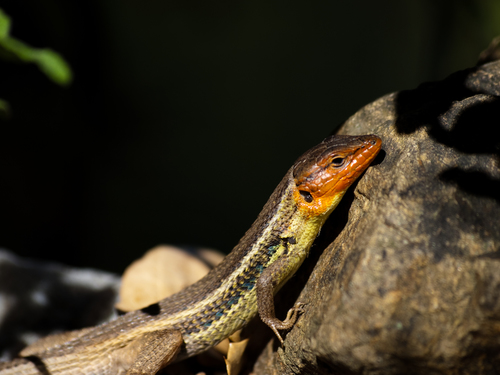
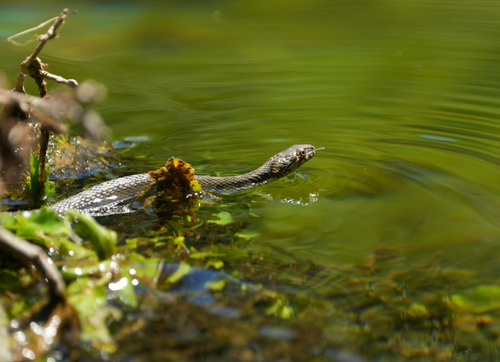
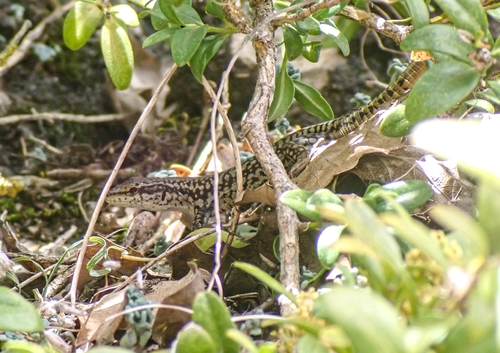
V. latastei grows to a maximum total length (including tail) of about 72 cm (28.3 in), but usually less. It is grey in colour, has a triangular head, a "horn" on the tip of its nose, and a zig-zag pattern on its back. The tip of the tail is yellow.

V. latastei can be seen day or night but is usually hidden under rocks. The yellow tip of the tail is possibly used to lure prey. V. latastei is found in southwestern Europe (Portugal and Spain) and northwestern Africa (the Mediterranean region of Morocco, Algeria and... Wikipedia →

Global Distribution

Parks Where Found

# Park Country Daily sighting probability
1 Sierra de Guadarrama National Park 🇪🇸 Spain
~10%

More parks will be added in future updates.

Closest Relatives at Sierra de Guadarrama National Park

No species of the same family or order lives in Sierra de Guadarrama National Park, so these are its closest relatives here: other reptiles.

Before you go

What are the chances of seeing a Lataste's Viper in Sierra de Guadarrama National Park?

With luck

About 10% of wildlife watchers report a Lataste's Viper sighting in Sierra de Guadarrama National Park on a given day, based on 61 verified sightings from GBIF citizen-science data from 2019 to 2026. It is the 12th most-seen of the 18 reptiles we can rate there. Over three days the chance rises to about 20%, and over a week to about 50%, if each day is a fresh chance.

When is the best time to see a Lataste's Viper in Sierra de Guadarrama National Park?

June and October

In those months about 20% of wildlife watchers report a Lataste's Viper in Sierra de Guadarrama National Park on a given day, against under 5% in November to February, the lowest months.

What time of day is best to see a Lataste's Viper?

Between 11 am and 2 pm

Across all the parks we cover, that three-hour window holds the most Lataste's Viper sightings with a recorded time, and about 8 in 10 of them come between 6 am and 6 pm: it is a daytime animal.

Where else can you see a Lataste's Viper?

Only Sierra de Guadarrama National Park, in our data

Sierra de Guadarrama National Park is the only park on Wallace's Line with enough records to rate Lataste's Viper sightings: about 10% of wildlife watchers there report one on a given day.

Where does the Lataste's Viper sighting chance come from?

GBIF citizen-science records

It is estimated from how often the Lataste's Viper is recorded against all the reptiles logged in Sierra de Guadarrama National Park (61 verified sightings from 2019 to 2026), calibrated against known sighting rates. Figures are rounded to the nearest 10% because citizen-science data supports honest approximations, not decimals, and months with records from fewer than five people show "—". How it works.

← Back to Sierra de Guadarrama National Park