Adelidoria glauca
Daily sighting probability ~20% · Possible
at Sinharaja Forest Reserve

In 3 days ~40% in a week ~70%

8 Verified sightings at Sinharaja Forest Reserve From 2019 to 2026
8 In 1 park
April Best month
☀️ Diurnal When it's spotted

About the Adelidoria glauca

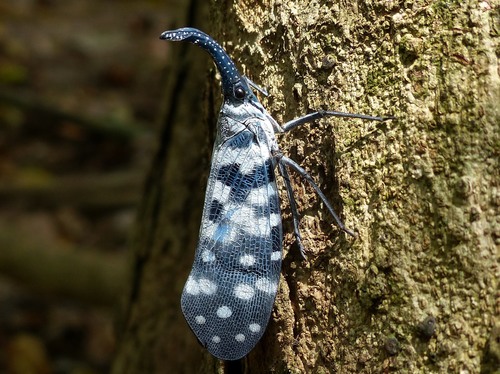
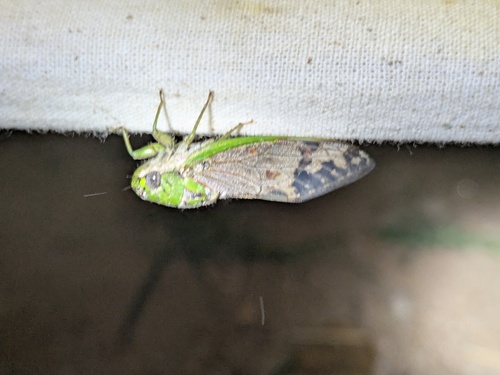
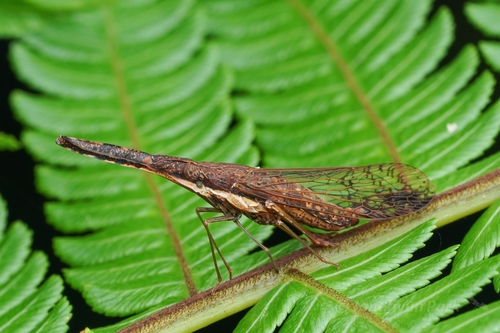
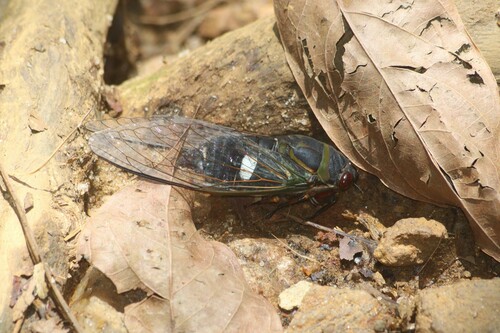
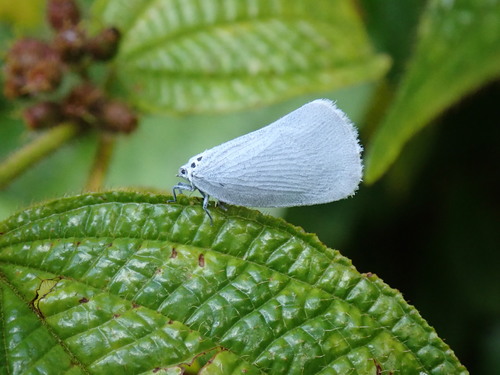
Adelidoria glauca is an insect species from Sri Lanka that was first described by William Forsell Kirby in 1891. It is the only species of the genus Adelidoria, which is related to the genus Cerynia, but differs in the neuration, etc.

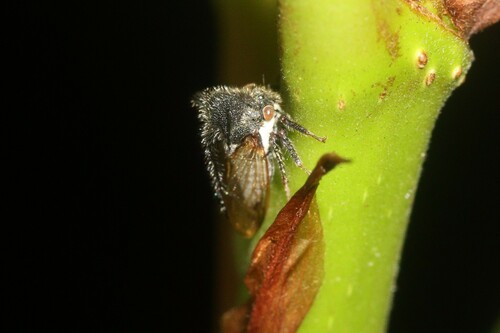
According to Distant, length excluding tegmina 9 to 10 mm; including tegmina 33 to 35 mm. According to Kirby it is 27–31 mm long. Tegmina are pale bluish grey, hind marginal area is paler; hind wings are more grey and iridescent. Body white, scutellum and legs black. Abdomen covered with white feathery waxy excrescences.

The frons is longitudinally convex, genae anteriorly rotundate, neither frons nor genae produced in the middle. Ocelli distinct. Antennae: segments of the peduncle elongate, first extending considerably beyond the lateral margins of the genae, second about one-fifth longer than the first. Tegmina are very greatly decumbent, very ample, sensibly widened towards the apex, rotundate, with a single regular series of transverse nervures towards the apex; corium, etc. (except at the base) with numerous transverse nervures; many of the longitudinal nervures furcate. Costal membrane dilated, basally narrowed more than twice... Wikipedia →
Global Distribution

Parks Where Found

# Park Country Daily sighting probability
1 Sinharaja Forest Reserve 🇱🇰 Sri Lanka
~20%

More parks will be added in future updates.

Before you go

What are the chances of seeing an Adelidoria glauca in Sinharaja Forest Reserve?

Possible

About 20% of wildlife watchers report an Adelidoria glauca sighting in Sinharaja Forest Reserve on a given day, based on 8 verified sightings from GBIF citizen-science data from 2019 to 2026. It is the 56th most-seen of the 117 insects we can rate there. Over three days the chance rises to about 40%, and over a week to about 70%, if each day is a fresh chance.

When is the best time to see an Adelidoria glauca in Sinharaja Forest Reserve?

April

In that month about 40% of wildlife watchers report an Adelidoria glauca in Sinharaja Forest Reserve on a given day, against under 5% in May to January, the lowest months.

What time of day is best to see an Adelidoria glauca?

Between 6 and 9 am

Across all the parks we cover, that three-hour window holds the most Adelidoria glauca sightings with a recorded time, and about 9 in 10 of them come between 6 am and 6 pm: it is a daytime animal.

Where else can you see an Adelidoria glauca?

Only Sinharaja Forest Reserve, in our data

Sinharaja Forest Reserve is the only park on Wallace's Line with enough records to rate Adelidoria glauca sightings: about 20% of wildlife watchers there report one on a given day.

Which relatives of the Adelidoria glauca live in Sinharaja Forest Reserve?

Same order: Hemiptera

The closest relatives of the Adelidoria glauca that you can see in Sinharaja Forest Reserve (order Hemiptera, True Bugs, Hoppers, Aphids, and allies) are Pyrops maculatus (about 50%), Platypleura westwoodi (about 20%) and Pibrocha egregia (about 10%), with each one's daily chance of a sighting.

Where does the Adelidoria glauca sighting chance come from?

GBIF citizen-science records

It is estimated from how often the Adelidoria glauca is recorded against all the insects logged in Sinharaja Forest Reserve (8 verified sightings from 2019 to 2026), calibrated against known sighting rates. Figures are rounded to the nearest 10% because citizen-science data supports honest approximations, not decimals, and months with records from fewer than five people show "—". How it works.

← Back to Sinharaja Forest Reserve