Marsh Marigold Moth

Marsh Marigold Moth

Micropterix calthella

Daily sighting probability ~10% · With luck
at Snowdonia National Park

In 3 days ~20% in a week ~40%

6 Verified sightings at Snowdonia National Park From 2019 to 2026
6 In 1 park
May Best month
☀️ Diurnal When it's spotted

About the Marsh Marigold Moth

Micropterix calthella, the marsh marigold moth, is a species of moth belonging to the family Micropterigidae. It is found in damp habitats throughout Europe (except for the far south) and is also distributed eastwards to central Siberia. It was first described by Carl Linnaeus in 1761 as Phalaena calthella.

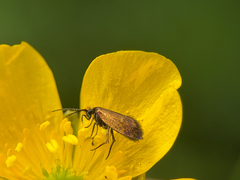
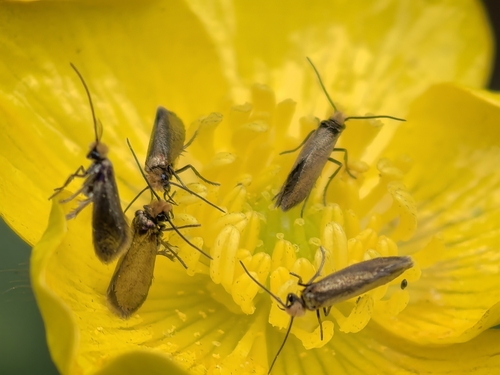
Pupae are brown with dark oculi and paler abdominal segments. Adults are small, with a forewing length of up to 4.6 millimetres (0.18 in) and a wingspan of 8–10 millimetres (0.31–0.39 in). The species is more plainly marked than many other European species of Micropterix, and has dark bronze-coloured (or pale shining bronzy-golden) forewings with a purple sheen in places and distinctive purple bases. The hindwings are rather dark bronzy-grey. The head is deep ferruginous-yellow.

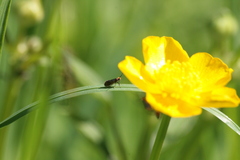
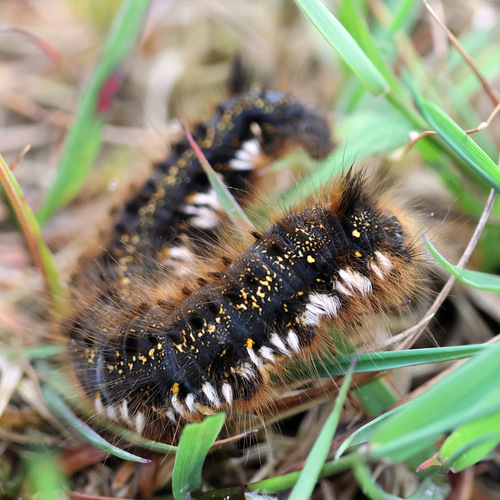
Eggs are laid amongst vegetation on the soil surface. They are translucent white turning grey, prior to hatching. The larvae feed on tender, young growth of herbacaeous plants and pupate in a tough, silken cocoon. Like other members of the family, Micropterix calthella has functional jaws in its imaginal stage. As adult, it feeds on pollen grains from a wide variety of plants... Wikipedia →
Global Distribution

Parks Where Found

# Park Country Daily sighting probability
1 Snowdonia National Park 🇬🇧 United Kingdom
~10%

More parks will be added in future updates.

Cities Where Found

# City Country Daily sighting probability
1 Moscow 🇷🇺 Russia
<5%
2 Saint Petersburg 🇷🇺 Russia
<5%

Before you go

What are the chances of seeing a Marsh Marigold Moth in Snowdonia National Park?

With luck

About 10% of wildlife watchers report a Marsh Marigold Moth sighting in Snowdonia National Park on a given day, based on 6 verified sightings from GBIF citizen-science data from 2019 to 2026. It is the 294th most-seen of the 387 insects we can rate there. Over three days the chance rises to about 20%, and over a week to about 40%, if each day is a fresh chance.

When is the best time to see a Marsh Marigold Moth in Snowdonia National Park?

May

In that month about 20% of wildlife watchers report a Marsh Marigold Moth in Snowdonia National Park on a given day, against under 5% in June to March, the lowest months.

What time of day is best to see a Marsh Marigold Moth?

Between 3 and 6 pm

Across all the parks we cover, that three-hour window holds the most Marsh Marigold Moth sightings with a recorded time, and nearly all of them come between 6 am and 6 pm: it is a daytime animal.

Where else can you see a Marsh Marigold Moth?

Only Snowdonia National Park, in our data

Snowdonia National Park is the only park on Wallace's Line with enough records to rate Marsh Marigold Moth sightings: about 10% of wildlife watchers there report one on a given day.

Where does the Marsh Marigold Moth sighting chance come from?

GBIF citizen-science records

It is estimated from how often the Marsh Marigold Moth is recorded against all the insects logged in Snowdonia National Park (6 verified sightings from 2019 to 2026), calibrated against known sighting rates. Figures are rounded to the nearest 10% because citizen-science data supports honest approximations, not decimals, and months with records from fewer than five people show "—". How it works.

← Back to Snowdonia National Park