
Chobe Dwarf Gecko

Chobe Dwarf Gecko

Lygodactylus chobiensis

Silhouette: SeismicShrimp · PhyloPic

LCLeast ConcernNTVUENCR
Daily sighting probability ~20% · Possible
at South Luangwa National Park

In 3 days ~50% in a week ~80%

5 Verified sightings at South Luangwa National Park From 2019 to 2026
63 In all 6 parks
June Best month
☀️ Diurnal When it's spotted

About the Chobe Dwarf Gecko

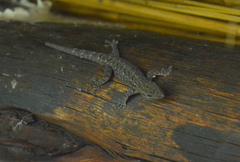
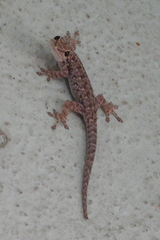
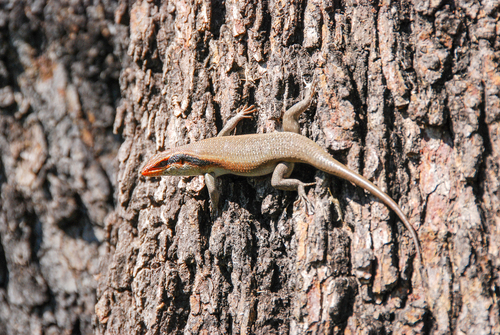
The Okavango dwarf gecko or Chobe dwarf gecko (Lygodactylus chobiensis) is a species of gecko found along the Chobe and Zambesi Rivers and into the Okavango Delta, and into Mozambique, Zimbabwe and Zambia. A large dwarf gecko (normally 25–30 mm in snout–vent length) with males being slightly larger than the females. It has a blue-grey back covered with large pale spots and a yellow belly. The male throat may be black or pale yellow and has two dark chevrons.

They mature at around 9 months and have a lifespan of 18 months. The Okavango dwarf gecko is normally arboreal and can found on tree trunks and sometimes buildings of the tropical savanna and flooded grasslands. It prefers to forage high up in trees and can often be found on acacia, baobab and mopane trees.

Their diet is mainly ants and termites. Reproduction occurs throughout the year and two hard-shelled eggs (5 × 6.5 mm) are laid every 8 weeks beneath the tree bark or in disused termite mound. The eggs hatch in about 125 days and the young geckos are about 30 mm in length. Wikipedia →

Global Distribution

Parks Where Found

# Park Country Daily sighting probability
1 Lower Zambezi National Park 🇿🇲 Zambia
~40%
2 Mana Pools National Park 🇿🇼 Zimbabwe
~30%
3 Hwange National Park 🇿🇼 Zimbabwe
~30%
4 Kafue National Park 🇿🇲 Zambia
~20%
5 South Luangwa National Park 🇿🇲 Zambia
~20%
6 Chobe National Park 🇧🇼 Botswana
~20%

Before you go

What are the chances of seeing a Chobe Dwarf Gecko in South Luangwa National Park?

Possible

About 20% of wildlife watchers report a Chobe Dwarf Gecko sighting in South Luangwa National Park on a given day, based on 5 verified sightings from GBIF citizen-science data from 2019 to 2026. It is the 9th most-seen of the 9 reptiles we can rate there. Over three days the chance rises to about 50%, and over a week to about 80%, if each day is a fresh chance.

When is the best time to see a Chobe Dwarf Gecko in South Luangwa National Park?

June

In that month about 40% of wildlife watchers report a Chobe Dwarf Gecko in South Luangwa National Park on a given day, against under 5% in April–May, July and November, the lowest months. That is one of South Luangwa National Park's driest months, with almost no rain against 310 mm in January. December and January have too few records to rate.

What time of day is best to see a Chobe Dwarf Gecko?

Between noon and 3 pm

Across all the parks we cover, that three-hour window holds the most Chobe Dwarf Gecko sightings with a recorded time, and about 9 in 10 of them come between 6 am and 6 pm: it is a daytime animal.

Is South Luangwa National Park the best place to see a Chobe Dwarf Gecko?

5th of 6

Of the 6 parks where we can rate Chobe Dwarf Gecko sightings, South Luangwa National Park ranks 5th at about 20%. The best odds are in Lower Zambezi National Park (Zambia, about 40%), Mana Pools National Park (Zimbabwe, about 30%) and Hwange National Park (Zimbabwe, about 30%).

Where does the Chobe Dwarf Gecko sighting chance come from?

GBIF citizen-science records

It is estimated from how often the Chobe Dwarf Gecko is recorded against all the reptiles logged in South Luangwa National Park (5 verified sightings from 2019 to 2026), calibrated against known sighting rates. Figures are rounded to the nearest 10% because citizen-science data supports honest approximations, not decimals, and months with records from fewer than five people show "—". How it works.

← Back to South Luangwa National Park