





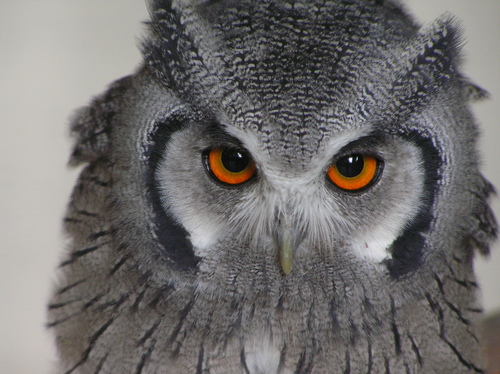


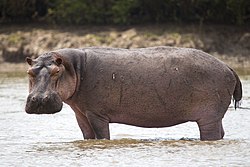

All 4 in 3 days here: ~60%
Hwange National Park
🇿🇼 Zimbabwe
Southern Africa, Zimbabwe 988 spp. recorded
Hwange National Park sits in western Zimbabwe, spanning a vast tropical savanna of open grasslands, acacia scrub, and teak woodlands. This protected region differs from neighboring reserves through its reliance on pumped boreholes and artificial waterholes that sustain wildlife across wide, arid terrain.
-19.054° S 26.517° E
🦜 Nature

502 Species sighted
21,011 Verified sightings From 2019 to 2026
Jan Best month
⭐ Iconic Species
📊 Most Spotted
⭐ Iconic Species
📊 Most Spotted
📊 Most Spotted
📊 Most Spotted
📊 Most Spotted
📊 Most Spotted
🌙 Most active after dark
+ 646 more species with insufficient data
Challenges you can complete here


All 4 in 3 days here: ~60%


All 3 in 3 days here: ~40%


All 4 in 3 days here: ~50%
Recent sightings in Hwange National Park
LIVEiNaturalistSighting Calendar
How many species you'd see in a day
67Jan
52Feb
51Mar
45Apr
50May
53Jun
49Jul
51Aug
50Sep
51Oct
47Nov
67Dec
Sighting Zones
Warmer areas are where all species together are recorded most often.
-
Davison's Camp
Daily sight. prob.vs avg Lilac-breasted Roller~90%+20%
 Blacksmith Lapwing~90%+30%
 Cape Turtle Dove~90%+30%
 Egyptian Goose~90%+20%
 Southern Yellow-billed Hornbill~80%+20%
 Fork-tailed Drongo~80%+10%
 African Grey Hornbill~60%+20%
 White-browed Sparrow-Weaver~60%≈
 Magpie Shrike~50%-10%
 Arrow-marked Babbler~50%≈
 Helmeted Guineafowl~40%-10%
 Southern Red-billed Hornbill~30%-10%
-
19.122° S, 26.592° E
Daily sight. prob.vs avg -
Hwange Main Camp
Daily sight. prob.vs avg- Lilac-breasted Roller~80%+10%
- White-browed Sparrow-Weaver~80%+20%
- Southern Yellow-billed Hornbill~70%+20%
 Steenbok~70%+20%
- Fork-tailed Drongo~70%+10%
 Greater Kudu~70%+20%
- Egyptian Goose~60%≈
- Cape Turtle Dove~60%≈
- Magpie Shrike~60%+10%
 African Bush Elephant~60%-20%
 Smith's Bush Squirrel~60%+10%
- Blacksmith Lapwing~60%-10%
-
Robin's Camp
Daily sight. prob.vs avg- Magpie Shrike~60%+10%
- Smith's Bush Squirrel~60%+10%
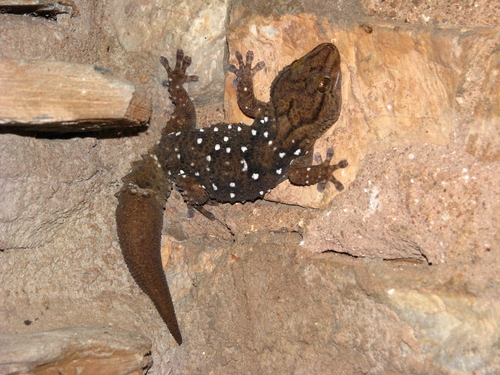
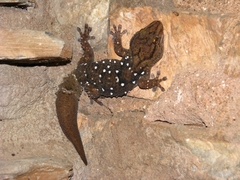 Fischer's Thick-toed Gecko~60%+40%
 Chobe Dwarf Gecko~60%+30%
- Helmeted Guineafowl~60%+10%
- Cape Turtle Dove~60%-10%
- Southern Red-billed Hornbill~50%+10%
- Arrow-marked Babbler~50%+10%
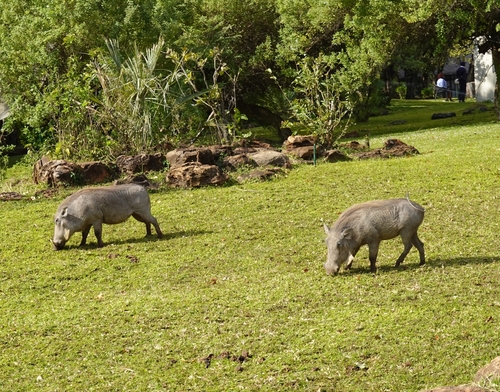
 Common Warthog~50%+10%
- White-browed Sparrow-Weaver~50%-10%
- Egyptian Goose~50%-20%
- Fork-tailed Drongo~50%-20%




🏕️ Experience
Essentials
Entrance
Paid
Tourism
Low
Typical stay
2–3
daysTrails
Easy
World Heritage
No
Climate
Temp °C Rain mm
JanFebMarAprMayJunJulAugSepOctNovDec
0.0 World-class
Wallace's Line Score
How good is this park for seeing wildlife? 🦜
Biodiversity
GoodHow rich is the wildlife?
4.0
Species by taxon
🦅 Birds 652
🐒 Mammals 169
🦎 Reptiles 128
🐸 Amphibians 39
988 Total Species
828 Global average across 316 parks
34 Threatened 10 Endemic
🔭
Sighting
ExcellentHow likely to see animals?
5.0
🎯
Top-12 Avg Probability
63% 📊
Coverage (291 species at ≥5% of 988 in the inventory)
29% 🔀
Taxon variety in top 12 (8 bird, 4 mammal)
59% 🔭
Species per 10 outings (distinct species a visitor would meet over 10 outings — effort held equal across parks)
192 🌟
Iconic-group species (≥15%) (every species from the 19 iconic groups — monkeys, cats, toucans, macaws, sloths, crocodilians… — not just the 4 highlighted above)
43 ⭐
High-prob species (>40%)
32 🏕️
Experience
ExcellentHow easy and pleasant is the visit?
4.8
Climate Pleasant High
Entrance Paid Low
Tourism Low High
Trails Easy High
World Heritage No —
What visitors say
Our final spot of the game drive was a group of Sable, a new antelope for the list that looks like it is dressed for Cinco de Mayo with a skull painted in white on its otherwise black body.
Over the course of the few days we spent in Hwange this time around we saw a sable antelope, several buffaloes, a rare side-striped jackal, giraffes, impalas and a multitude of bird species come to the water.
We must have seen over 200-300 hundred or more elephants, including multipe family units of 5-25 individuals with young of all ages, and plenty of bachelors in small groups.
It wasn’t long before we encountered large herds of elephants (something Hwange is renowned for) congregating around a pumped waterhole and also spotted lion, hyena, giraffe and the tail end of a leopard as it slunk into the tall grass.
Before you go
What animals can you see in Hwange National Park?
988 species
Hwange National Park has 988 recorded vertebrate species. The ones wildlife watchers report most often on a given day are African Bush Elephant (about 80%), Lilac-breasted Roller (about 70%), Egyptian Goose (about 70%), Cape Turtle Dove (about 70%) and Blacksmith Lapwing (about 60%). Among reptiles, the most-seen is Nile Crocodile (about 40%); among amphibians, Grey Foam-nest Treefrog (about 20%).
When is the best time to visit Hwange National Park for wildlife?
July–August and December
In those months the park's 12 most-seen species average about 70% on a given day, against about 50% in February.
Can you see an African Bush Elephant in Hwange National Park?
Yes
About 80% of wildlife watchers report an African Bush Elephant sighting in Hwange National Park on a given day, based on 165 verified sightings from GBIF citizen-science data from 2019 to 2026. The best time is February, April–May, July and December (about 80%).
Can you see a Lion in Hwange National Park?
Yes
About 60% of wildlife watchers report a Lion sighting in Hwange National Park on a given day, based on 67 verified sightings from GBIF citizen-science data from 2019 to 2026. The best time is July (about 80%).
Can you see a Painted Hunting Dog in Hwange National Park?
Yes
About 30% of wildlife watchers report a Painted Hunting Dog sighting in Hwange National Park on a given day, based on 18 verified sightings from GBIF citizen-science data from 2019 to 2026. The best time is May–June, August and December–January (about 40%).
Can you see a Sable Antelope in Hwange National Park?
Yes
About 40% of wildlife watchers report a Sable Antelope sighting in Hwange National Park on a given day, based on 23 verified sightings from GBIF citizen-science data from 2019 to 2026. The best time is February (about 70%).
Where in Hwange National Park is wildlife easiest to see?
Around Davison's Camp
The richest sighting zone is around Davison's Camp, followed by Hwange Main Camp, ranked by how many of the park's headline animals visitors can expect to see in each. See the zones on the map.
Is Hwange National Park good for wildlife watching?
4.7 out of 5
On the Wallace's Line Score, Hwange National Park rates 4.7/5: 38th of 316 parks worldwide and 27th in Africa. 42 of its species are reported by about 40% or more of wildlife watchers on a given day.