Tree Locust

Tree Locust

Anacridium moestum

Daily sighting probability <5% · Rare
at Table Mountain National Park

In 3 days ~10% in a week ~20%

14 Verified sightings at Table Mountain National Park From 2019 to 2026
93 In all 5 parks
June Best month
☀️ Diurnal When it's spotted

About the Tree Locust

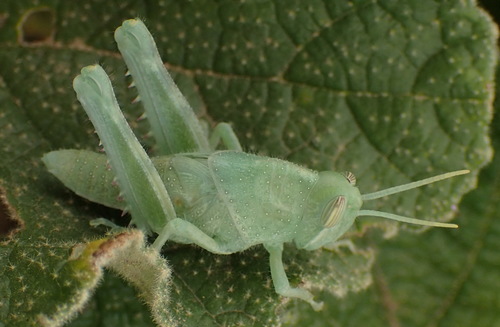
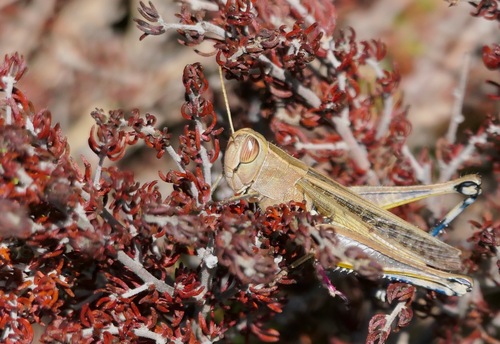
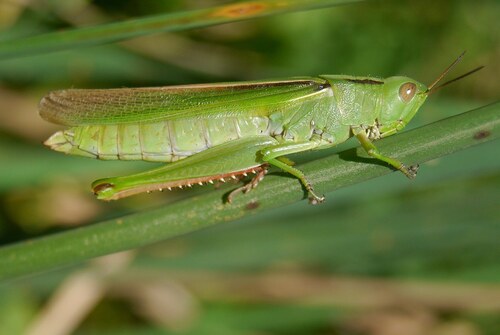
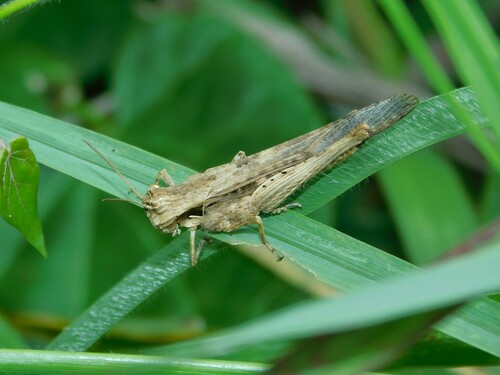
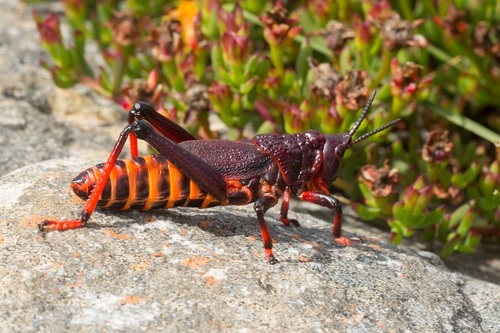
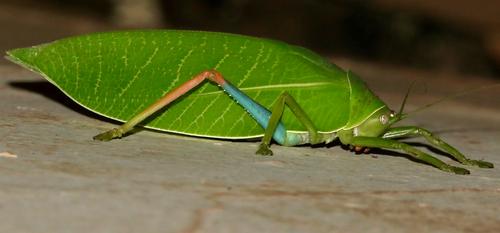
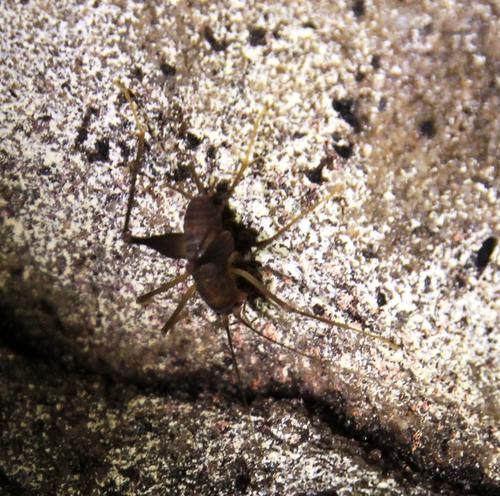
Anacridium moestum, the camouflaged tree locust, is a species of grasshopper belonging to the family Acrididae, that is native to Africa south of the equator. It is similar in appearance to the Southern African desert locust, Schistocerca gregaria flaviventris. It is likewise brownish, large and slender, but mostly arboreal in its habits.

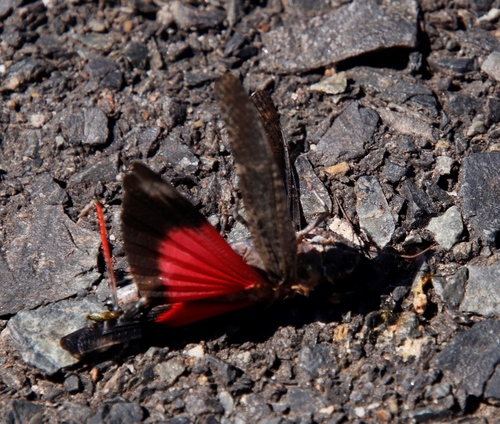
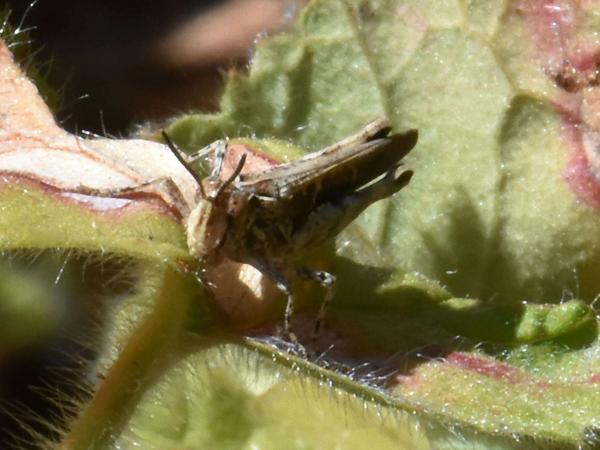
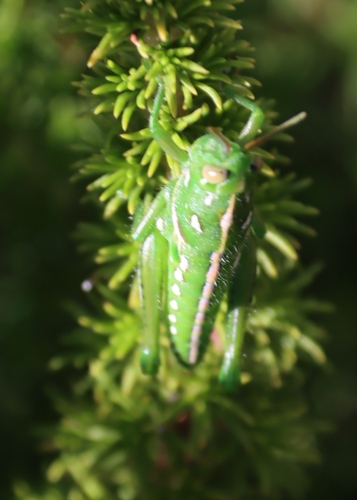
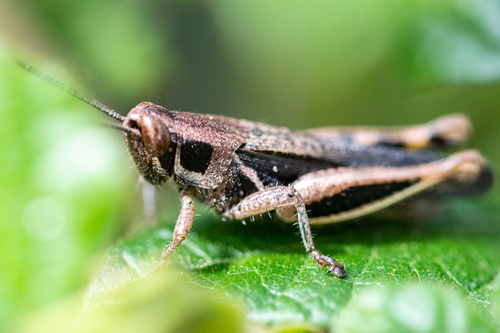
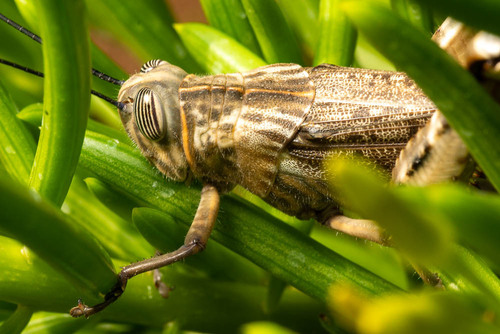
Anacridium moestum can reach a length of 50–90 millimetres (2.0–3.5 in). These large and slender locusts show a mottled reddish brown or grey body, with a finely speckled green tegmina. Hind wings are pale blue with a black band near the base. Hind tibiae are purplish. Nymphs (hoppers) are yellowish green. The eyes and face are vertically striped.

This species is native and widespread in southern and south tropical Africa. These grasshoppers live on trees or shrubs in grassland with acacias. Anacridium moestum feeds on Acacia, Zizyphus, Capparis aphelia, and gum trees. These tree locusts may damage crops and fruit trees, but only occasionally swarm.

Burr (1903) Orthoptera Fam. Eumasticidae, Genera Insectorum, V. Verteneuil & L. Desmet, Brussels 15:1-23, pl 1 COPR (Centre... Wikipedia →
Global Distribution

Parks Where Found

# Park Country Daily sighting probability
1 Namib-Naukluft National Park 🇳🇦 Namibia
~30%
2 Kgalagadi Transfrontier Park 🇿🇦 South Africa
~10%
3 Etosha National Park 🇳🇦 Namibia
~10%
4 Table Mountain National Park 🇿🇦 South Africa
<5%
5 Kruger National Park 🇿🇦 South Africa
<5%

Cities Where Found

# City Country Daily sighting probability
1 Cape Town 🇿🇦 South Africa
<5%

Before you go

What are the chances of seeing a Tree Locust in Table Mountain National Park?

Rare

Under 5% of wildlife watchers report a Tree Locust sighting in Table Mountain National Park on a given day, based on 14 verified sightings from GBIF citizen-science data from 2019 to 2026. It is the 180th most-seen of the 344 insects we can rate there. Over three days the chance rises to about 10%, and over a week to about 20%, if each day is a fresh chance.

When is the best time to see a Tree Locust in Table Mountain National Park?

May and June

In those months about 10% of wildlife watchers report a Tree Locust in Table Mountain National Park on a given day, against under 5% in July to April, the lowest months. Those are among Table Mountain National Park's wettest months, with about 85 mm of rain a month against 15 mm in February.

What time of day is best to see a Tree Locust?

Between 10 am and 1 pm

Across all the parks we cover, that three-hour window holds the most Tree Locust sightings with a recorded time, and about 9 in 10 of them come between 6 am and 6 pm: it is a daytime animal.

Where does the Tree Locust sighting chance come from?

GBIF citizen-science records

It is estimated from how often the Tree Locust is recorded against all the insects logged in Table Mountain National Park (14 verified sightings from 2019 to 2026), calibrated against known sighting rates. Figures are rounded to the nearest 10% because citizen-science data supports honest approximations, not decimals, and months with records from fewer than five people show "—". How it works.

← Back to Table Mountain National Park