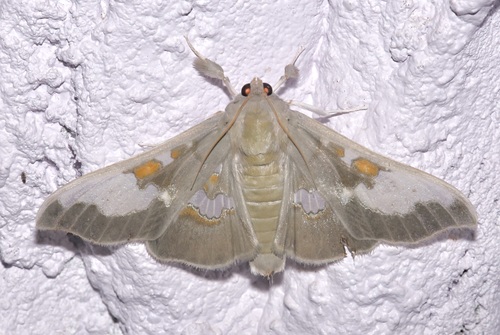
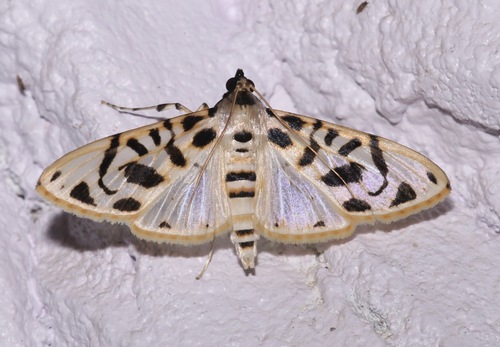
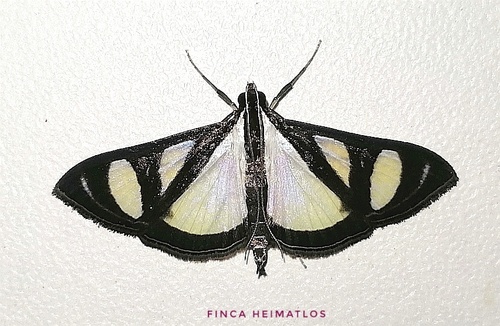
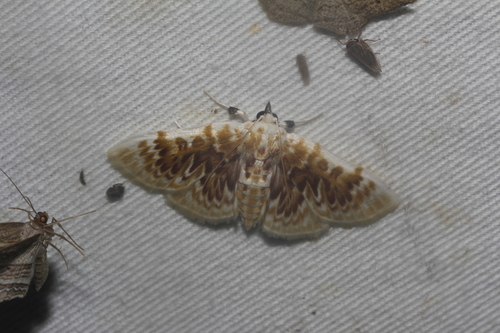
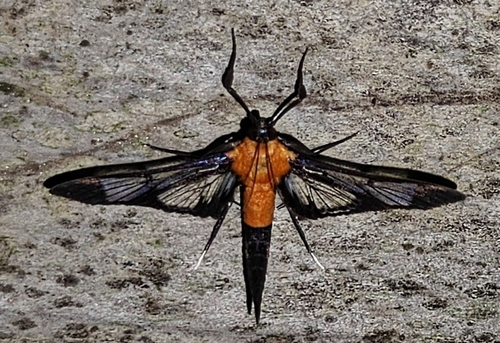
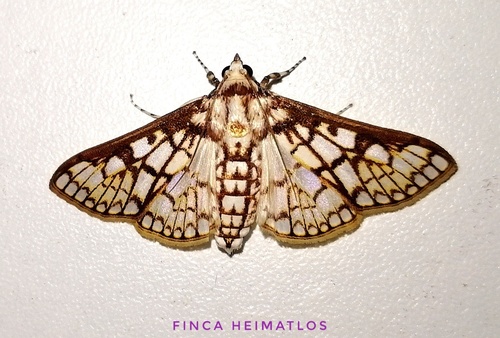
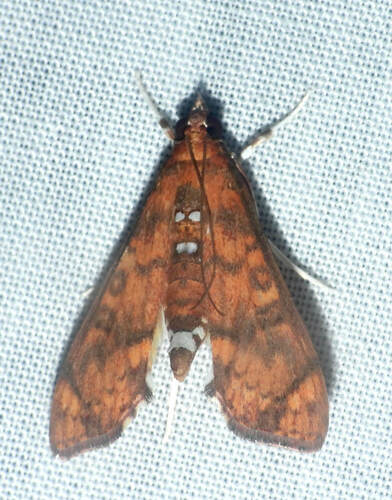
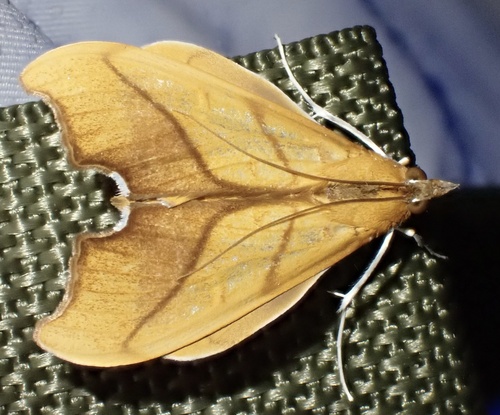
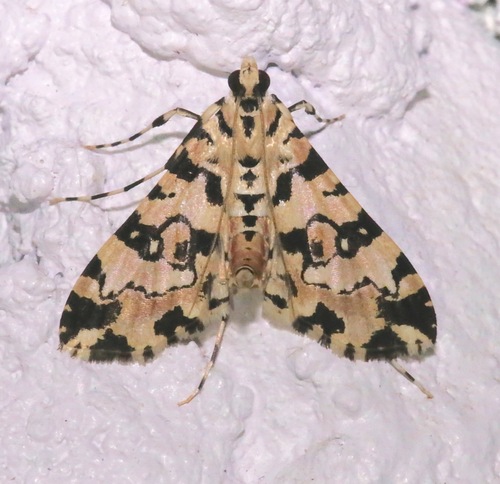
Syngamilyta samarialis

Syngamilyta samarialis

Syngamilyta samarialis

Daily sighting probability ~10% · With luck
at Tapantí-Macizo de la Muerte National Park

In 3 days ~20% in a week ~40%

8 Verified sightings at Tapantí-Macizo de la Muerte National Park From 2019 to 2026
13 In all 2 parks
February Best month
☀️🌙 Day & Night When it's spotted

About the Syngamilyta samarialis

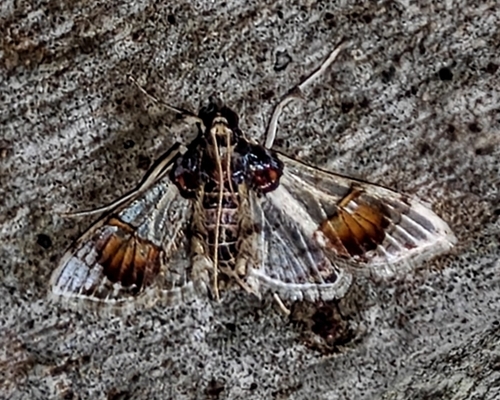
Syngamilyta samarialis is a moth in the family Crambidae. It was described by Herbert Druce in 1899. It is found in Costa Rica and Colombia. The forewings are semihyaline white, with a dark reddish-brown base and crossed by two fine metallic blue lines, as well as a broad reddish-brown band, darker near the anal angle, crossing the wing beyond the cell from the costal to the inner margin, the outer margin slightly clouded with brown. The hindwings are semihyaline white, crossed about the middle from the costal to the inner margin by a fine brown line, the apex, anal angle and inner margin are clouded with reddish brown. The marginal line is white. Wikipedia →

Global Distribution

Parks Where Found

# Park Country Daily sighting probability
1 Tapantí-Macizo de la Muerte National Park 🇨🇷 Costa Rica
~10%
2 La Amistad International Park (Panama) 🇵🇦 Panama
<5%

Before you go

What are the chances of seeing a Syngamilyta samarialis in Tapantí-Macizo de la Muerte National Park?

With luck

About 10% of wildlife watchers report a Syngamilyta samarialis sighting in Tapantí-Macizo de la Muerte National Park on a given day, based on 8 verified sightings from GBIF citizen-science data from 2019 to 2026. It is the 88th most-seen of the 187 insects we can rate there. Over three days the chance rises to about 20%, and over a week to about 40%, if each day is a fresh chance.

When is the best time to see a Syngamilyta samarialis in Tapantí-Macizo de la Muerte National Park?

February

In that month about 20% of wildlife watchers report a Syngamilyta samarialis in Tapantí-Macizo de la Muerte National Park on a given day, against under 5% in April to January, the lowest months. That is one of Tapantí-Macizo de la Muerte National Park's driest months, with about 160 mm of rain against 570 mm in October.

What time of day is best to see a Syngamilyta samarialis?

Between 8 and 11 pm

Across all the parks we cover, that three-hour window holds the most Syngamilyta samarialis sightings with a recorded time, and about 7 in 10 of them come between 6 pm and 6 am: it is seen both by day and at night.

Is Tapantí-Macizo de la Muerte National Park the best place to see a Syngamilyta samarialis?

Yes

Of the 2 parks where we can rate Syngamilyta samarialis sightings, Tapantí-Macizo de la Muerte National Park has the highest daily chance: about 10%. Next come La Amistad International Park (Panama) (Panama, under 5%).

Which relatives of the Syngamilyta samarialis live in Tapantí-Macizo de la Muerte National Park?

Same family: Crambidae

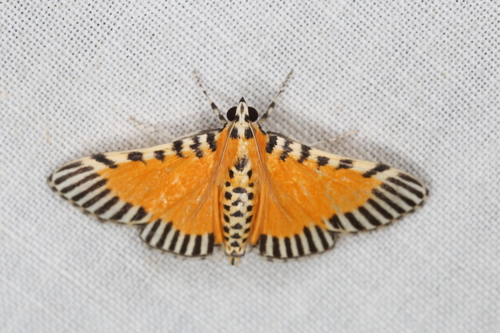
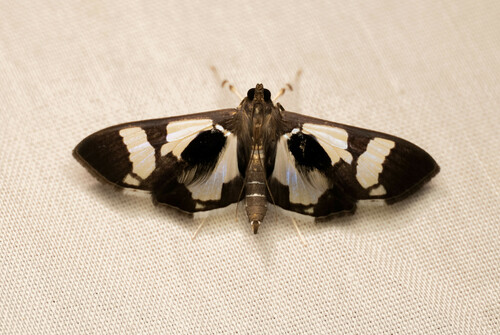
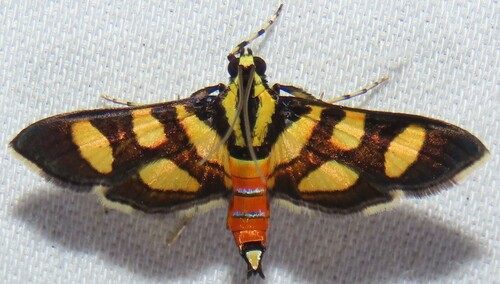
The closest relatives of the Syngamilyta samarialis that you can see in Tapantí-Macizo de la Muerte National Park (family Crambidae, Crambid Snout Moths) are Polygrammodes mimetica (about 10%), Desmia bajulalis (about 10%) and Orange-Spotted Flower Moth (about 10%), with each one's daily chance of a sighting.

Where does the Syngamilyta samarialis sighting chance come from?

GBIF citizen-science records

It is estimated from how often the Syngamilyta samarialis is recorded against all the insects logged in Tapantí-Macizo de la Muerte National Park (8 verified sightings from 2019 to 2026), calibrated against known sighting rates. Figures are rounded to the nearest 10% because citizen-science data supports honest approximations, not decimals, and months with records from fewer than five people show "—". How it works.

← Back to Tapantí-Macizo de la Muerte National Park