Lychee Stink Bug

Lychee Stink Bug

Tessaratoma papillosa

Daily sighting probability ~30% · Possible
at Taroko National Park

In 3 days ~70% in a week ~90%

106 Verified sightings at Taroko National Park From 2019 to 2026
106 In 1 park
April Best month
☀️ Diurnal When it's spotted

About the Lychee Stink Bug

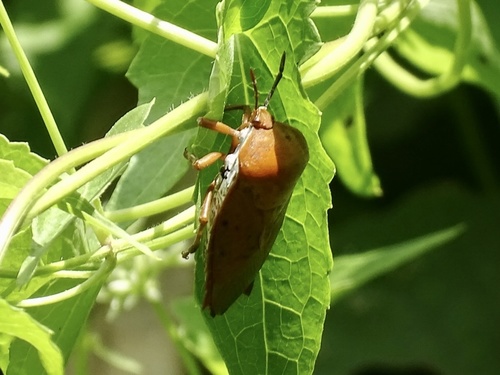
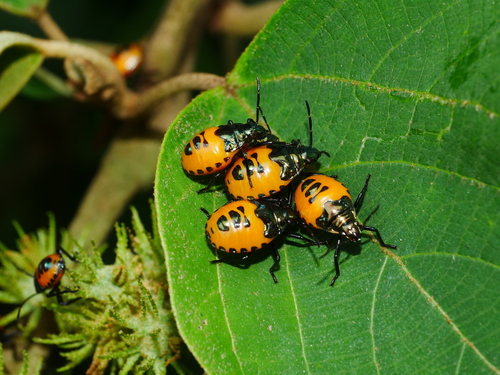
Tessaratoma papillosa, the lychee giant stink bug, is a species of bug in the family Tessaratomidae. It is found in Indomalaya, Australasia, and Eastern Asia. It feeds on the buds, shoots, flower sprigs, and fruits of lychee and longan trees using its piercing and sucking mouthparts. This feeding can cause major damage to the tree, causing its fruits and flowers to drop off and the withering of twigs and fruits. A tree that is fed upon by many T. papillosa may experienced retarded growth or even death. For this reason, T. papillosa is considered an agricultural pest, causing considerable economic losses for farmers in affected regions.

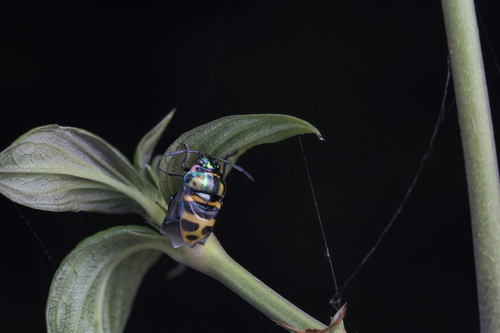
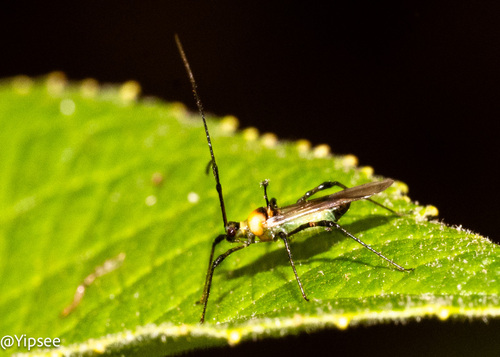
Adult Tessaratoma papillosa have a shield-shaped body with yellowish-brown coloration. They have a body length of 24-28mm and a width of 15-17mm. Females are slightly larger than males. They have one pair of ommatidium and one pair of compound eyes, both of which are red. The antennae have four segments and are dark brown. The prothorax is tilted forward and downward. It has odor glands near the front of the metathoracic side plate and white wax powder covering the ventral surface of the thorax. The female has a longitudinal slit in... Wikipedia →

Global Distribution

Parks Where Found

# Park Country Daily sighting probability
1 Taroko National Park 🇹🇼 Taiwan
~30%

More parks will be added in future updates.

Cities Where Found

# City Country Daily sighting probability
1 Taipei 🇹🇼 Taiwan
~30%
2 Taichung 🇹🇼 Taiwan
~30%
3 Tuen Mun 🇨🇳 China
~30%
4 Zhuhai [Macau] 🇨🇳 China
~30%
5 Hong Kong 🇨🇳 China
~20%
6 Fuzhou 🇨🇳 China
~20%
7 Guangzhou 🇨🇳 China
~10%
8 Xiamen City 🇨🇳 China
~10%
9 Tainan 🇹🇼 Taiwan
~10%
10 Kaohsiung 🇹🇼 Taiwan
~10%

Before you go

What are the chances of seeing a Lychee Stink Bug in Taroko National Park?

Possible

About 30% of wildlife watchers report a Lychee Stink Bug sighting in Taroko National Park on a given day, based on 106 verified sightings from GBIF citizen-science data from 2019 to 2026. It is the 15th most-seen of the 447 insects we can rate there. Over three days the chance rises to about 70%, and over a week to about 90%, if each day is a fresh chance.

When is the best time to see a Lychee Stink Bug in Taroko National Park?

April

In that month about 60% of wildlife watchers report a Lychee Stink Bug in Taroko National Park on a given day, against under 5% in February and September–December, the lowest months.

What time of day is best to see a Lychee Stink Bug?

Between 1 and 4 pm

Across all the parks we cover, that three-hour window holds the most Lychee Stink Bug sightings with a recorded time, and nearly all of them come between 6 am and 6 pm: it is a daytime animal.

Where else can you see a Lychee Stink Bug?

Only Taroko National Park, in our data

Taroko National Park is the only park on Wallace's Line with enough records to rate Lychee Stink Bug sightings: about 30% of wildlife watchers there report one on a given day.

Which relatives of the Lychee Stink Bug live in Taroko National Park?

Same order: Hemiptera

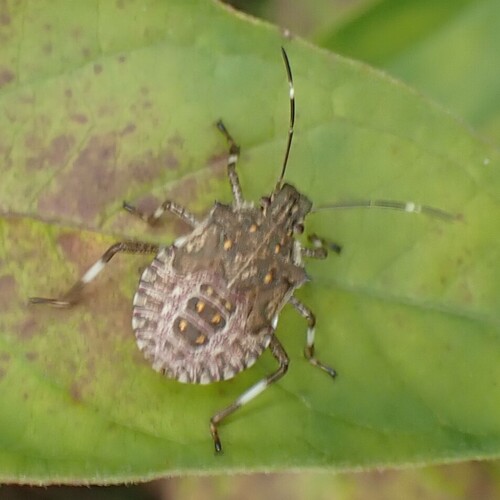
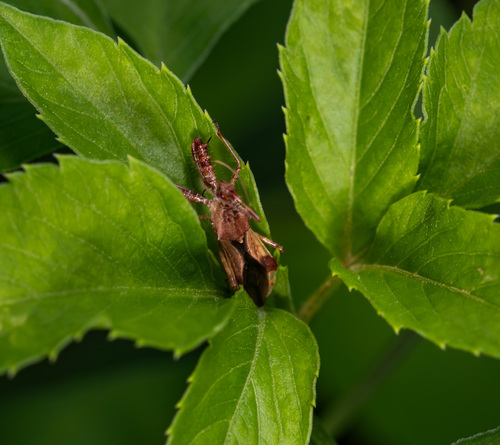
The closest relatives of the Lychee Stink Bug that you can see in Taroko National Park (order Hemiptera, True Bugs, Hoppers, Aphids, and allies) are Brown Marmorated Stink Bug (about 40%), Scipinia horrida (about 40%) and Nerthus taivanicus (about 30%), with each one's daily chance of a sighting.

Where does the Lychee Stink Bug sighting chance come from?

GBIF citizen-science records

It is estimated from how often the Lychee Stink Bug is recorded against all the insects logged in Taroko National Park (106 verified sightings from 2019 to 2026), calibrated against known sighting rates. Figures are rounded to the nearest 10% because citizen-science data supports honest approximations, not decimals, and months with records from fewer than five people show "—". How it works.

← Back to Taroko National Park