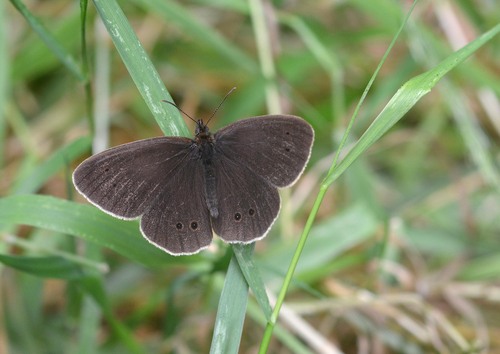
Bedstraw Hawkmoth

Bedstraw Hawkmoth

Hyles gallii

Daily sighting probability ~10% · With luck
at Tatra National Park

In 3 days ~30% in a week ~50%

6 Verified sightings at Tatra National Park From 2019 to 2026
180 In all 13 parks
August Best month
☀️ Diurnal When it's spotted

About the Bedstraw Hawkmoth

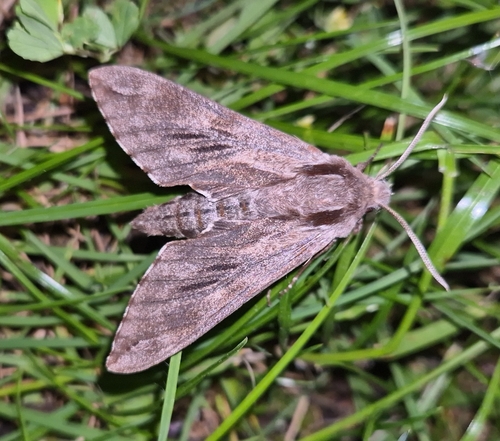
Hyles gallii, the bedstraw hawk-moth or galium sphinx, is a moth of the family Sphingidae. The species was first described by S. A. von Rottemburg in 1775. Hyles gallii is present in North America, in Europe to the Arctic Circle, in Central Asia and in Japan. Hyles gallii have a wingspan reaching 55 to 80 mm. In appearance, this species is very similar to Hyles euphorbiae. However, in H. gallii the red of the hindwings is not so extensive and the olive-colored band on the forewings is not interrupted.

The following information was taken from the public-domain The Illustrated Natural History of British Moths (1869) by Edward Newman. The Bedstraw Hawk-Moth - Fore wings olive brown, with a broad, irregular, whitish stripe along the middle; hind wings black at the base; then a broad pinkish-white band, quite white near the body... Wikipedia →

Global Distribution

Parks Where Found

# Park Country Daily sighting probability
1 Vanoise National Park 🇫🇷 France
~20%
2 Jasper National Park 🇨🇦 Canada
~20%
3 Biebrza National Park 🇵🇱 Poland
~20%
4 Glacier National Park 🇺🇸 United States
~10%
5 Tatra National Park 🇸🇰 Slovakia
~10%
6 Banff National Park 🇨🇦 Canada
~10%
7 Bavarian Forest National Park 🇩🇪 Germany
~10%
8 Rocky Mountain National Park 🇺🇸 United States
~10%
9 Acadia National Park 🇺🇸 United States
~10%
10 Wadden Sea National Park 🇩🇪 Germany
~10%
11 Great Bear Rainforest 🇨🇦 Canada
~10%
12 Grand Teton National Park 🇺🇸 United States
~10%
13 Yellowstone National Park 🇺🇸 United States
<5%

Cities Where Found

# City Country Daily sighting probability
1 Helsinki 🇫🇮 Finland
~10%
2 Astana 🇰🇿 Kazakhstan
~10%
3 Calgary 🇨🇦 Canada
~10%
4 Anchorage 🇺🇸 United States
~10%
5 Novosibirsk 🇷🇺 Russia
~10%
6 Stockholm 🇸🇪 Sweden
~10%
7 Kazan 🇷🇺 Russia
~10%
8 Edmonton 🇨🇦 Canada
<5%
9 Yekaterinburg 🇷🇺 Russia
<5%
10 Vancouver 🇨🇦 Canada
<5%

Before you go

What are the chances of seeing a Bedstraw Hawkmoth in Tatra National Park?

With luck

About 10% of wildlife watchers report a Bedstraw Hawkmoth sighting in Tatra National Park on a given day, based on 6 verified sightings from GBIF citizen-science data from 2019 to 2026. It is the 118th most-seen of the 142 insects we can rate there. Over three days the chance rises to about 30%, and over a week to about 50%, if each day is a fresh chance.

When is the best time to see a Bedstraw Hawkmoth in Tatra National Park?

August

In that month about 20% of wildlife watchers report a Bedstraw Hawkmoth in Tatra National Park on a given day, against under 5% in July and October–May, the lowest months.

What time of day is best to see a Bedstraw Hawkmoth?

Between 1 and 4 pm

Across all the parks we cover, that three-hour window holds the most Bedstraw Hawkmoth sightings with a recorded time, and about 8 in 10 of them come between 6 am and 6 pm: it is a daytime animal.

Is Tatra National Park the best place to see a Bedstraw Hawkmoth?

5th of 13

Of the 13 parks where we can rate Bedstraw Hawkmoth sightings, Tatra National Park ranks 5th at about 10%. The best odds are in Vanoise National Park (France, about 20%), Jasper National Park (Canada, about 20%) and Biebrza National Park (Poland, about 20%).

Which relatives of the Bedstraw Hawkmoth live in Tatra National Park?

Same family: Sphingidae

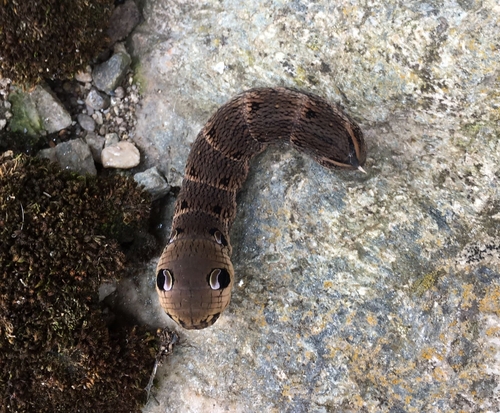
The closest relatives of the Bedstraw Hawkmoth that you can see in Tatra National Park (family Sphingidae, Sphinx Moths) are Pine Hawkmoth (about 20%), Eurasian Hummingbird Hawkmoth (about 10%) and Elephant Hawkmoth (about 10%), with each one's daily chance of a sighting.

Where does the Bedstraw Hawkmoth sighting chance come from?

GBIF citizen-science records

It is estimated from how often the Bedstraw Hawkmoth is recorded against all the insects logged in Tatra National Park (6 verified sightings from 2019 to 2026), calibrated against known sighting rates. Figures are rounded to the nearest 10% because citizen-science data supports honest approximations, not decimals, and months with records from fewer than five people show "—". How it works.

← Back to Tatra National Park